Tehran University Library; The beating heart of research and origin of lasting scientific works
According to the Iran Book News Agency (IBNA) culture and publishing service, the Central Library and Documentation Center of the University of Tehran, as one of the country’s most important scientific and cultural institutions, plays a fundamental role in preserving, expanding, and transferring knowledge. This collection not only safeguards valuable written resources and documents but also holds a significant part of Iran’s scientific, historical, and cultural memory. The importance of this library doubles when its management is accompanied by a scientific, forward-looking, and meticulous approach.
During the management period of Dr. Rasoul Jafarian, the Central Library and Documentation Center of the University of Tehran witnessed a significant transformation in order, organization, and scientific approaches. His precise and conscious management, based on deep research experience and extensive knowledge of historical and documentary sources, has transformed this institution from a mere repository of resources into a dynamic center for research and knowledge production. Special attention to scientific cataloging, document organization, preservation of manuscripts, and facilitating researcher access to resources are among the most important achievements of this period.
Understanding the importance of library modernization, Rasoul Jafarian emphasized the connection between tradition and technology and has strived to turn the Tehran University Central Library into an institution aligned with contemporary research needs. The result of this approach has been an increase in the library’s efficiency, an improvement in its position among the country’s scientific centers, and enhanced trust among researchers and students in this collection.
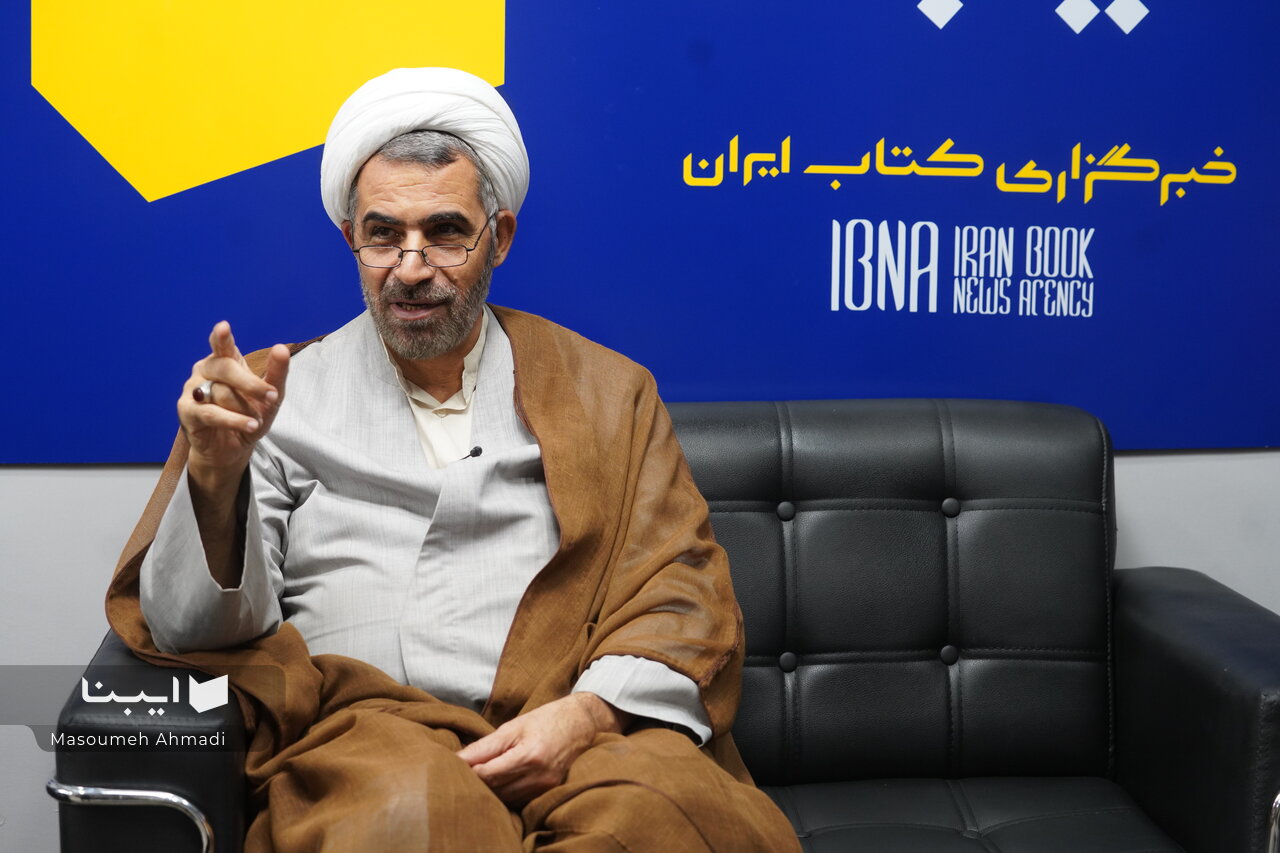
On the first day of Research Week, we conducted an interview with him, in which Jafarian referred to the central library’s policies in research, documentation, and scientific resource provision for the University of Tehran. He emphasized that the Tehran University Library is not only an institution that preserves the past but also paves the way for the future of research and thought.
What is the position of the central library in academic research?
There is no doubt that libraries, both in the past and today, are considered the main arm of research. Every educational research institution inevitably requires a dynamic and efficient library. For this reason, from the first days of the establishment of the University of Tehran, libraries were formed in faculties such as Medicine, Law, and Literature. After some time, the Central Library was established, and to this day, these collections, which include about 50 libraries in faculties and institutions affiliated with the University of Tehran in addition to the Central Library, provide services to students, faculty, and staff.
How many resources do the Central Library and other University of Tehran libraries currently have?
The Central Library alone has 224,000 titles in close to 400,000 copies. The total resources of the University of Tehran libraries cover approximately 1.5 million titles, mainly in the Persian and Arabic languages. In the Latin section, the Central Library has over 100,000 titles in 135,000 copies. Furthermore, 17,250 manuscripts, more than 10,000 lithographs, millions of documents, thousands of photos and maps, close to 150,000 theses, and other objects are kept in this collection.
How much of these resources are digitally available, and how is access provided?
Our digital library currently includes 39,000 files, which are available in various ways. All manuscripts, meaning over 17,000 copies, are completely available to the public free of charge, and more than 6,000 of them are also usable in the Azarsa system. A significant number of lithographs and old textbooks have also been digitized and are accessible. Additionally, requests for digital copies are answered daily, and if there are no legal obstacles, the files are provided to the applicant and added to the digital library. Among the 107,000 existing theses, a large portion is available through Azarsa; some are free for student study, and others require payment.
What facilities has the library provided for students to study inside the library?
The Central Library is one of the most beautiful buildings in Tehran, among the university complex and library buildings in the country. This building, since its opening in 1971, has been continuously available to students, faculty, and researchers. Its beautiful halls, either open or closed-stack, house a large number of valuable resources and are available daily to applicants. The Central Library welcomes students every day from 8 AM to 9 PM, except for official holidays. However, open-shelf halls have more limited hours in the afternoon; for example, the Iranology Hall is active until 4 PM, and the Iqbal and Jamalzadeh Halls from 8 AM to 3:30 PM. The study halls, as mentioned, are open until 9 PM. Thousands of people visit the library daily. The lending section is very active, with an average weekly turnover of about 1,000 books. The rare books section is also open to researchers and applicants at specific hours.
What is the process of purchasing books and providing resources at the Central Library?
Our resource provision is done through two methods: purchasing and donation. In the past year, from December last year until now, more than 5,000 volumes of books have been added to the collection through purchase and donation. In recent years, the amount of donations to the Central Library has increased, and it is natural that there are duplicates among them, which we exchange with other libraries. Due to financial limitations, the purchase of manuscripts is very small, but in contrast, more historical documents have been acquired through both purchase and donation. Last year, the families of Nizam-Mafi, Ittihadieh, and Gheysari donated valuable documents to the library. Also, friends like Dr. Mansour Tabatabaei provided notable collections of documents to the Central Library, and we sincerely thank them all.
What are the relations between the Central Library and other library centers?
At the University of Tehran level, the Library Coordination Council is active, in which the heads of all university libraries hold membership, and a meeting is held at least quarterly. Close communication between libraries is also established through automation systems, although faculty libraries are financially independent and managed under the supervision of the respective faculty heads. Our communication with external libraries is not systematic, but like other libraries, we use resources from the National Library in the field of bibliographic information. There is no joint lending system with other libraries. However, the Azarsa system has brought all university libraries together in a coherent program. In terms of information sharing, we impose no restrictions on scientific centers. The Foundation of the Islamic Encyclopedia is one of the most active centers in using our resources. The Islamic Revolution Document Center has continuous cooperation in the field of press and publications. The Institute for Contemporary History Studies also cooperates with us in scanning theses, and we exchange books and files. Our most significant interaction is with the Noor Center in Qom, and we are looking to expand this collaboration.
What is the relationship between the Central Library and Irandoc?
Our regular relationship with Irandoc is mainly in the field of theses, which are routinely sent from the University of Tehran to this center. Theses are used in Irandoc for both similarity detection (plagiarism check) and storage and presentation in systems like Ganj. Unfortunately, Irandoc shows little interest in older theses that we scan with significant cost and effort. We expect Irandoc to be able to make more effective use of the scientific capital and content of state universities, including our resources, by utilizing specialized artificial intelligence.
Besides the library website, through what other channels are resources made available to applicants?
In the field of theses, we have close collaboration with the Noor Center in Qom, and applicants can access our theses through this channel, adhering to regulations. One of the important recent developments is the activation of the “Sainito” system at the metadata level. Also, the “Sabit” system, which has recently started its official operation, will offer our resources based on an existing memorandum of understanding. In fact, everything available as a file in Azarsa will also be usable through Sabit. Sabit, as a portal affiliated with Pars Azarsh, can play an important role in expanding access to resources.
What are the library’s educational programs for students and extracurricular activities?
The library has always been active in education. Last year, dozens of training sessions were held on topics such as cataloging, document reading, the application of artificial intelligence in research, and similar subjects. Numerous sessions were also held to teach the use of information databases for which the university pays a significant subscription fee. Throughout the year, exhibitions are held on the ground floor of the library, some of which have an innovative aspect. For example, the exhibition of Shiite coins has been running for almost a month now. These exhibitions are usually accompanied by scientific sessions during their opening or closing ceremonies. However, I emphasize that our main policy focus is on strengthening resources: purchasing books, cataloging, scanning, uploading resources, and responding to requests from researchers away from the library. Extracurricular activities are also defined in line with these missions. Thanks to this approach, no book has been left behind for cataloging; all manuscripts have been cataloged, and documents are continuously being cataloged.
What is the financial situation of resources and financial aid to the Central Library?
Unfortunately, the university’s financial resources are limited to fully cover our needs. Furthermore, according to financial regulations, a large part of the library’s expenses must be covered by its own revenues, which is both time-consuming and practically yields little financial gain. According to existing statistics, the Central Library has about four billion tomans in debt to the university’s financial affairs, which is not an acceptable situation. Regarding supporters, a group of benefactors helps us on specific occasions. The Jamalzadeh Foundation and a number of friends who do not wish to be named provide assistance as much as possible. We particularly need support in the area of books, and we ask friends to encourage individuals with valuable collections or those interested in donating. Financial contributions for book purchases are also possible through the library’s supporters’ account. Equipment acquisition is also important for us. Last year, two desktop scanners were purchased with the help of donors, for which we are grateful. Donations have also been made in the area of manuscripts, news of which will be published soon.
You have an active channel titled “Tehran University Central Library and Documentation Center.” What is the content of this channel?
Yes, the Central Library’s Telegram channel, with over 23,000 members, has been active for years in providing news, book, document, and image information. We publish more than ten posts daily on this channel. We try to provide files of some old, non-copyrighted works to the audience and introduce new documents as samples so that users become familiar with their nature. Internal news of the library and meetings are also reflected in this channel. In addition, we have launched another channel titled “Smart Kitabcast of the Central Library,” where podcasts from books in the fields of education, research, and history are published using artificial intelligence. To date, as of December 16th, over 135 podcasts have been published in about 20 days. Our belief is that we should not limit ourselves to borrowing and reading physical books; instead, we should use modern facilities to make book content available to students and interested parties in formats such as podcasts. This will also help promote reading.
The Central Library also has a museum-like space. Can you explain that?
We prefer not to call this space a museum, but rather a mirror of the history and position of the Central Library. This collection, which was initially formed as “storage for old library objects,” gradually expanded, and its goal was to create a type of gallery with a media approach. In this space, showcases include lithographs, Braille books, art books, old library seals, old microfilm machines, valuable photos, paintings, sound recording devices, lead type-setting tools, and other valuable objects on display. This collection was established on the fourth floor of the library in 2018-2019, but due to being far from student access, we decided to move it to the ground floor, which will be ready for visits soon. Here, I find it necessary to mention my old and late friend, Mr. Damirchi, the founder of the Printing Museum at the Parliament Library, who unfortunately was separated from that collection due to the incorrect policies of subsequent managers. He donated a 19th-century printing press to the Central Library, which is now located on the ground floor. We have established this gallery in his memory; a person who was one of the best specialists in printing history and old devices. May his memory be cherished and his soul be happy.
Our last question is whether non-university students, faculty, and staff can use the library?
Naturally, yes, but keep in mind that we have over 40,000 students and nearly 2,500 faculty members and thousands of staff. While the university library spaces are relatively large, there are limitations in space and facilities. Furthermore, going in and out of the university has its specific issues and regulations. The simplest form of access for outsiders is to obtain a temporary membership by paying a fee and getting a one-month, three-month, or six-month card. In any case, the presence of individuals inside the library for study, for a library with limited financial resources, is costly. Also, due to administrative problems, lending is not possible except for official university members such as faculty, students, and staff. However, we make every effort to answer remote scanning requests from outside the university, within the limits allowed and without legal issues. The assumption is that this library is special for this complex, and naturally, in Tehran, there are hundreds of libraries belonging to the public library institution, as well as the National Library, which belongs to all the nation, and also the Parliament Library, which also belongs to everyone. Temporary membership is still an option, but only for studying inside the library.