Mikhail Bakhtin’s Book about François Rabelais
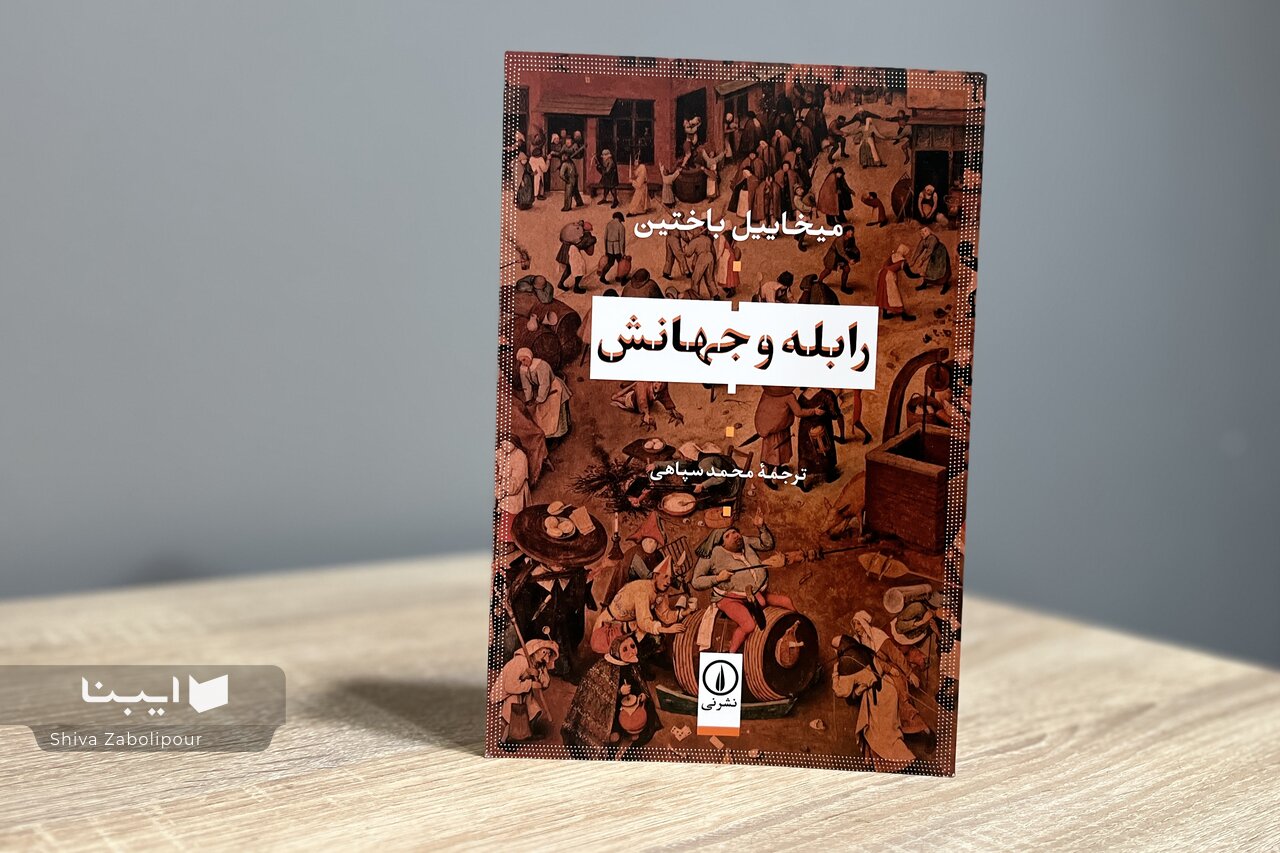
According to the correspondent of the Iran Book News Agency (IBNA), “Rabelais and His World” is one of the important works of Mikhail Bakhtin, the prominent Russian theorist, and a notable work in the field of literary criticism and theory; a work that can be considered a classic text in this field today.
In “Rabelais and His World,” Bakhtin, through analyzing the fictional world of François Rabelais, the great French author of the Renaissance era, explains his theoretical discussions about the novel and its connection with carnival, laughter, and freedom.
In “Rabelais and His World,” the novel is discussed not only as a literary genre but also as an embodiment of freedom; a freedom with which the cheerful and carnivalesque nature of the novel has a close connection.
The book includes an introduction by Krystyna Pomorska, its English translator, and a foreword by Michael Holquist.
It is worth noting that since the basis for the theoretical discussions in “Rabelais and His World” is François Rabelais’s novel “Gargantua and Pantagruel,” a summary of this novel has been provided in the Persian translation of the book. As explained in the book, this summary is derived from the entry for “Gargantua and Pantagruel” (translated by Reza Seyed Hosseini) in the fifth volume of the “Dictionary of Works” collection; a collection compiled under the supervision of Reza Seyed Hosseini and published by Soroush Publications.
The book “Rabelais and His World” consists of an introduction and seven chapters. Rabelais’s place in the history of laughter, the language of the street and marketplace in Rabelais’s novel, popular festive forms and images in Rabelais’s novel, and images of feasting in Rabelais’s novel are among the topics discussed in this book.
In a part of “Rabelais and His World,” you read: “In this book, we do not want to answer the question of whether Rabelais ranks alongside Shakespeare, or whether he is higher or lower than Cervantes. There is no doubt that he, alongside Dante, Boccaccio, Shakespeare, and Cervantes, is among the founders of modern European literature. Rabelais not only determined the fate of French literature and the French literary language but also influenced the future of world literature—at least as much as Cervantes. He is undoubtedly the most democratic figure among the pioneers of new literature, and his connection with popular sources, especially certain parts meticulously listed by Michelet, is closer and more fundamental than others. These very sources have shaped his entire artistic system of imagery and worldview.”
“This specific and radical popular character makes Rabelais’s images so heavily weighted with the future (a point Michelet rightly emphasized in the admiring quote above) and also determines the ‘non-literary’ nature of Rabelais’s work.”
The book “Rabelais and His World,” translated by Mohammad Sepahi, has recently been published by Ney Publication in 500 copies at a price of 780,000 Tomans.