Call for the Eighth Isfahan Biennial Literary Award Announced
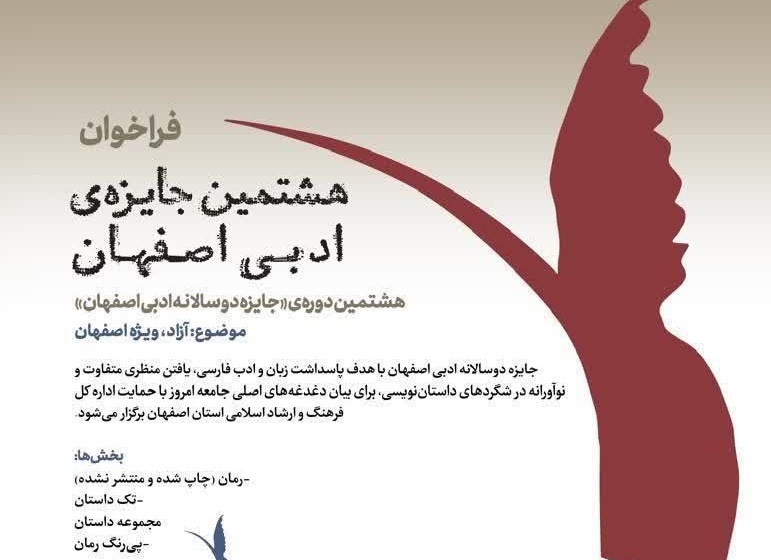
According to the reporter of Iran Book News Agency (IBNA) in Isfahan, the call for the eighth Isfahan Biennial Literary Award has been published. This award, known in recent years as one of the significant and influential events in fiction writing, has played an important role in identifying and introducing new literary talents and supporting prominent narrative works. The main objective of holding this award is stated as strengthening literary creativity, enhancing the quality of contemporary fiction writing, and creating a dynamic link between tradition and innovation in Iranian literature.
Mohammad Ali Jafari, Deputy of Cultural and Press Affairs at the Isfahan General Department of Culture and Islamic Guidance, stated in an interview with IBNA reporter, highlighting the importance of this event: “The Isfahan Biennial Literary Award is designed with a qualitative approach and has always strived to evaluate fictional works based on creativity, precision in language and prose, narrative structural coherence, and innovation in storytelling methods.” According to him, this award, in line with the tradition of the Isfahan school of fiction writing, pays close attention to the issues and concerns of contemporary society with a meticulous perspective and utilizes the capacities of ancient Iranian literature and culture in a new form.
Referring to the different sections of the eighth round, he added: “This round has been defined at a national level, and the call’s theme is open, so writers from all over the country can participate in this competition. The competitive sections include published and unpublished novels, short stories, short story collections, and novel plots. This variety in sections provides opportunities for diverse narrative experiments and various storytelling methods, offering a suitable opportunity for writers with different tastes and styles to showcase their works.”
Jafari emphasized the importance of paying attention to the quality of works, stating: “In evaluating works, creativity in handling story elements, innovation in narrative techniques, textual coherence, and language precision are among the main priorities of the jury. With a qualitative and critical approach, this award attempts to introduce fictional works that reflect the changes and concerns of today’s Iranian society while preserving the connection with the country’s literary heritage.”
The Deputy of Cultural and Press Affairs at the Isfahan General Department of Culture and Islamic Guidance, referring to previous award experiences, said: “Holding previous rounds has shown that this award has successfully identified many new literary talents and introduced prominent works of significant quality to the audience.” He added: “This event plays an effective role in motivating young and experienced writers and also provides an opportunity for exchanging ideas and recognizing new trends in fiction writing.”
He announced the timing of the eighth round, stating: “The deadline for submission of works has been set for the end of February 1404 [Solar Hijri calendar, corresponds to late February 2026], and the final award ceremony will be held in May 1405 [Solar Hijri calendar, corresponds to May 2026].” In this ceremony, the winners of each section will be introduced, and the creators of the top works will be recognized.
He added: “This round provides a suitable opportunity to showcase creativity and new ideas in the field of fiction writing, and it is expected that diverse and high-quality works from all over the country will be submitted to the secretariat.”
Jafari explained access to full call information: “Interested individuals can refer to the information website Isfahan.farhang.gov.ir to obtain the full call text, learn about the participation conditions and regulations, submission methods, and prize information. The award secretariat is located in Isfahan, Abshar Sevom Street, after Ghadir Bridges, at the General Department of Culture and Islamic Guidance, and is ready to answer questions from writers and those interested in the field of fictional literature.”
Stating that the Isfahan Biennial Literary Award gives special importance to continuing the tradition of fiction writing in this city, he added: “Isfahan, as a cultural and literary center with a rich background in fictional literature, is a suitable environment for holding such an event. In this award, in addition to the literary quality of the works, attention to innovation and utilization of Iran’s cultural and literary capacities with a new and contemporary approach are prioritized.”
The Deputy of Cultural and Press Affairs at the Isfahan General Department of Culture and Islamic Guidance, emphasizing the role of the award in developing fictional literature, stated: “The Isfahan Biennial Literary Award provides a basis for enhancing the level of fiction writing in the country and, by supporting writers and providing professional feedback, facilitates the improvement of writers’ skills and introduces prominent works to audiences and publishers.”
He added: “By holding review sessions and interacting with literary figures, this event creates a dynamic and creative environment for exchanging experiences, which ultimately leads to improving the quality of fiction writing in the country.”
Jafari explained the novel plot section, stating: “This section provides an opportunity for writers to present their novel ideas and preliminary drafts and benefit from the jury’s feedback. This action is important in strengthening the creative process and guiding writers towards innovation in story narration and plays an effective role in identifying new talents.”
Regarding the award’s impact on identifying and introducing young writers, he said: “Many prominent writers and creators in the country submitted their works to this award before achieving widespread success, and through receiving professional feedback, they paved the way for their literary growth. The Isfahan Biennial Literary Award helps develop the country’s fictional literature by supporting these talents and providing a suitable platform for showcasing works.”
The Deputy of Cultural and Press Affairs at the Isfahan General Department of Culture and Islamic Guidance concluded his remarks by inviting all writers and literature enthusiasts to submit their works to the award secretariat, adding: “It is expected that the eighth round will receive widespread participation, and we will witness diverse and high-quality works from all over the country. He emphasized: The award secretariat is ready to answer questions and guide writers through all stages of submission, and the main goal is to support creativity and enhance the quality of fiction writing in the country.”
The publication of the call for the eighth Isfahan Biennial Literary Award presents an opportunity for writers across Iran to showcase their works in a competitive and professional environment, learn from other writers’ experiences, and elevate the standard of their works through specialized feedback. This event not only helps identify and introduce new literary talents but also paves the way for developing fictional literature in the country by emphasizing the quality of works and innovation in storytelling.