Establishing a National Documentation Center in West Azerbaijan is essential
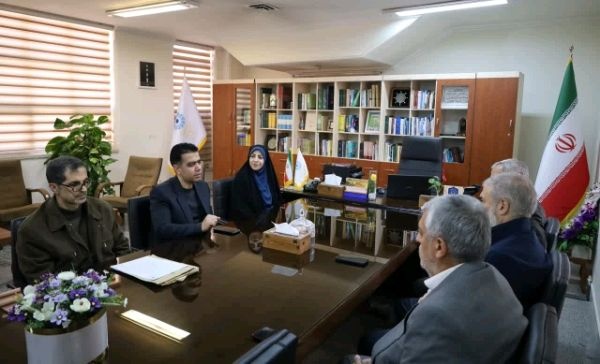
According to the reporter of Iran Book News Agency (IBNA) in Urmia, Saeed Ozaddini Maleki, head of the West Azerbaijan Iranology Foundation Center, stated on Monday morning at the book and historical documents donation ceremony held in the Urmia Central Library: Many valuable documents and books exist in Urmia that have remained unknown until now, and donating old and valuable copies to preservation centers can encourage others to donate old, valuable, and precious books and documents.
The head of the West Azerbaijan Iranology Foundation Center, pointing to the lack of a documentation center in the province, emphasized: To keep and protect manuscripts and ancient and valuable books in a suitable location, a suitable place must exist, and establishing a documentation center in West Azerbaijan is an undeniable necessity.
He considered the donation of books and documents by the province’s intellectuals as an important step in making the cultural and historical assets of the province permanent and said: This action can gradually become institutionalized in society and encourage various groups to preserve and donate valuable documents.
Over a thousand volumes of manuscripts in Urmia Central Library
Khadijeh Masoumi, Director General of Public Libraries of West Azerbaijan, also said at the meeting: The stronger the written history of a region, the more book-reading generations are raised.
Masoumi stated: In West Azerbaijan province, 76 independent libraries, 2 mobile libraries, and 25 participatory libraries provide services to enthusiasts.
She added: The Urmia Central Library has a children’s section, a shared workspace, a general reading room, private rooms, and a periodicals section, which are available to enthusiasts.
Khadijeh Masoumi added: The Urmia Central Library has various sections, including children’s, science and creativity hall, shared workspace, private halls, periodicals section, special services for the visually impaired and hearing impaired, as well as a manuscript section that serves various segments of society, and we have over 30,000 audiobooks in the Urmia Central Library.
Referring to the manuscript section, she also said: In this section, we have 1,200 volumes of manuscripts and stone-print books, and many people in the province own manuscripts, and our effort is to enrich the manuscript collection of the Urmia Central Library.
The Director General of Public Libraries of West Azerbaijan stated: This library succeeded in receiving the national award from the President and obtaining a medal for activity in the field of special groups this year.
Referring to three campaigns, she said: We held the book endowment campaign, book fundraising campaign, and book donation campaign (donating knowledge) this year, where good books were donated.
Mohammad Reza Kheradmand, donor of stone books and manuscripts, continued at the meeting by stating that keeping ancient documents and books in homes leads to their destruction, said: These works should be transferred to specialized centers so that they are properly preserved and utilized.
He added: Our effort is for documents and books to be entrusted to the Urmia Central Library to be kept in this place and made available to researchers.
Establishing a National Documentation Center in West Azerbaijan is essential
Mohammad Ashtari, former Director General of Cultural Heritage, Tourism, and Handicrafts of West Azerbaijan, also referred to the historical background of the province, saying: West Azerbaijan has been known as a province since 1931, and during a time when the country only had 10 provinces, it was the fourth province established.
Ashtari added: This province has always been a center of important historical events, and with this background, the existence of a documentation center in it is essential, while today such a center does not exist in the province.
He considered West Azerbaijan a strategic province and said: Many important historical events and prominent national managers originated from this land.
Ashtari stated: In addition to keeping historical documents and books, a space should also be created for displaying and introducing these works so that people become closely acquainted with these valuable assets, and in this regard, the capacity of the media, especially the national media, should be used because of its visual nature.
The documents in the manuscript section of Urmia Central Library are indigenous
Reza Mahmoudpour, expert in the manuscript section of Urmia Central Library, stated that the priority of this section is to collect indigenous resources, said: The documents presented in this center are mainly indigenous, and the manuscript section is the only specialized center in the province that deals with the collection and proper preservation of manuscripts and ancient books.
He added: The visitors to this section are mainly researchers, academics, university professors, and intellectuals.
According to IBNA, at this meeting, Mohammad Reza Kheradmand donated 2 volumes of stone books and 30 manuscripts related to the Qajar period and one volume of lead-print book related to the Pahlavi period to the Urmia Central Library’s documentation and manuscript center.
Also, 134 linear documents related to the Qajar period were donated by Keyvan Vaziri, and 172 leaves of documents and one 5-page newspaper from the Pahlavi period were donated by Hossein Ghaffari to this center.





