Soroush’s patriotism in the 12-day war showed he is not enslaved by the atmosphere / The theory of theoretical expansion and contraction and democratizing the understanding of religious text
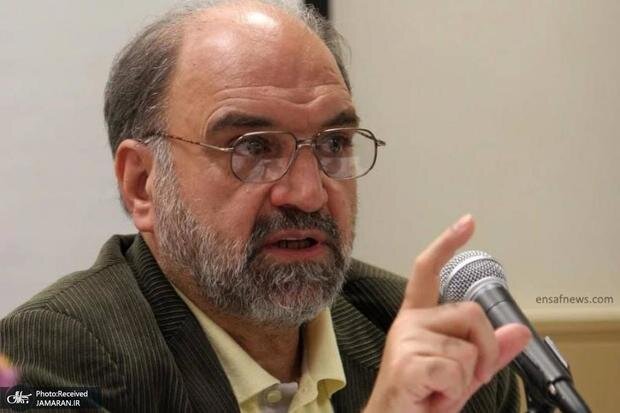
Group of Thought: The following article was written by Dr. Yaser Mirdamadi, a researcher of religion and philosophy, for Hammihan newspaper. This writing is dedicated to a deep analysis and evaluation of Abdolkarim Soroush, one of Iran’s most influential contemporary religious thinkers, and considers his central intellectual development to be the “Theory of Theoretical Contraction and Expansion of Sharia.” This theory, proposed in the atmosphere of “revolutionary certainty” in the 1980s, was considered not just an abstract discussion but an “revolution within a revolution” in religious understanding at the time. By introducing the fluidity of religious understanding and its dependence on human knowledge, it shattered the monopoly of official interpreters over the interpretation of the sacred text and prepared the ground for the democratization of religious understanding. At the same time, while acknowledging the historical importance and progressive nature of Soroush’s theory (even compared to Western analytical epistemology), the author also raises criticisms regarding the consequences of its “reader-centered” hermeneutics and the “death of the author.” Finally, the article points to Soroush’s patriotic and independent political-social stance in confronting the ruling dictatorships and the general atmosphere. The article is presented below for your consideration:
****
Yaser Mirdamadi
Looking at Abdolkarim Soroush’s intellectual record, one can say in a single sentence that his intellectual life has had transformative consequences for Iranian religious thought. In this regard, without a doubt, emphasis must be placed on the “Theory of Theoretical Contraction and Expansion of Sharia.”
Revolution within a Revolution
Although contraction and expansion might seem obvious to many today, this very obviousness is probably one of the signs of its success. Contraction and expansion was also obvious at the time of its formation, but not obviously true, rather obviously false. The pace of Iranian intellectual development has become so fast that four decades ago seems like four centuries ago.
However, the rapid pace of developments should not cause us to forget the context in which this idea was formed. In the late 1980s, when contraction and expansion entered the public sphere, Iran’s intellectual atmosphere was saturated with “revolutionary certainty.” In such an environment, not only the rulers but even the general public believed they possessed the “naked religious truth.”
In such a space, talking about the fluidity of religious understanding and the dependence of reading the sacred text on human knowledge was not merely theoretical work but something akin to a “revolution within a revolution.” The traditional theory of religious understanding has always given centrality in understanding to the sacred text and ultimately to its official and exclusive interpreters. But Soroush, by proposing the idea that understanding the religious text is a human matter and subject to variables outside the text, concluded that understanding the religious text is always dependent on context and time.
The output of this awareness of understanding (hermeneutics) was that understanding the religious text is not exclusively owned by official interpreters but is a public asset and property of all. This means that no one can claim exclusive ownership of understanding the religious text and force society towards their understanding, but rather all interpreters must participate in the civil process of collective understanding from the religious text. This theory gave centrality in understanding the religious text to collective reason and contemporary rationality, not to the class of official interpreters or the understanding of the past.
Although contraction and expansion in its formulation was an abstract theory full of technical epistemological details, its consequence was the democratization of religious understanding. Precisely for this reason, the revolutionary official interpreters and owners of exclusive religion-monopolized power did not welcome such a theory; because it broke their monopoly over the interpretation of the religious text and opened the door for common understanding and new knowledge into the protected sanctuary of religious text interpretation.
Of course, there were some critics in this regard who approached from another angle and claimed that contraction and expansion was simply a translation of Western ideas and a repetition of modern epistemological discussions, with nothing new to offer. This judgment, however, seems mistaken to me and ignores the comparative progression of epistemological developments. If we return to the late 1980s, when Soroush introduced contraction and expansion in Persian in Iran, we see that the sociological turn in Western analytical epistemology had not yet occurred.
The central debate in analytical epistemology at that time was still about whether knowledge is justified true belief or not. The situation of religious epistemology in the analytical tradition was no better. The main debate at that time was over classic foundationalism versus reformed epistemology; discussions that were essentially empty of the centrality of sociology in the formation, maintenance, and expansion of knowledge.
Based on this, it can be claimed that Soroush undertook the sociological turn in epistemology at a time when this turn had not yet occurred in Western analytical epistemology. Unfortunately, the non-translation of contraction and expansion into English has resulted in the temporal precedence of contraction and expansion in the sociological turn being completely unseen in the English-speaking world, and Iranian thought sometimes being portrayed with the label of “follower of Western thought.” This is while in contraction and expansion, we are dealing with indigenous and pioneering thought, not an uncreative repetition of Western thought.
Down with “Death of the Author”
However, although contraction and expansion holds central importance in post-revolutionary Iranian theology, this does not mean it is defensible. The historical importance of an idea is one thing, and its defensibility is another. Contraction and expansion ultimately proposes a reader-centered hermeneutics, and its idea of “silent sharia” says: “Expressions are hungry for meanings; not pregnant with them.” This view leads to the death of the author; practically and even to a large extent theoretically. Such a radical hermeneutics might have been a necessary strategy in the 1980s to remove textual interpretation from the exclusive grasp of the class of official interpreters and open space for other thoughts to breathe.
But today, when the dust has fortunately settled (partially due to the stunning success of the contraction and expansion theory itself), we must think about an alternative hermeneutics that also pays homage to the author’s right to the text. Soroush says that not every meaning can be imposed on the religious text, but this condition is so neutral and minimal that it seems the text practically never says no to any interpretation. A text that says no to no interpretation is just like a woman who says no to no man. Such a text is neither noble nor respected.
In stating the essentials of religion, Soroush only points to the negative aspect of monotheism, merely indicating that “we are not God,” and this means almost every understanding of the Quran can be adopted, and all interpretations are incidental, except for the single interpretation that “we are not God.” However, no one—not even advocates of monism (unity of existence)—has such an interpretation of the Quran that “we are God.” Based on this, contraction and expansion is accused of “hermeneutical relativism.”
I believe the theory of contraction and expansion successfully performed its role in democratizing the understanding of religious texts, and now it is time to think about an alternative hermeneutics that also pays homage to the author’s right to the text. Perhaps in this path, the objective but flexible hermeneutics of Eric Hirsch—an American literary critic and hermeneuticist—can be groundbreaking.
Hirsch makes a critical distinction between “meaning” and “significance.” In his view, meaning is not dependent on the reader but dependent on the “author’s intent” and is discoverable in principle. However, the text can hold fresh and vibrant significances for every reader or reading community at any given time, while simultaneously not being unrelated to the meaning of the text and rooted in the rationality of the time.
Thus, although the meaning of the text is author-centered, the significance of the text is reader-centered. This distinction can be a way out of the deadlock of hermeneutical relativism in contraction and expansion while simultaneously not abandoning the democratization of religious text significances.
Critical Patriotism
But moving beyond all theoretical discussions, one cannot ignore Soroush’s political-social conduct in recent difficult months in silence. Soroush’s patriotic stance during the 12-day war showed that he is not enslaved by the “dictatorship of the atmosphere.” Precisely when blind emotions overshadow rationality, he maintained his intellectual independence.
His reading of the 12-day war event was not atmosphere-driven. The late Ezzatollah Sahabi has a brilliant quote: “Harder than avoiding the dictatorship of the government, is avoiding enslavement by the dictatorship of the atmosphere.” In the recent war, the dictatorship of the atmosphere required silence in the face of an atmosphere tired of oppression, looking at the bombs of Bibi and Daddy (Netanyahu and Trump) hoping that they would bring freedom in the wrapping of bombs to Iranians, just as they brought them in Gaza, the West Bank, and Lebanon, and now bring them in Sudan.
Soroush, at this historical juncture, showed that he has his independent reading of the logic of social developments. He is not intimidated by the tired general atmosphere and the pressure from dependent foreign media outlets. He is not willing to trade the independence and territorial integrity of this ancient land for any deceptive promise. In a time when opportunism and enslavement to the dictatorship of the atmosphere are common currency, steadfastness on principles is alchemy.
For Abdolkarim Soroush, on his 80th birthday, I ask from the presence of the Truth of Truths for continuous long life and ever-increasing God-given dignity, by His grace and generosity.