Seyyed Hassan Amin: I am a follower of Mulla Sadra / The practical benefit of believing in the unity of existence is human equality and non-discriminatory parity / Suhrawardi, Reviver of Ancient Iranian Philosophy
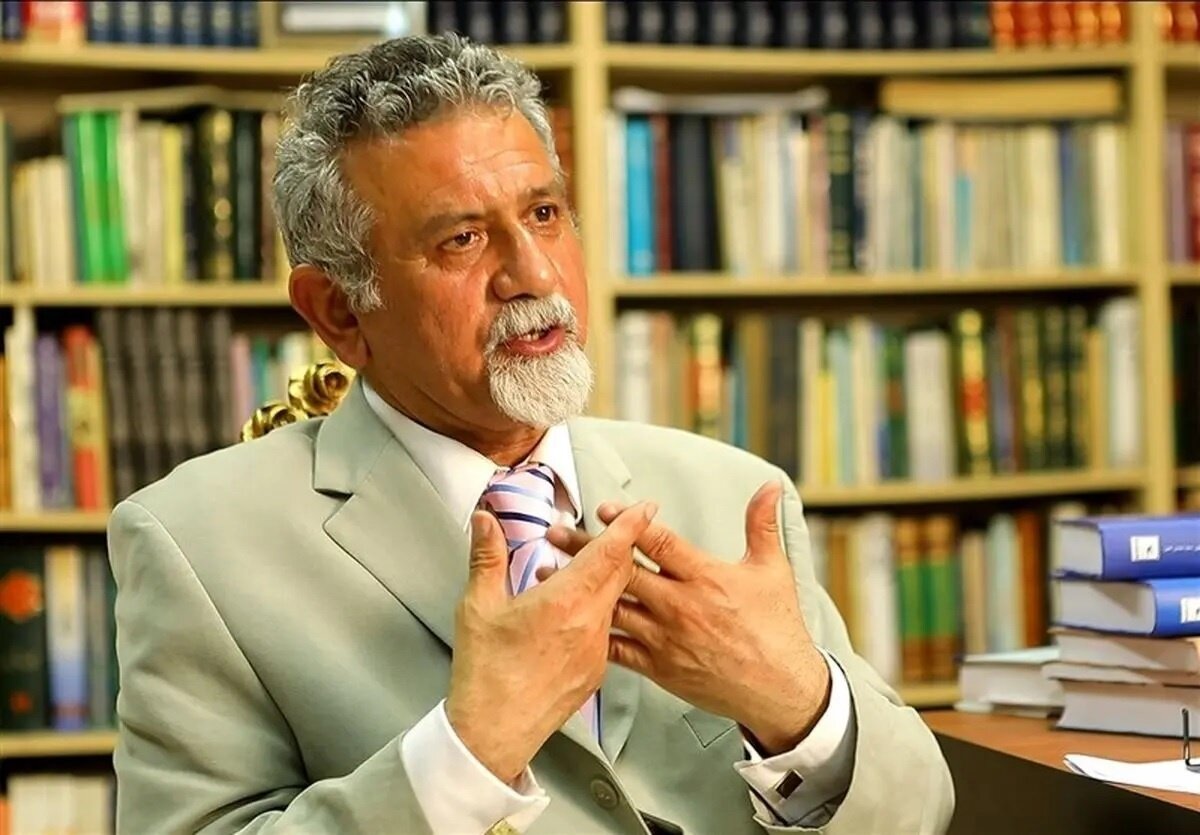
According to Khabar Online news agency, Elaheh Shams wrote in the introduction to her interview with Dr. Seyyed Hassan Amin for Ibna’s Religion and Thought service: The concept of “unity of existence” is one of the deepest and most controversial topics in ontology; a point where Islamic philosophy and mysticism, in continuation of the Greek tradition and in dialogue with modern Western philosophy, have tried to explain the relationship between human and existence in the form of the unity or multiplicity of existence. The question of whether “existence is singular or multiple?” is not only a theoretical issue but also a fundamental question about the meaning of life and humanity’s relationship with God. The book “Unity of Existence in Islamic Philosophy and Islamic Mysticism” by Seyyed Hassan Amin is an effort to re-examine this concept within the framework of the Peripatetic, Illuminationist, Stoic schools, mystics, and Sufis, and then in Eastern and Western philosophical systems. Given this importance and the breadth of the question, I went to Seyyed Hassan Amin, an Iranian philosopher, jurist, and literati, a former chair professor at Glasgow Caledonian University in England in philosophy, and the author of this book, to conduct an interview with him and clarify the aspects of this work through his answers. This interview is presented below for your consideration:
Fundamental Distinction Between “Existence” and “Existent”
You differentiate between the unity of existence and the unity of the existent at the beginning of the book. To clarify the subject, what is your precise definition of “existence” versus “existent”?
To make the difference between existence and existent as simple as possible, it is enough to say: existence means being and presence, which is the opposite of non-being and non-existence, and is self-subsistent. Its objective realization, permanence, and establishment are intrinsic to it and not dependent on anything else. It is also undefinable. It has no genus, differentia, definition, or description. It has always been and always will be. But an existent means something that has come into being, or possesses existence, not that it is existence itself; rather, its existence is in need of creation, formation, or emanation.
Primacy of Existence, Gradation, and Quiddity in Transcendent Theosophy
Within this framework, what is your position regarding the debate on the primacy of existence or the primacy of quiddity, and also the gradation of existence in Transcendent Theosophy?
The meaning of the primacy of existence is the real and true realization and determination of existence outside the mind. Absolute existence has no limit, description, restriction, or condition. But existents, in addition to having a level of existence – and existence being the common aspect of all existents – each also have specific defined limits and distinct characteristics, which are called quiddity (the answer to the question “what is it?”) or, in contrast to existence, appearance.
However, in the view of people like us, meaning in reality our teachers, like Allameh Hassan Zadeh Amoli, who are followers of the school of Mulla Sadra’s Transcendent Theosophy, quiddity is not primary, but rather the differentiating aspect of possibilities from each other. That is why Sadraean philosophers consider every existent, which is technically a possible existent, to be a composite of existence and quiddity. And the question of which of these two has real determination and true principality has been discussed among later philosophers, meaning from the era of Mulla Sadra, or even from the time of his teacher Mir Damad onwards. Mulla Sadra and his followers and commentators of his works believe in the primacy of existence, like Sabzevari, who says: “Indeed, existence is primary with us.” Now, Mulla Sadra, in fact, following Suhrawardi, considers existence to be flowing and pervasive in all existents in a graded manner, with varying degrees of perfection and imperfection, intensity and weakness, and priority and posteriority.
The Intended Unity of Existence: A Synthesis of Philosophers’ and Mystics’ Gradation
Which interpretation of the unity of existence do you endorse: Ibn Arabi’s unity of existence, unity of the existent, or a graded form of unity based on gradation?
The unity of existence in my view is the same as the opinion of the later profound scholars of the Sadraean school who believe in the graded flow of existence in various levels and manifestations, which is a synthesis between the view of philosophers (gradation in levels) and mystics (gradation in manifestations and loci of appearance), and this has been affirmed by Seyyed Saleh Khalkhali, Professor Jalal Homaei, and others.
Comparison with the “Universal Unity of the Stoics”
What exactly do you mean by the “universal unity of the Stoics,” and how can this concept be compared with mystical unity of existence?
The Stoic school and those with a divine taste believe in the unity of existence and the multiplicity of existents, and this is closer to the Peripatetic school which believes in the multiplicity of existence and the multiplicity of existents, rather than the Illuminationist school which believes in the unity of existence and the multiplicity of existents.
Suhrawardi: Differential Gradation of Existence/Light
What is your view on Suhrawardi? Considering that many commentators consider him close to the primacy of quiddity, do you consider his luminous unity a form of unity of existence or fundamentally distinct?
In my opinion, Suhrawardi is the reviver of ancient Iranian philosophy, meaning Khosravani wisdom or perennial wisdom. Although he is generally a Peripatetic philosopher, in the matter of the unity of existence, by positing the equivalence of existence and light, he believes in the differential gradation of existence/light in various levels of existents, and he considers the Ispehbadian lights to possess the same light present in the Light of Lights (Nur al-Anwar).
Compatibility of Unity of Existence with Sharia and the Boundary with Permissiveness
Please clarify how the philosophical explanation of the unity of existence can remain compatible with Sharia; in your view, where is the boundary between monotheistic mysticism and permissiveness?
Certainly, many jurists and Hadith scholars have disagreed with the unity of existence and its implications, whether it be Ibn Arabi’s unity of existence or Mulla Sadra’s unity of existence. For instance, Tanekaboni in Qisas al-Ulama tells Sabzevari that jurists excommunicated Mulla Sadra. Later, Seyyed Mohammad Kazem Tabatabaei Yazdi deemed all Sufis who believed in the unity of existence to be impure if they understood the implications of this belief. Aqa Mohammad Ali Kermanshahi also excommunicated several Sufis for these beliefs, declared them worthy of death, and had them killed.
Epistemological, Ethical Implications, and Correction of the Misconception of “Pantheism”
What is the most important epistemological implication of the unity of existence for contemporary humans? Is the unity of existence merely theoretical, or does it also have ethical and spiritual effects? And what common misunderstandings among the general public regarding the term “unity of existence” have you tried to correct in this book?
The practical and ethical benefit of believing in the unity of existence is the equality of humans and non-discriminatory parity among humankind, as well as responsibility towards the environment and future generations. The misunderstanding that the unity of existence in Islamic philosophy and mysticism is related to pantheism or Hindu panentheism or polytheism in Islam is a common misinterpretation of the term ‘unity of existence,’ which I have tried to correct in this book.
Existential, Attributive, and Active Monotheism in the Theory of Unity of Existence
Finally, please explain the basis of your classification among existential, attributive, and active monotheism? Which type of monotheism, in your view, is the closest expression to the theory of unity of existence?
Monotheism in the essence is specific to the principles of religion and belief in monotheism, and the unity of existence and the oneness of the Necessary Existent have the most relevance to accepting essential, attributive, and active monotheism. However, at the same time, active, practical, and experiential monotheism also encompasses the aspect of human transcendence and the spiritual and ethical elevation of humankind, and it is not merely abstract.





