Reza Amirkhani or Charlie Kirk?
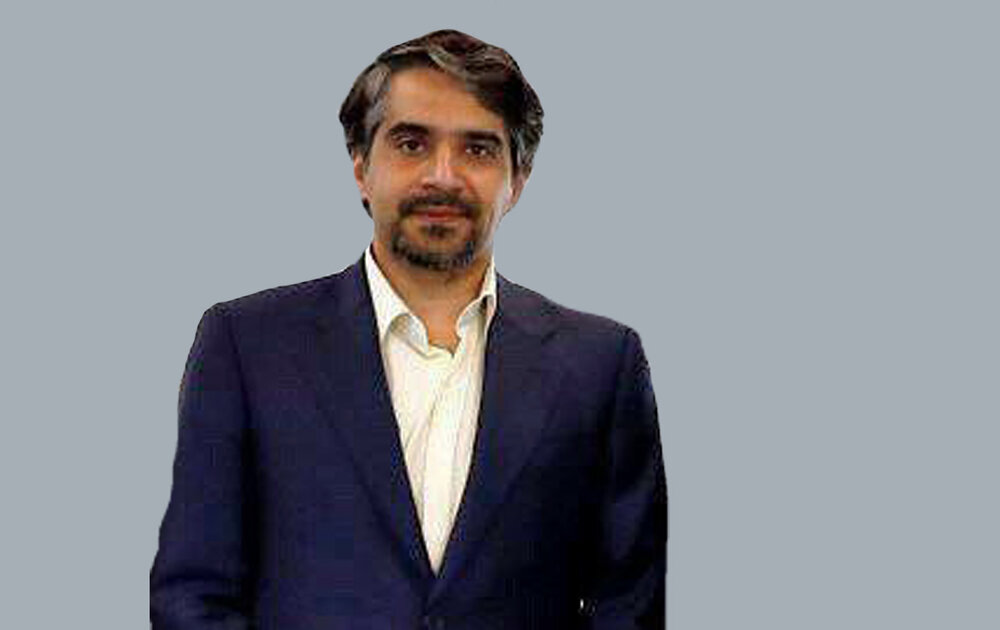
This question might seem strange at first glance: comparing an Iranian writer and literary critic with an American political activist. However, if we evaluate the role of each in their respective social worlds, this comparison is not only possible but also illuminates important points.
Charlie Kirk has created a voice, energy, and political direction for America’s youth and university community, whether we agree with him or not. But Reza Amirkhani has played a role in Iran that, in its depth and impact, has been and continues to be beyond political activism; a cultural-social role (especially in the realm of writing) that few have been able to replicate.
1. Reza Amirkhani; A Different Way of Living
Amirkhani is not just a writer; he chose a way of life that is an “exception” among his peers.
- He studied mechanical engineering but did not remain an engineer and thought beyond engineering.
- He had the opportunity for economic activity but did not dedicate his time and energy to it.
- He had the opportunity to enter governmental and executive positions but did not choose the path of power.
- [And of course, this itself is a serious critique of the governance structure that did not utilize such a mind/ability in executive/policymaking arenas.]
- He had the opportunity to immigrate and live in America but chose to live in Iran and maintain a continuous connection with Iranian society (he even lived in America for a short period but did not stay there).
By forsaking conventional paths to success, Amirkhani presented society with a non-clichéd life model; a life based on “thinking,” “writing,” “observing,” and “discipline.”
2. Taking “The Novel” Seriously in a Land Where Novels Are Not Taken Seriously
In Iran, novel writing has often been considered marginal, insignificant, or a pastime. However, Amirkhani, contrary to the general trend, pursued the novel as a “full-time job,” seriously and professionally. Over the years, few have written novels with such discipline, continuity, and seriousness. His success in novel writing is the result of three key characteristics:
- Creative and effervescent mind
- Seriousness in work
- Work discipline
The continuous publication of his works in recent years is not accidental; it is the result of these three characteristics. But let us consider one of these three characteristics more prominent: discipline.
Amirkhani’s writing finds its meaning under the shadow of his strict discipline;
a writer who, in the act of writing, is as disciplined as an army commander.
3. Amirkhani’s Connection with Iranian Youth Compared to Charlie Kirk
Amirkhani’s presence in high schools, university environments, and essentially any place where the younger generation was present has been one of his valuable characteristics. The strength of Charlie Kirk’s presence in American universities lies in his directness of speech and mental presence; however, Amirkhani possessed both of these, and in addition, had another characteristic in his connection with youth: modesty.
In Amirkhani’s discourse, despite its directness, a certain Eastern modesty and an element of composure are evident; something not easily found in his Western counterpart. This composure is a sign of his worshipful spirit; the very word Ali Shariati used to explain the concept of “prayer.”
Amirkhani’s life is a beautiful manifestation of prayer;
a constant dialogue and quiet emulation of one person with the sky.
a person not limited to the earth alone.
4. Amirkhani and Avoiding Ugly Political Debates
Amirkhani never entered ugly and emotional political debates. Not because he couldn’t, but because he preserved his personal integrity and dignity and did not want to dissolve into the aggressive atmosphere of Iranian politics. Writing much and reading widely did not lead him to engage in microaggressions like Kourosh Aliani or Mehdi Tadayoni.
Amirkhani has expressed his criticisms of the government clearly and without hesitation; from economic and cultural critiques to criticisms of the country’s security apparatus. Yet, despite this directness, he has never entered the tumultuous arenas of manufacturing opposition, insult, contention, or political disputes. This rare combination—directness without aggression—distinguishes him from many cultural and political figures.
Several hours have passed since the accident involving Reza Amirkhani, and the hearts of his fans and readers are still worried, following hospital news. After hearing the news of my parents’ car accident, hearing the news of Amirkhani’s accident was one of the bitterest days of my life.
From the land of Iran, many engineers, pilots, politicians… and even writers have emerged, but what Iran has lacked and still lacks, yesterday, today, and tomorrow, is the essence of humility like Reza Amirkhani’s. Humility born from power, combined with modesty.