Decline or Revival; Is the Future of Digital Printing in the Publishing Industry Uncertain?
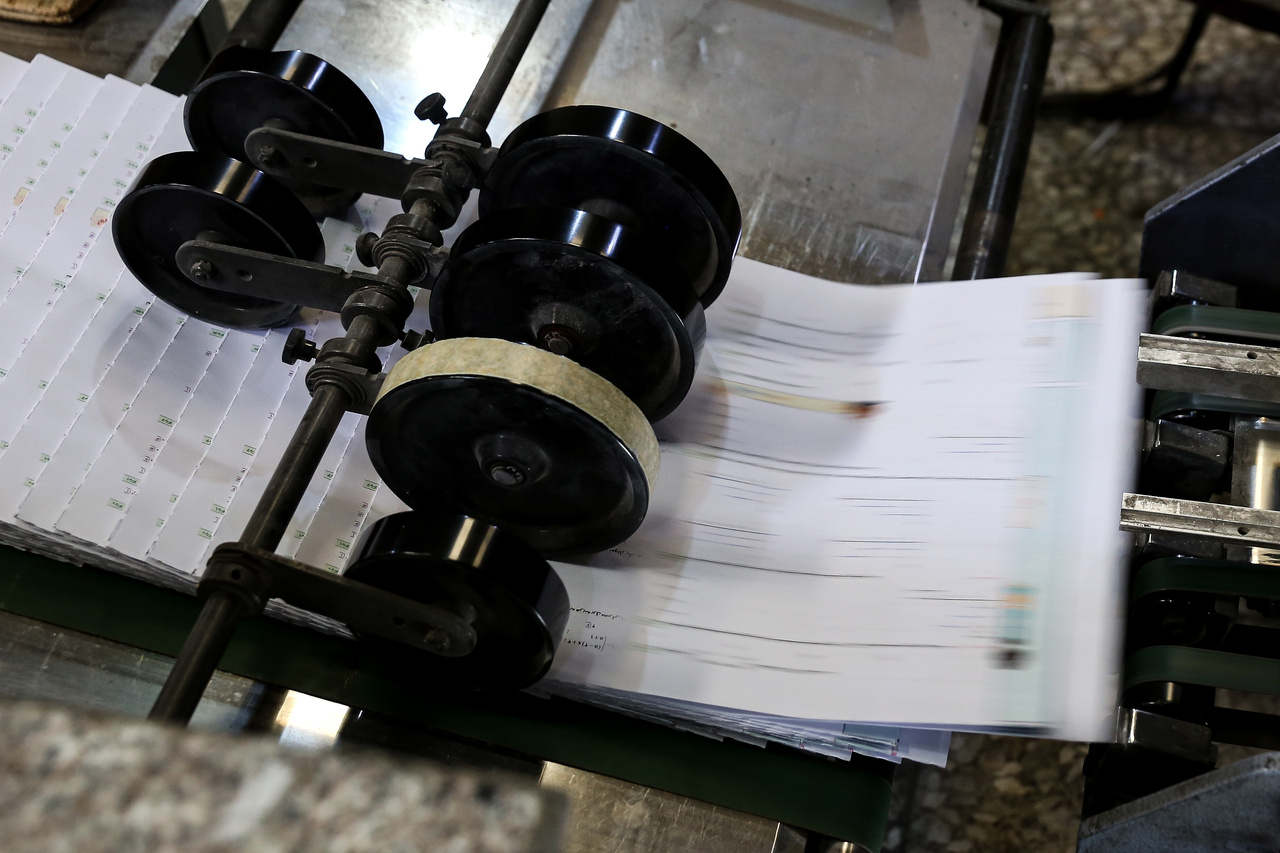
IBNA Culture and Publishing Service – Digital printing has been one of the hopes for Iran’s publishing industry over the past two decades to overcome numerous crises; a technology that was supposed to open a new path for publishers by reducing print runs, increasing production speed, and lowering storage costs. However, according to many activists in this field, digital printing has not only failed to help publishing but has become one of its structural problems.
Digital printing technology entered the book production process in Iran at a time when import routes for printing machines were severely pressured by sanctions. Furthermore, the publishing industry lacked the economic capacity to purchase new and standard machines, a problem that has created many challenges for activists in this field over the past two decades.
Jalal Zakai, an activist and expert in digital printing who has been active in this field for many years, believes that a large number of second-hand, refurbished, and non-quality machines were in use.
He stated that a significant portion of the machines entering the country have been decommissioned in their countries of origin. He added: ‘These machines might have been fully renovated and refurbished externally, but technically, their lifespan is less than a year. The consequences of this situation have been increased repair and parts costs, a sharp decline in productivity, reduced output quality, and market distrust in digital production.’
It seems that digital printing technology in Iran was flawed from the outset, and this fundamental flaw has practically eliminated the possibility of its healthy development.
Further along, consumers were forced to use Chinese and non-standard toners, inks, and consumables. Zakai attributed this situation to the weak publishing economy and the increased costs of importing essential materials, adding: ‘Using Chinese materials for second-hand machines is like injecting low-quality fuel into worn-out engines; it both destroys the output quality and damages the machine.’
He pointed to the visible market consequences of this issue, noting: ‘The lowering of printing standards to the level of office products, an increase in machine breakdown rates, a decrease in publishers’ trust in digital printing, and the market’s move towards excessive ‘cost-cutting’ are among the repercussions.’
If we consider all factors together, it must be said that this vicious cycle has practically prevented the formation of a professional digital printing market for publishing in Iran.
Destructive Competition and a Low-Quality Market
A look at the current state of digital printing in the publishing industry shows that the combination of worn-out machines and low-quality materials has thrown the digital printing landscape into disarray and unhealthy competition.
Zakai stated that price-cutting has become the main competitive advantage in the market, with quality almost removed from the equation. He said: ‘The main reasons for this situation are the indiscriminate entry of unprofessional actors, the absence of technical and regulatory standards, the lack of a requirement for specialized licenses, and significant disparities in the investment levels of market participants.’
According to him, the digital publishing market is currently experiencing a form of ‘quality deflation,’ meaning a reduction in quality to lower prices.
When Digital Printing and Photocopying Are Not Distinguished
One of Zakai’s most important criticisms concerns the organization and supervision of digital printing activities. He said: ‘Today, any small photocopy center can introduce itself as a digital printing house by putting up a digital printing sign. There is no oversight on licenses, machines, or even printed products.’
According to him, the root of this disarray lies in the 30-year-old and obsolete printing house regulations, strict and illogical conditions for obtaining official licenses, the possibility of operating without oversight and without a photocopy union license, and the lack of a precise definition of ‘industrial digital printing.’
Therefore, it seems that the continuation of this situation has blurred the distinction between professional printing houses and small desktop units, pushing the market towards irregularity.
Why Are Packaging and Industrial Printing Successful?
Some experts believe that the problems of digital printing in publishing are not due to technology itself, but rather the result of Iran’s economic and managerial structure in publishing. For a more precise analysis, Zakai offers a comparative look at other digital printing sectors, including packaging and textile printing. Unlike publishing, these sectors have grown significantly, and new, high-quality machines are common in them.
He continued: ‘The reasons for this difference are a dynamic and profitable economy in the packaging industries, the presence of customers who buy quality, real and promising demand, and mandatory technical standards.’
Zakai also referred to digital printing and its role in expanding book smuggling, saying: ‘One of the less-discussed but very important aspects is the role that digital printing has played in facilitating the reproduction and distribution of smuggled books. The lack of adequate oversight has made it easy for book files to be duplicated and produced in small printing houses.’
He stated: ‘When the smallest reproduction center can print any file without oversight, book smuggling is structurally strengthened. This issue, in addition to harming the rights of publishers and authors, also disrupts the economic chain of publishing.’
But What Should Be Done?
Despite all the issues and problems mentioned, what are the solutions for rebuilding the digital printing market for publishing?
Zakai, referring to a set of practical and implementable solutions, said: ‘In the first step, the legal definition of ‘digital printing’ must be redefined, meaning specific regulations for industrial digital printing, office digital printing, and photocopy centers should be drafted so that licenses and oversight can be organized based on them.’
He also deemed targeted support for importing standard machines a necessity, adding: ‘With the cooperation of the Ministry of Industry, Mine, and Trade and the Central Bank, the path for importing new machines, especially high-quality Chinese models, can be opened so that Iran no longer becomes a hub for second-hand machines.’
According to Zakai, an urgent reform of the regulations for issuing printing house licenses is also a necessity. This will ensure that professional actors do not have to resort to less credible photocopy licenses. Establishing systems for monitoring print files and products can also play a significant role in combating book smuggling.
Overall, the ‘digital printing’ crisis in Iran is not a single-factor phenomenon. This crisis has a set of synergistic causes: lack of import standards, weakness in the publishing economy, lack of investment in technology, disorganization in issuing licenses, destructive competition, and market abandonment by regulatory bodies.
Although digital printing could be a lifeline for Iran’s low-circulation publishing issue, with its current structure, it has become a threat to quality, economy, and publishing rights. Revitalizing this sector requires a multidimensional, specialized approach based on structural reforms; otherwise, digital printing in publishing will remain a chronic crisis rather than an opportunity.’





