A Journey into the Life of a Forgotten Figure in the Book ‘The Intellectual and Political Life of Abdullah ibn Muawiya’

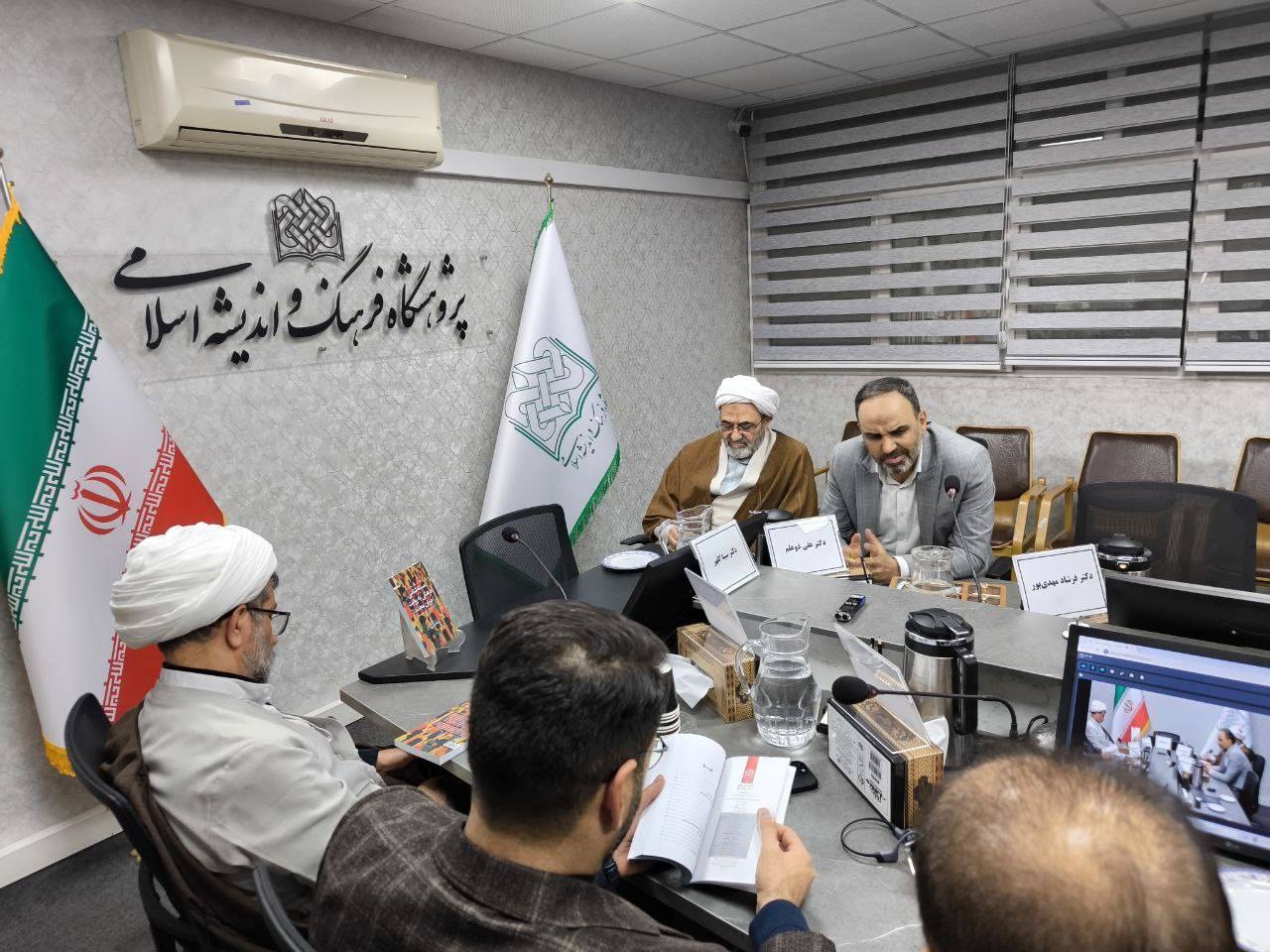
According to the correspondent of the Iran Book News Agency (IBNA) in Mashhad, Mohammad Bagheri holds a doctorate in Islamic history and lectures at Imam Reza University, Ferdowsi University, Farhangian University, Azad University, and Mashhad University of Medical Sciences. In recent years, through his meticulous and innovative research on the historical figure of Abdullah ibn Muawiya, he has opened new horizons in the field of the political and intellectual history of Shi’ism in the late Umayyad era. His new book, titled ‘The Intellectual and Political Life of Abdullah ibn Muawiya ibn Abdullah ibn Ja’far ibn Abi Talib,’ published by ‘Katibeh Miras Shi’ah’ Publishers, has so far won two important research awards.
Bagheri, in an interview with IBNA correspondent, attributed the secret of his book’s success and cultural awards to two years of continuous effort and sleepless nights of study, emphasizing: ‘I dedicated two years of my life to this work. My work was not merely rewriting sources; rather, narratives were meticulously examined in terms of their chain of transmission and content, and for the first time, I presented a documented and comprehensive picture of Abdullah ibn Muawiya, with many new insights in this book.’
Regarding his goal in writing this book, he stated: ‘I wanted to pull historical truth out from under the dust of centuries of distortion and take a small step in the field of the history of Shi’ism, especially Kīsanīya history.’
Bagheri described his motivation for focusing on Abdullah ibn Muawiya as personal interest and academic concern, saying: ‘During my master’s studies, when I came across the life of Abdullah ibn Muawiya, I saw that he was a severely distorted figure. Various and contradictory narratives attributed ugly accusations to him, such as claims of divinity, prophecy, immoral relations, and other charges. It raised the question for me: How could someone who was the son-in-law of Imam Sajjad (AS) and Zayd ibn Ali, and a student of Imams Baqir (AS) and Sadiq (AS), possess such attributes? This contradiction in sources bothered me, and I decided to scientifically and documentarily investigate this issue as my master’s thesis.’
In response to how he conducted his research, he said: ‘First, I collected all materials about Abdullah ibn Muawiya. Then, I simultaneously carried out content criticism and chain of transmission criticism of the narratives. When I put these two together, the role of different groups in shaping the distorted image of Abdullah ibn Muawiya became clear to me.’
Bagheri explained: ‘Five main currents played a role in damaging Abdullah ibn Muawiya’s character; first, tribal enmities, especially between northern and southern Arabs; second, some Sunnis who sought to weaken the Ahl al-Bayt by discrediting their students and close associates; third, extremist (Ghulat) movements.’
The university professor continued: ‘The Umayyads, against whom Abdullah ibn Muawiya had revolted, also discredited his character. The Abbasids, who initially accompanied him but later had him killed by the ruler of Herat whom they had appointed, also played a role in this.’
He added: ‘This volume of narrative creation against one figure indicates that Abdullah ibn Muawiya was an influential and dangerous figure for the governments of his time.’
Referring to the new points he had discovered, he stated: ‘One of the important findings was that Abdullah ibn Muawiya, who was the son-in-law of Imam Sajjad (AS) and the great-grandson of Ja’far ibn Abi Talib, after the martyrdom of Zayd ibn Ali and Yahya ibn Zayd, continued the Zaydi uprisings and revolted in Kufa. When, after the defeat of his uprising, he came from Kufa to Iran, he established a Shi’ite government in the western and southwestern regions of Iran.’
This author said: ‘Ibn Muawiya’s uprising in Kufa is considered the seventh Shi’ite uprising in the history of Shi’ism and Islam, and his government in Iran is regarded as the first Shi’ite government in Iranian history and the fourth Shi’ite government in the history of Islam.’
Bagheri stated: ‘He even minted coins bearing Quranic verses and Shi’ite emblems, and adopted the slogan ‘Al-Rida min Al Muhammad’ (Satisfaction from the Family of Muhammad). From a literary perspective, his surviving poems show him to be a cultivated, wise, and ethical person; no signs of impiety or hedonism are seen in his poetry.’
He further added: ‘Abdullah ibn Muawiya’s location in today’s geography can be traced to his burial place in Kohandezh, Herat, Afghanistan, known as ‘Sadat Musarraf’ and a pilgrimage site for the people of that region. Field research of historical sources and local reports indicates that this place has long been attributed to him, serving as a lasting sign of the presence of the Alawi family in the Iranian plateau and Khorasan.’
Bagheri pointed out: ‘When I realized Abdullah ibn Muawiya’s lineage and standing, I could not remain silent in the face of such a volume of accusations. The result is that, 1370 years after Abdullah ibn Muawiya’s death, a coherent and unbiased study about him has finally been written. This book is not just historical research; it is a re-evaluation of scholarly conscience in the face of history.’