Culture is an inseparable component of literature / In our culture, art means virtue
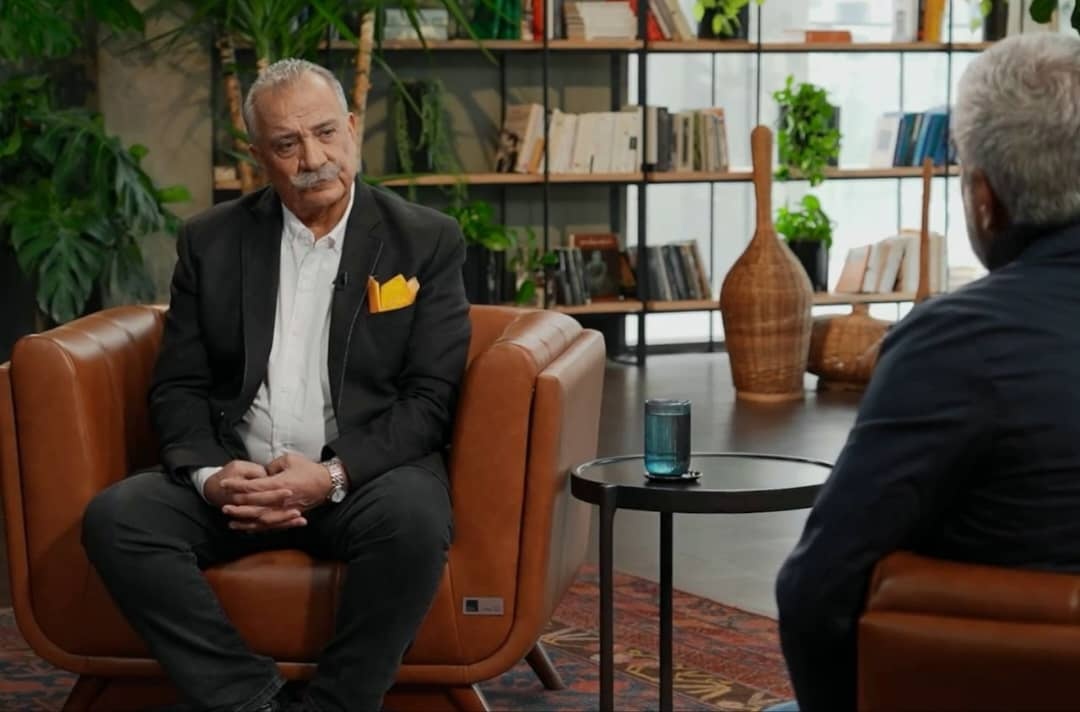
According to the Iran Book News Agency (IBNA), Rezvani initially responded to Sehhat’s question about what culture is by stating: “Culture is an inseparable component of literature, and without culture, learning a language is impossible. A while ago, a Harvard professor translated Saadi’s Gulistan. When he reached the famous poem, ‘A fragrant piece of clay once came into my hand from a beloved in the bathhouse…’, he encountered a problem. The point is that the entire beauty of this poem lies in the juxtaposition of ‘gel’ (clay) with ‘gol’ (flower). This Harvard professor, not thinking there was ever a place where people might wash their heads with clay, translated it as ‘gol’ (flower), meaning in his translation, the juxtaposition became ‘flower with flower’.”
Culture is history, background, customs, and traditions
Referring to another poem by Saadi, he explained to the host of the Aknoon program: “Saadi says: ‘I did not know from the start that you were unfaithful; it is better not to promise than to promise and not keep it. The candle should be taken out of this house and extinguished, lest it tell the neighbors that you are in my house.’ The candle’s job here is to give away secrets and backbite; do you expect a foreigner to understand this? Culture is exactly this; unless you know these cases, you will not understand the meaning of the poems. Therefore, culture is history, background, customs, and traditions.”
In response to the host’s question about whether one can learn a language at sixty-one, this literary translator said: “You can always learn a language. We have a chronological or identity age and a biological age. Two people may be fifty years old chronologically, but biologically one may be thirty and the other eighty. Therefore, you can always learn a language, and what matters is motivation.”
One should not judge people by appearances
Rezvani told Soroush Sehhat: “Allusion (Talmih) is the infinitive of the tafil verb form, meaning glancing at the corner of the eye, meaning a reference. You say something that refers to something else; if you don’t know that something else, you don’t understand this either. Saadi says, ‘Why should I impose a penalty on the defiled, when I recognize myself as defiled?’ This refers to the story of Jesus, who, when a woman was about to be stoned, said, ‘Let him who is without sin cast the first stone.’ Therefore, until you know the story of Jesus, you cannot understand the poem.”
In response to the program host about not judging, the author stated: “One should not judge people by appearances. ‘The secret that the walking mystic told to no one, I wonder from where the wine seller heard it?’ We should not judge based on appearance.”
In our culture, art means virtue
Rezvani said: “In our culture, art means virtue. You can be an artist (in the technical sense) but not a true artist (honarmand). The relationship between ‘honarmand’ and ‘artist’ in our culture is like the relationship between a ‘pahlavan’ (champion/hero with morals) and a ‘ghahreman’ (athlete/winner). Many people are champions but not pahlavans.”
He continued: “There is much discussion about whether ‘Bani Adam’ (Saadi’s poem) means ‘members of one another’ or ‘one body.’ From a semantic standpoint, ‘one body’ is closer to the mind, but if we know that these three couplets are a masterful allusion (talmih) to the Prophetic Hadith, which begins with ‘Al-Nas kal-jasad al-wahid’ (People are like one body), ‘one body’ is more appropriate. If we knew this, we would not say ‘members of one another’.”
This literary translator told the program host: “In translation, there is something called fidelity. In translation, rhymes emerge from the poem itself while preserving fidelity; no distortion should occur.”
Abdolmahmoud Rezvani explained: “Unlike other people who speak only abstractly, Saadi speaks very tangibly and grounded. His advice is not top-down, and he does not play the role of a preacher; he just shows the way. In fact, he uses an analogical comparison. For example, to tell people to give Zakat, he doesn’t promise paradise but explains that it benefits individuals and proves this by using the analogy of a grape vine, saying, ‘Pay Zakat on your property, for just as the gardener prunes the excess parts of the vine, it yields more grapes’.”
He explained that Saadi is called the Master of Speech because when he wants to express relativity, he describes it in this way: “For the satiated, a barley bread does not seem pleasant / My beloved is ugly near you.”
Rezvani explained: “Unless we understand the significations (delalats), we do not know the meaning of language, and this is an important issue. For example, every color signifies something; white signifies purity and peace, and if we don’t know this, it has no meaning for us.”
He stated: “In ancient times, it was assumed that the earth was flat and had two ends: the east and the west, and China was considered a distant place. For this reason, the poem says, ‘Since my wandering heart went to the twists of your hair (Chin), / It has no intention to return home from its long journey.’ Here, there is a double entendre: a journey to China (Chin) and the twists (Chin) of the hair.”
Saadi and Hafiz are masters of choosing the most suitable word
This author explained to Soroush Sehhat: “Words carry weight and have implicit significations. We have many significations for death, thinness, beauty, and even social standing, and choosing the most suitable word is very important. Every word has its place, and every point has its time, and our great figures like Saadi and Hafiz are masters of choosing the most suitable word.”
Rezvani responded to the host’s question about how he became familiar with Saadi and entered his world: “This acquaintance came about in childhood. My father was very fond of reading Saadi and used to read his poems and explain them to me. Because of this, I became familiar with the concept of Saadi’s verses from that time, and this led me to want to get to know and discover Saadi even more later on.”