Travel by war trains; a memory of the largest deployment from Khorasan
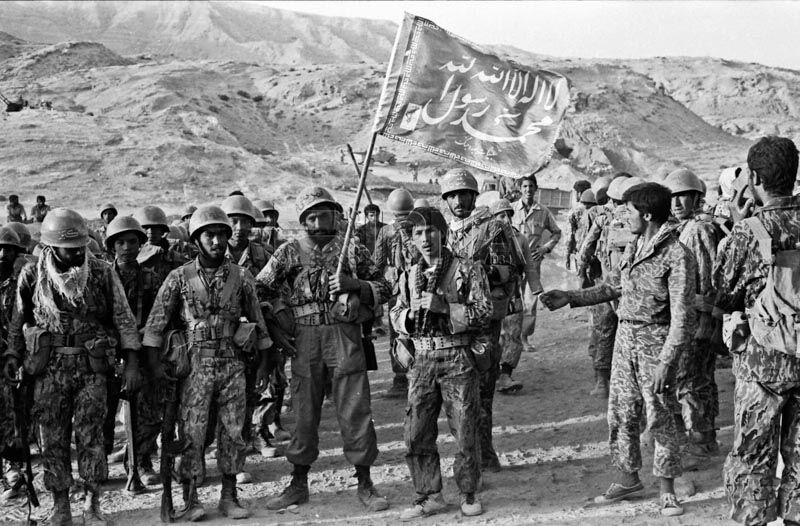
According to the reporter of Iran Book News Agency (IBNA), he asked: “Are you from Khorasan, right?” He had guessed correctly, I was happy and said: “Yes.” Faruj. He looked satisfied and said: “So, you are good at dancing Kermani?” I replied: “I haven’t danced, but I have seen a lot of dancing.” He said: “Go find 4 sticks and bring them.” I went and came back with 4 sticks. I realized the instructor was from Bojnourd. The instructor gave me two sticks and took two himself and said: “Start.”
Then, like a skilled musician, he began to make the sound of the Kermani instrument with his mouth. During the stick dance, the instructor taught me which stick should be up for attack and which stick should be down for defense. With this technique, I learned attack and defense using sticks. Some time passed during our training. We had reached a satisfactory level of readiness. The instructor turned to me and said: “Listen, fellow citizen, I want to test the children’s readiness through you. You are my honor now; because you are considered my fellow townsman. If you get beaten by the children, I will treat you again with several times the beating myself. So pay attention.”
These sentences are part of the memories of veteran Mohammad Attaran which are published in the book “First of all” with an interview and editing by Elham Sabahi in Soreh Mehr Publications.
The first chapter recounts the narrator’s childhood and family in Faruj, beginning with his mother’s death, followed by events within the family, and then an event that captures the atmosphere of those days: “It was the summer of 1978. Dad came home in a hurry. He told Uncle Ali Akbar: ‘Turn on your car immediately, they killed Haj Agha Kafi near Quchan.'”
Uncle Ali Akbar had a white Volkswagen car. He lived with his aunt in the three end houses. They had four daughters, and for this reason, they built a wall between the yard to maintain modesty between the female cousins and male cousins. Dad was so anxious that when I said I would come too, he didn’t notice and didn’t say anything about getting in. I didn’t wait for an answer, eager for a car ride, and quickly went to see Haj Agha Kafi – whose voice I had heard so much. Dad sometimes cried and talked to my uncle that the government was not happy with Haj Agha. His last speech had said: ‘Do not leave Imam Khomeini alone.’ As we reached Alimajq village, on a relatively steep slope, a large crowd had gathered around the crash site. I pushed myself through the crowd to the front. I saw a crumpled white Peugeot.”
Nearing 6 thousand forces being deployed to the region
Mohammad Attaran is one of those energetic boys who tries hard to be dispatched to the front and goes through many adventures to go to the front with some of his fellow townsmen. In August 1982, he finally begins a special experience: “Ismail and I ordered kebab koobideh. I was careful not to let the food move on the table or fall to the ground. Then I found the train toilet; to see how a person can do their business while moving. When we went from one wagon to another, we could see the ground and the railway track under the tray between the two wagons. I went back and forth so much that I could easily jump over it. It had become a good pastime for Ismail and me. They said this was the largest deployment of forces from Khorasan to the southern front. I think 6 trains – each with several wagons – were lined up one after another. To see the end of the trains on the winding paths of the west, we pressed our heads against the window. I calculated to myself that if each train had a thousand forces, nearly 6 thousand forces were being deployed to the region.”





