In judging literary awards, attention should be paid to works that have remained in the shadows
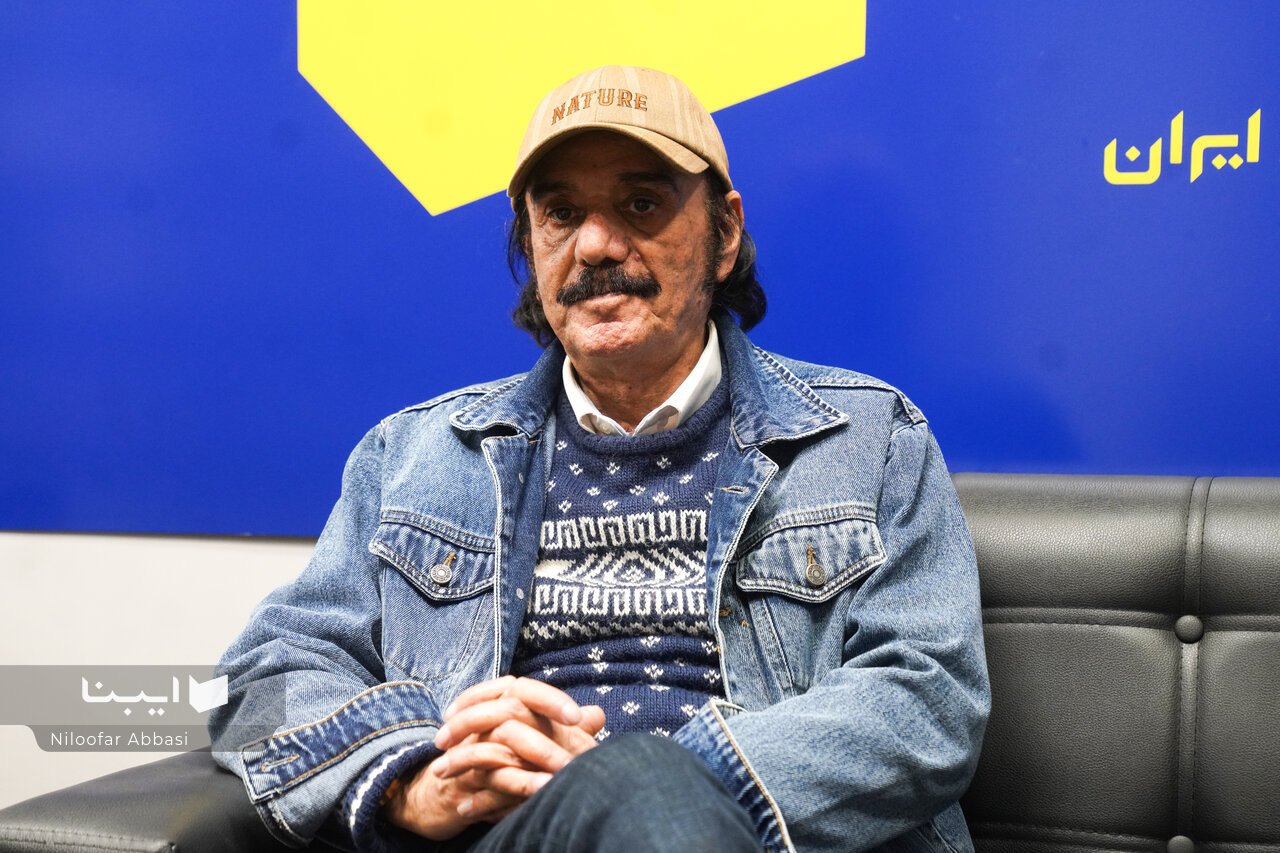
Literature service of the Iran Book News Agency (IBNA) – Ali Shorougi: Literary awards are among the most controversial topics in the field of Iranian fiction literature. Every award always brings with it joy and displeasure, praise and criticism regarding the judging process.
Ahmad Aram is a writer who has experience judging various literary awards. This provided an opportunity to interview him about the challenges of literary awards and their role in Iranian fiction writing. In the upcoming interview, Aram discusses the dual role of literary awards, stating that they can both be helpful and harmful, depending on the judging method.
Fiction writing, the crisis of Iranian fiction publishing, and the current state of Iranian fictional literature are other topics addressed in this interview.
A novel by Ahmad Aram titled “The Night Ento Became Acquainted with His Pain” was published this year by Ofoq publishing house. The novel’s subject is the coronavirus pandemic, which Aram wrote during the outbreak. In this interview, we also asked him about this novel.
Aram holds a degree in dramatic arts and has a serious familiarity with painting and cinema in addition to theater. In one part of this interview, he speaks about the influence that various arts have had on his writing.
Here is the interview with Ahmad Aram:
You have experience judging various literary awards. There are always criticisms, complaints, and discussions about the judging process of awards. Based on your experience in judging awards, what challenges have you faced in the evaluation process? Is there a solution to minimize these criticisms? In your opinion, what is the major problem with literary awards, and do they help or harm fictional literature more?
Literary awards both help and harm; they help when the selection of judges is logical and professional. In all European and Western countries, literary awards have been and continue to be an important pillar in the life of literature. Looking at reputable international awards, their impact is clear. However, in Iran, this process lost its way in the 1990s. In that decade, literary awards became numerous, and in my opinion, that decade somewhat harmed literature, because books were selected and introduced that were mediocre at best, yet received the title of “best.” If Iranian fiction is read less today and audiences have become distrustful of it, I believe the root goes back to that period. A reader who loved Iranian fiction, when they bought a selected book and saw it was mediocre, gradually changed their view of Iranian fictional literature.
In the 1990s, we witnessed books that won awards, but today even their names are forgotten. This means good judging did not take place.
In your opinion, what makes a good fiction judge?
A judge who understands both realistic literature and has knowledge of modern literature. But sometimes the composition of the judges is completely traditional, and their taste only favors realism; as a result, many modern works are sidelined and fade into the shadows. I have always been sensitive to this issue because I myself have been hurt by some awards. Wherever I judged, I tried to bring back to the scene books that had been overlooked. I did this in the “Haft Eqlim” award.
For example, regarding the book “Guide to Dying with Medicinal Herbs” by Atiyeh Attarzadeh, when I compared it with “The Blind Musician” by Vladimir Korolenko, I realized that the character depicted as blind and so powerful derived this strength from the geography of Iran, not Russia. At that time, I asked why such a book should not be introduced?! Because I knew it would be ignored. It was overlooked in that judging, but I and a few others decided that this work should be seen. I think this book received other awards later on.
I value literary awards, but on the condition that they follow their real path and the composition of judges does not have personal animosity towards traditional, realistic, or modern literature. When modern literature comes into play, some instinctively take a stance against it, saying it is complicated or hard to understand, while ignoring that if a novel is complex, it has its own identity and has not imitated from elsewhere.
Usually, motivating young writers is considered one of the positive features of literary awards. But a group also believes that giving an award, especially for a writer’s first work, quickly instills the belief that their work has reached a relative perfection and they don’t need to work more. That is, it might cause the writer to stall in their first works. Does such a thing really happen, and is this criticism valid?
Yes, it has happened often. A writer publishes their first book, wins an award, and is praised, thinking they have said the final word there and no need to continue; whereas I believe every writer must move ahead of their time. If they don’t, they will unconsciously repeat themselves. Many writers experience fear after initial success; how to write the next work, or whether they will win an award again or not. This worry is sometimes what prevents writing. There are people whose first book wins an award and then they disappear. They are afraid of what will happen to their next work. This fear is destructive.
Do you think this stagnation is inevitable or does it depend on how the writer manages themselves?
In my opinion, it completely depends on the writer themselves. Some just want to be seen. Being seen is not difficult; one can be seen in any profession. But literature is another matter. When we go back to the works of those who won awards for their first book, we see weaknesses in the structure of their language.
What do you think are the essential qualities a writer should possess?
Literature is a space where when you enter it, you must have a strong memory, be ahead of your time, and stay current. Staying current means avoiding repetition. In the ten to twenty books I have written, I have tried to ensure each novel or short story collection has its own specific language. If this is not the case, the work might not be seen. I don’t know how successful I’ve been, but in any case, this is part of my writing strategy.
Given that you follow today’s Iranian fictional literature, have you found anything in the stories of new writers that caught your eye and that you would like to discuss as a strength of today’s fictional literature?
In recent years, I have read new books from the young generation; mostly those born in the 1970s and late 1980s. When I read their work, I see how correctly they have understood language. When an action occurs in the story, they instinctively create a frame for it; that is, the event remains in view and does not fade away. In many works of famous writers, there is an event but it passes ineffectively and does not stay in mind. In the work of young people, this is not the case; especially in the works of female writers. I read a few works that were truly impressive. Because anyone who is close to the pain of their time understands that pain, puts it in an appropriate frame, and presents it to the audience.
So you believe that good Iranian stories are being written and published in Iran today? Because many publishers don’t even go for Iranian fiction now, saying it doesn’t sell.
That’s right; our situation is more complex than a shortage in production. In Europe or Western countries, when a good short story collection is presented to a publisher, selection is based on quality and literary standing, not merely market trends. But in Iran, publishers’ behavior often fluctuates: one year novels are in demand, and the next year they prefer short story collections, or vice versa. This fluctuation indicates a structural disease in the publishing market that has not yet been cured.
Part of the problem consists of small publishers and non-standard publishing methods; some of these publishers print books by charging a fee, and then the publisher disappears, or proper support and distribution are not provided. This behavior has made readers sensitive and distrustful of Iranian books. Simultaneously, translations have taken the place of Iranian books. Part of this phenomenon stems from the commercial nature of publishing. In publishing, like cinema, the focus on the box office dominates, and not every publisher can or wants to accept the risk of printing a new writer’s book.
However, risk-taking in this area is not problematic if the work is analyzed and expert-reviewed properly. It is necessary for innovative works and works by young writers to be carefully examined, a target market and distribution strategy designed for them, and for the publisher to accept long-term responsibility for introducing the work. Otherwise, even if good stories are written and published, they will not be seen due to the flawed market structure and short-term publishing decisions.
Do you only consider publishing to be the cause of this phenomenon, or do you think the writer is also involved?
The writer is also involved in this issue. A writer who writes for 10 to 20 years, if they write properly, does not lose their audience. Why? Because the audience finds their favorite style and genre and wants to follow it. I have seen in online classes that young people are receptive to new and modern works. As far as I know and am in touch with readers, readers are always loyal to these books. This connection also has nothing to do with the complexity of the work. Complex literature can also communicate with a young audience.
Reaching a complex and modern work requires strong literary assets and extensive reading. This shows that young people have correctly found their path. I clearly see this in the works of young writers and find it interesting.
However, some writers do not read young people’s books, and this is very bad. It really is bad. When I read the work of a young person born in the 70s or 80s, I learn from it, and I am not afraid to admit it. Contemporary literature is based on give and take; the more good things we give, the more good things we receive.
This year, your novel “The Night Ento Became Acquainted with His Pain” about the coronavirus was published. Can you tell us about the process of writing this novel?
This book had no specific plot at all, and I was not ready to write such a novel. This is my only novel that was written in two months and was an interesting experience for me. The time of writing was during the coronavirus period; I myself was caught up in these conditions and was hospitalized at home. When I felt better, I suddenly realized that I had lost some of my good friends in Tehran – actors, filmmakers, etc. – in one day. Their numbers were still on my phone, but no one answered anymore.
This experience suddenly gave me an idea: that during Corona, people gained a deeper understanding of themselves. Passing through death and limitations caused everyone to better understand who they are and what they want. In this novel, Misha and Ento are a couple, and the story revolves around them. They are trapped in a residential complex during Corona and cannot leave the house, but they communicate via balconies; they start reading texts and send messages via WhatsApp for everyone to read their own text.
In this text reading that starts from the balconies, strange events and actions emerge from inside the houses. Misha and Ento represent people who constantly argued with each other but suddenly realize how much they understand each other. They find the best opportunity to talk about past infidelities and conclude that when we talk about our infidelities, we are no longer liars.
This novel is in the post-apocalyptic genre; it is related to conditions within Iran and also incorporates reports from around the world into the narrative. For example, during Corona, reports were published from Latin America about people dying from Corona, and after a while, rabbits emerged from their graves. This event also enters my novel in a surrealistic form: noises come from the ceiling at night, and rabbits fall from the ceiling. This situation forces the residents of the complex to leave home, and at that moment, the massacre of rabbits for food in the complex creates strange visual images in the narrative.
Event after event occurs in this novel, but the reader cannot guess what will happen on the next page. Drones appear and suddenly drop books onto the balconies and into the complex, and houses become full of books, and these books again carry a message, and everyone tries to find their way based on those books.
In addition to writing, you also work in theater, painting, and cinema and have a serious familiarity with those arts. What effect has this familiarity had on your writing style?
Theater taught me that character is built through dialogue and that people in life and on stage all have mise-en-scène. My works always have mise-en-scène. I have always tried for the dialogues to be lasting, not disposable. Painting also taught me the effect of light and color. When you look at a large painting, you understand what impact light has, and I have brought this experience into the narrative of my stories.
Cinema gave me perspective and depth. I always said that “Citizen Kane” was my best teacher; someone standing at the back of the stage has a different feeling than someone in front. I learned this point from cinema and have observed it in my stories. Music also taught me the rhythm of the narrative; the tempo of sentences in my stories is taken from music.





