Letter to Pouri Soltani about Kamran Fani
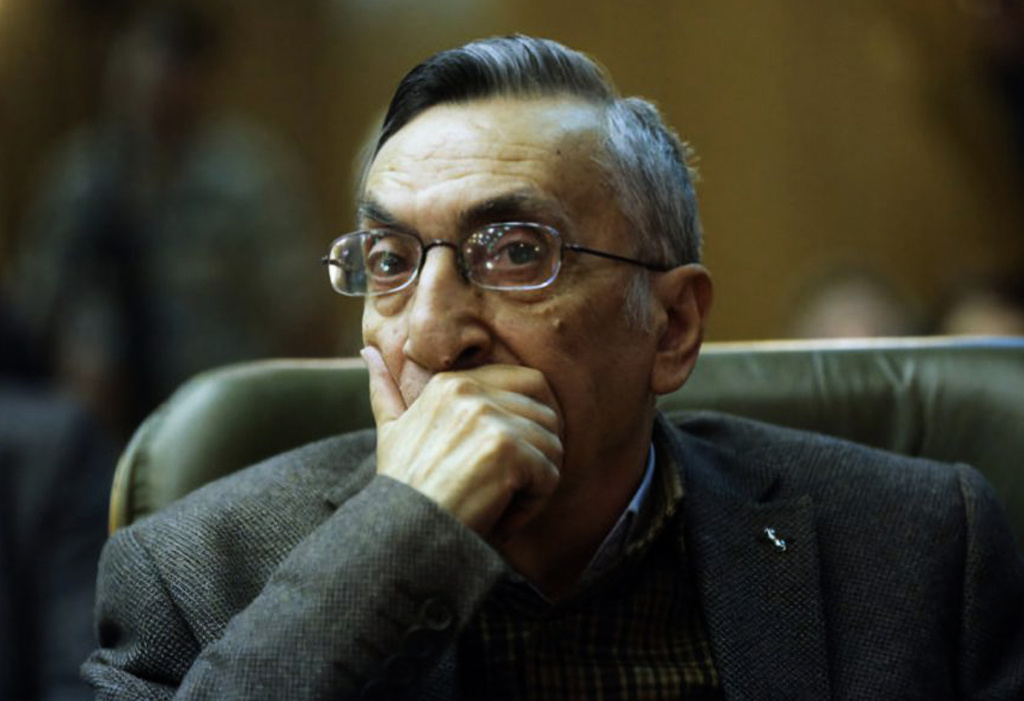
Iran Book News Agency (IBNA) – Mohammad Tabatabai; writer and journalist: This is a letter to the late Pouri Soltani, the mother of modern Iranian library science, who was a colleague and friend of the late Kamran Fani for nearly 50 years. When the news of Professor Kamran Fani’s passing was announced, the image of their collaboration in the Center for Library Services and the National Library came to my mind. This letter is a short narration of that image.
Dear Ms. Soltani, Dear Pouri Khanom, Did you see? Kamran Fani also left us and this world. He left us and came to you. As Mr. [Ali] Dehbashi said yesterday, Kamran Fani went to join Dariush Shayegan, Abdollah Anvar, Pouri Soltani, and the others. Perhaps Mr. Fani’s death, which is not good news for us, is not so bad for you. Your colleague of many years, whom you hadn’t heard from in 10 years, has come to you. Yes, Kamran Fani came to you, he who called you “esteemed professor” and was proud of his half-century of acquaintance, collaboration, and friendship with you.
Do you remember? On the night that Bukhara magazine held in your honor, how humorously Kamran Fani started his speech? He said it was the first time he had written his speech, but even this time, Ali Dehbashi had printed the text of his speech before him, and then, with more humor, he turned to the audience in the hall and said: “But listen because I wrote it well.”
He was right, he had written well. He had written well in calling you the cultural figure of the time, he had written well in describing his acquaintance with you as the biggest cultural event of his life, he had written well in considering close collaboration with you as his great fortune. He had written well because Kamran Fani always wrote well.
You know, Pouri Khanom, honestly, I think a person has to be lucky. Being lucky is an important part of a person’s happiness. As my mother used to say, God must look upon someone for them to become lucky. Kamran Fani was certainly one of those people. Kamran Fani was lucky that in 1971, after completing his studies in Persian Literature at the University of Tehran and at the beginning of his postgraduate studies in library and information science, he met you. He was lucky that at that time Abdolrahim Ahmadi, the deputy director of the Institute for Scientific and Educational Research and Planning, introduced him to you so that he could start working at the Center for Library Services, which had just been established then. And of course, he was worthy. He was worthy that after your first meeting with him, you contacted Mr. Jafari and told him not to introduce him elsewhere because he was very worthy and the library center desperately needed him. Do you remember? You yourself used to say, “I was so captivated by Kamran Fani’s personality that I immediately called.” And after a short period of time at the library center, all his colleagues were captivated by his personality, who, according to you, “was pure-hearted, educated, modest, and sincere.”
But Pouri Khanom, after you left, the neat and clean writer and book-understanding man of our time who had become close to you seemed lonely. It’s not a matter of a day or two; you were colleagues for nearly 50 years. As Kamran Fani himself said, for a long time you worked together in the same room. At the beginning of your work, perhaps it was teacher and student, but after a while, you became colleagues. You yourself used to say that “even in his youth, Kamran Fani’s range of knowledge was so extensive that it impressed everyone, and the nickname ‘moving encyclopedia’ was quickly bestowed upon him by his colleagues.” After all, according to him, “he was interested in all earthly and heavenly matters, terrestrial or celestial, and there was hardly any subject that did not attract his attention.” And according to you, “This was truly the case. In physics and mathematics, in philosophy, in history, in pure sciences and natural sciences, in humanities, in music in general and classical music in particular, in literature, in linguistics, in space sciences, in all things, he was an expert and well-rounded.”
Dear Ms. Soltani, perhaps he won’t tell you himself that Kamran Fani in recent years mostly sat in a corner reading and reading and reading books. I don’t know if in these recent years, like before, when, according to you, “he read quickly, as if photographing the pages of the book with his eyes and committing them to memory,” he still read quickly, or if he lacked the ability to read fast because he had become so lifeless. I don’t even know if his memory remained strong like in the past, when he didn’t forget what he read, or not. What I do know is his self-imposed loneliness in these years. But when the news of his illness was announced, even his self-imposed loneliness was taken away from him.
Dear Pouri Khanom, dear mother of modern Iranian library science and all librarians, I know, as soon as he arrives with you, you will greet him with your usual smile, and then proudly introduce him to your husband, Morteza Keyvan. For example, perhaps you will say, “Dear Morteza, Kamran Fani is the one whose name we gave ‘encyclopedia’.” Perhaps you will say, “Dear Morteza, Kamran Fani is the one I told you was very similar to you because he spent his time correcting the work of others.” Perhaps you will say, “Morteza, Kamran Fani was my colleague for nearly 50 years.” And Kamran Fani, happy to see Morteza Keyvan, will say: “Mr. Keyvan, Ms. Soltani was not just a mother and teacher of library science for us, she taught us how to live with love because she faithfully stood by the love she had for you.”
And I will remember, if I decide to rewrite the play “Uncle Ghich Ghichi,” which is a portrait of your love and Morteza Keyvan’s, to mention Kamran Fani in it as well.





