Kamran Fani and his silent but effective movement in science, thought, and culture of Iran / A lifetime dedicated to organizing Iran’s scientific memory
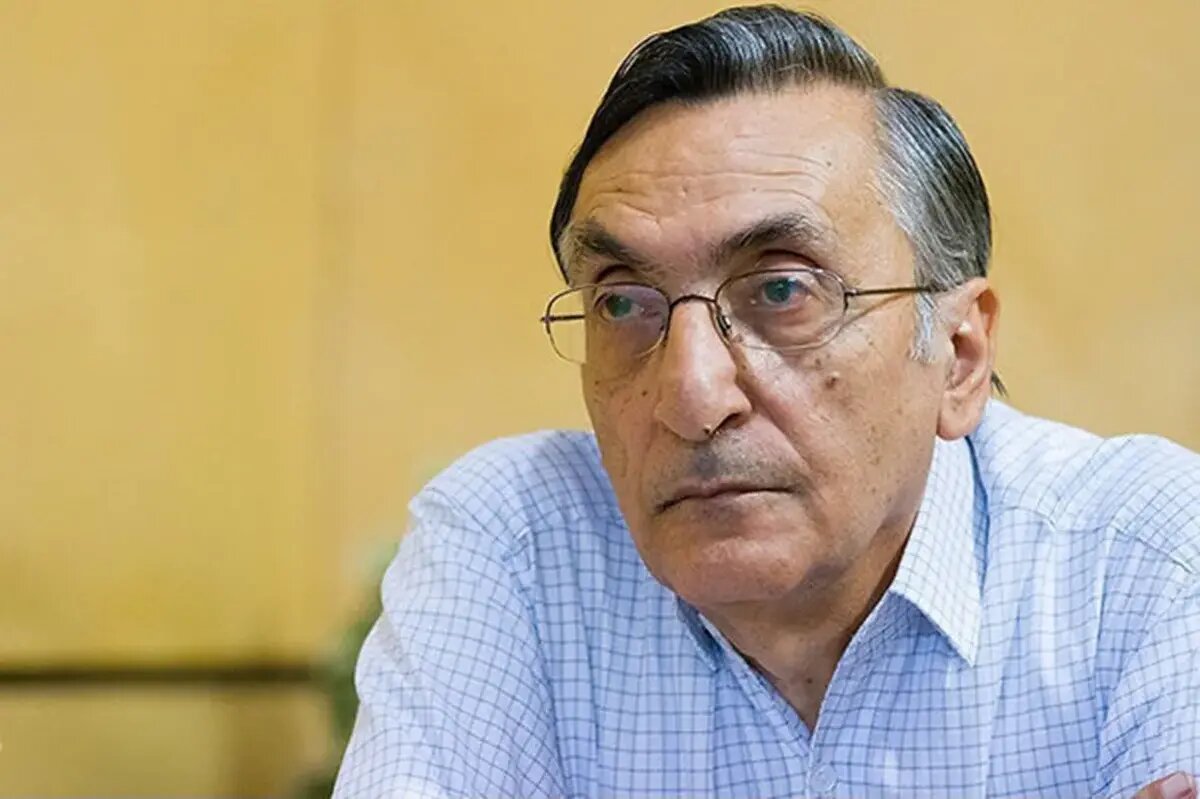
Group Thought: His breadth and depth of knowledge were so vast that it seemed as if he had renewed the lives of the great scholars (Allamehs) despite the complexity of modern science. The passing of Kamran Fani, a prominent Iranian literary scholar, bibliographer, lexicographer, and translator at the age of 81, prompted the Iran newspaper’s book page to dedicate two separate articles, one by Maryam Shahbazi and the other by Farid Moradi, to explore different aspects of this powerful thinker and analyze his fruitful cultural life.
In the first article, Maryam Shahbazi discusses Fani’s innate fascination with books. Shahbazi recounts that Fani attributed his strong interest in books, in a family where no one else was interested in reading, to a “book gene.” If today’s youth knew what university major Fani was accepted into and what field he continued studying in, they would undoubtedly be surprised. Shahbazi explains that Fani initially studied medicine at Tehran University but abandoned it due to his attachment to books, turning instead to Persian literature and bibliography. This love led Fani to play a foundational role in modern bibliography. Fani began his professional career at the National Library of Iran in 1980, serving as one of the pioneers of modern bibliography and playing a central role in foundational projects like the classification of Iranian history and Islamic philosophy. He also contributed effectively to the compilation and advancement of major national cultural reference projects such as the “Encyclopedia of Shi’a” and “Danashnameh Daneshgostar.” Despite his skill in translation, Fani deliberately prioritized foundational and infrastructural work over individual productions and fame; humility, professional ethics, and commitment to preserving ideas were among his prominent characteristics.
In the second article, Farid Moradi, a writer and researcher in the publishing field, discusses Kamran Fani as a late Iranian literary scholar, bibliographer, and lexicographer. The author emphasizes his silent, profound, and lasting presence in the foundation of contemporary Iranian culture. He believes that Kamran Fani considered bibliography not merely a specialization but “a special way of living with books.” He worked for years at the National Library of Iran, dedicating himself to fundamental, root-based, and infrastructural research rather than seeking fame. His footprint can be seen in the entries, edits, and meticulous reviews of most encyclopedias and fundamental reference works of the last forty years in Iran (such as Danashnameh Daneshgostar). He preferred that the cultural work progress, even if his name wasn’t recorded. The author considers Fani a treasure trove of memories from half a century of Iranian culture, much of which unfortunately was not documented. He expresses hope that Fani’s numerous notes and manuscripts will be collected and reviewed so that the new generation can become familiar with his research method, scientific precision, and professional ethics, preventing Iran from suffering the chronic harm of forgetting cultural figures. These two notes follow:
Maryam Shahbazi: He consciously kept his name on the sidelines of major reference projects
“I became fascinated with books from childhood. I don’t know the exact reason; why in a family where others had minimal interest in books, I alone had such an attachment! It’s possible that a ‘book gene’ truly exists. This gene manifests itself in some individuals, becomes apparent, and then society and individual efforts help further cultivate it. Nevertheless, I still don’t know why my fascination with reading exists more than in others. One reason is that reading adds to our knowledge, and a book is essentially a tool for this task; a tool for recording knowledge that preserves thought from the ravages of time.”
Kamran Fani spoke these words on the evening of March 1, 2016, during his commemoration ceremony; sentences that were not only a personal description of his relationship with books but also the summary of a cultural life spanning several decades. A life that began with books in childhood and continued until his final years; uninterrupted, unpretentious, and mostly far from the hustle and bustle of fame and flashy titles.
Kamran Fani, literary scholar, bibliographer, lexicographer, translator, and influential figure in contemporary Iranian culture, finally passed away at age 81 after months of struggling with Alzheimer’s and problems due to old age. His name is tied not so much to a specific book or title, but to books as a cultural and social matter; to the extent that some of his friends and contemporaries called him “Mr. Book.”
Kamran Fani was born on April 14, 1944, in Qazvin, and his life became intertwined with books from adolescence. His first experience in bibliography dates back to high school; when he organized the school library and undertook its cataloging work. This early attachment gradually changed his academic and professional path as well. He first entered the Faculty of Medicine at Tehran University but realized after two years that his true interest lay elsewhere. He abandoned medicine and turned to Persian language and literature, and then bibliography; a choice that later led to one of the effective paths in shaping modern bibliography in Iran.
Fani’s education benefited from the presence of professors such as Abdolhossein Zarrinkoub, Badiozzaman Forouzanfar, Zabihollah Safa, and Parviz Khanlari. Simultaneously, being classmates with figures like Baha’eddin Khorramshahi, Saeid Hamidian, and Hassan Anousheh placed him at the center of an influential and productive cultural generation; a generation that later advanced many of the country’s reference projects.
Fani received his Master’s degree in Library and Information Science in 1973 and began his professional career at the National Library of Iran in 1980; at the National Library, in addition to being a faculty member, he served as a consultant to the presidency and a member of the Supreme Advisory Council, playing a central role in designing and implementing foundational projects and acting as one of the pioneers of modern bibliography in Iran; especially in the field of classification and knowledge organization. “Classification of Iranian History” and “Classification of Islamic Philosophy” are among the most important examples of these efforts; time-consuming and meticulous works that form the foundation of the country’s scientific and cultural memory.
Concurrent with these activities, Fani played an effective role in compiling and advancing cultural reference projects; including “Encyclopedia of Shi’a,” “Danashnameh Daneshgostar,” “Encyclopedia for Children and Young Adults,” and “Thematic Dictionary of the Quran.” In these works, he sometimes took on the responsibility of supervision, sometimes editing, and in some cases, direct contribution to authorship. Although Fani was a skillful translator, translating works such as Dostoyevsky’s “Pushkin’s Discourse,” Bernal’s “Science in History,” and Günter Grass’s “Cat and Mouse” into Persian, he preferred to dedicate his energy and time to fundamental and infrastructural research in later years.
He had repeatedly said that he preferred infrastructural works over any individual production; this perspective meant that despite his wealth of knowledge and experience, the number of books published under his name remained limited. Humility, professional ethics, and a sense of social responsibility were prominent features of Fani’s personality. He did not view his knowledge as a personal accumulation but considered it public capital that should be made available to others, especially younger generations. Perhaps for this reason, his footprint can be seen in many reference works of the last four decades of Iranian culture; a silent yet lasting presence.
Kamran Fani’s life, like his words about books, testified to the belief that thought, if not recorded and transmitted, deteriorates. He spent his life recording, organizing, and perpetuating ideas; even if his own name consciously remained on the sidelines.
Farid Moradi: The humble servant of culture
Kamran Fani was one of those figures who were present in contemporary Iranian culture silently, yet with a deep and lasting impact. A man whose name was perhaps heard less than the weight of his work, but whose footprint can be seen in many fundamental projects of the last four decades; in many encyclopedias, dictionaries, and reference works that have formed the foundation of today’s scientific and cultural research in Iran. Fani was born in Qazvin in April 1944, started his university education in medicine and continued it for two years, but soon realized his professional life would follow another path.
His deep love and interest in books and culture led him from medicine to studying Persian language and literature at Tehran University and later to bibliography; a choice that placed him on a path less noisy but more effective than fame and wealth. For him, bibliography was not just a specialization, but a special form of “living with books.”
He worked for many years at the National Library of Iran and became a companion and co-founder of remarkable projects that are considered part of the country’s research heritage today. Fani was less inclined towards administrative work or formal affairs; he was a researcher who, wherever fundamental and meticulous work was needed, would participate without any pretense. Fani was not one of those people who register projects in their own name; he preferred the work to progress, even if his name wasn’t seen anywhere. Fani’s footprint can be found in most of the fundamental reference works of the last forty years; from encyclopedias and dictionaries like “Danashnameh Daneshgostar” to major projects in information science, history, and literature.
In many of these works, effective and definitive entries, edits, or reviews exist that are the result of his precision, scientific meticulousness, and extensive knowledge. If these entries and the contribution he made to initiating and completing them were gathered in one place, perhaps a clearer picture of the actual volume of his work and countless services would emerge.
He dedicated himself to fundamental research
Although he was a capable translator and had done meticulous translations from English, he set translation aside and dedicated himself to fundamental research. I think he concluded that Iranian culture needed fundamental, lasting, and unpretentious works more than flashy books; works that don’t bring fame but build infrastructure.
One of Kamran Fani’s most important characteristics was his unprecedented humility. Despite possessing vast knowledge in various fields, from history and literature to bibliography and even Quranic studies, he never showed off. He neither spoke about his knowledge nor was he interested in highlighting his own role. Nevertheless, anyone facing a problem in research, books, or studies who approached Fani would receive his full and selfless support.
We friends were also recipients of this support; let me mention a personal experience: when I intended to sell my personal library to the Iranology Foundation, I faced obstacles and disruptions. Kamran Fani immediately intervened in the matter. He defended with clarity and logic that the result of a researcher’s life should not be scattered and that books should go where they can be useful to researchers. This spirit of support and defense of cultural work was an inseparable part of his personality.
Fani was an extremely hardworking person. In a single day, you might meet him in several different research centers; early in the morning in one place, before noon in another institution, and in the evening at a research meeting or even a friendly but cultural gathering. However, he never worked hastily or superficially. His connection to books was a permanent one. Surprisingly, he was always reading, and a strange and sincere passion could be seen in his demeanor upon discovering a new point or encountering a new text; a passion that, despite his dignity and simplicity, was clearly discernible and shared with his friends and colleagues.
A treasure trove of cultural memories
Perhaps some might attribute Fani’s multifaceted nature to his education and benefiting from mentors like Abdolhossein Zarrinkoub, Zabihollah Safa, Parviz Natel Khanlari, Badiozzaman Forouzanfar, and Jalaluddin Homai. Although one cannot deny the influential perspective and teachings of these great figures on him, I believe Fani’s multifaceted nature is more a result of his research life than his education. He undoubtedly benefited from great mentors, but the majority of his knowledge came from continuous study, meticulous examination of texts, and active interaction with various sources. His command of the English language provided widespread access to scientific sources, and this continuously enriched his knowledge.
In the years before the revolution, he had close ties with figures like Baha’eddin Khorramshahi and Gholamhossein Saedi and was actively present in the lively and dynamic cultural scene of that era for years. Of course, his close friendship with Professor Khorramshahi continued until recently. Fani was a treasure trove of memories from half a century of Iranian culture; memories, much of which unfortunately was not said or written down. It’s a pity that such a memory of cultural history was not systematically recorded and published.
However, my guess is that a significant number of notes and manuscripts have likely remained from him. A researcher with that volume of study and precision cannot have lived without note-taking and journaling. Although these notes may be scattered, unorganized, and personal, if collected and reviewed carefully, they can be a valuable resource for young researchers; both in terms of content and research methodology. One of the chronic problems of Iranian society is the rapid forgetting of cultural figures. After some time, legacies are abandoned, and projects remain unfinished. If work is done on the documents, writings, and remaining works of figures like Fani, not only will their legacy be preserved, but the new generation can also become familiar with their research method, scientific precision, and professional ethics.
Kamran Fani may not have published voluminous books under his own name, but he has a serious and lasting presence in the foundation of contemporary Iranian culture forever. He was one of those researchers whose work remains more than their name. And this, perhaps, is the most honorable form of presence in culture. My acquaintance with Kamran Fani dates back to the 1980s, and our connection deepened from the mid-80s; especially in the 2000s when collaborations and interactions increased. Throughout all these years, what did not change was his honesty, humility, and uninterrupted commitment to cultural work. Unfortunately, in the final years of his life, memory weakness gradually distanced him from daily activities; an unintended isolation that marked a bitter part of his final years.





