Coordination of Customs, Central Bank, and Guild Associations is the Key to the Paper Issue
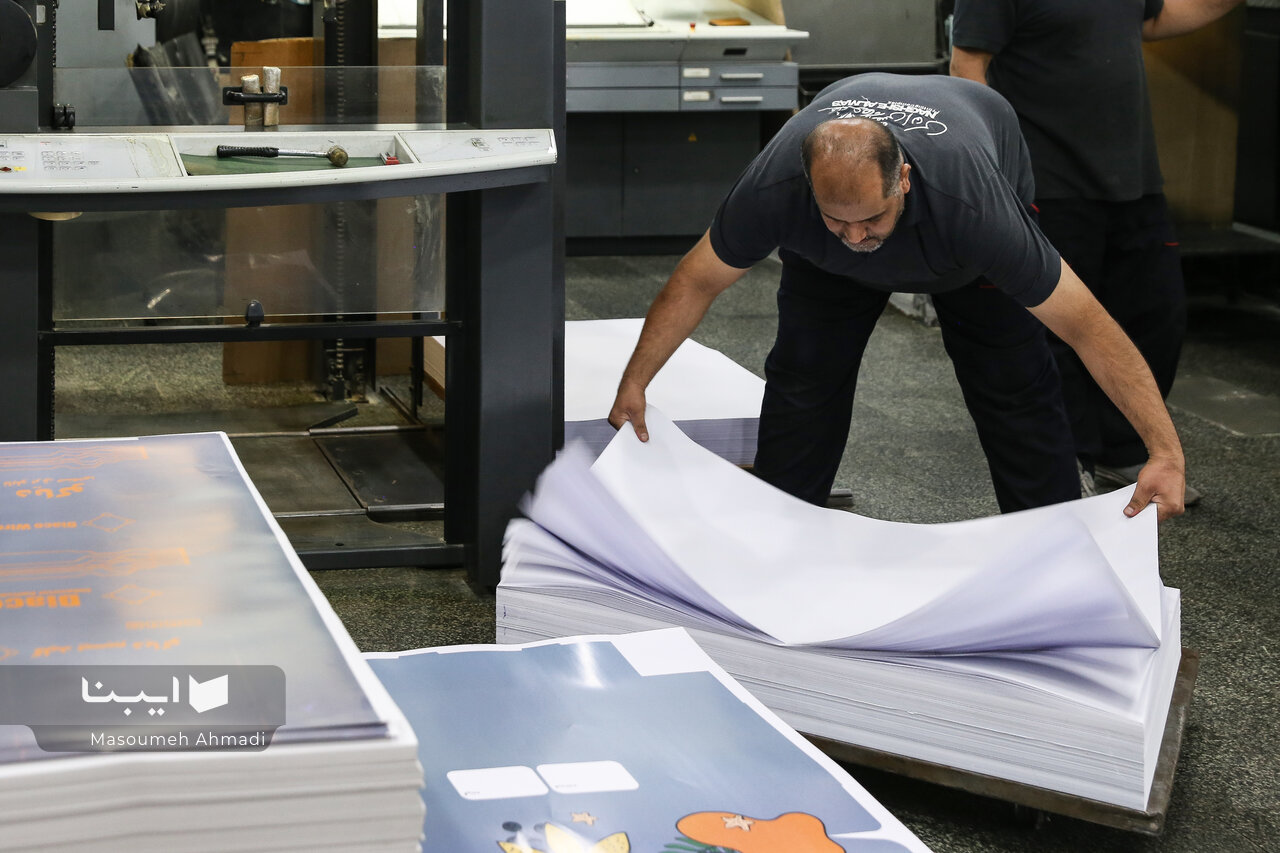
Afshin Ghanbari Monfared, an activist in the printing sector, in an interview with the reporter of Iran Book News Agency (IBNA), referring to the current market situation for paper and cardboard, said: In recent days, the shortage of paper and cardboard has faced the printing industry and its associated industries with a serious challenge; a problem that has both slowed down production and affected prices.
He continued: Currently, the printing industry is facing a severe shortage of paper and cardboard. This shortage has not only affected printing houses but has also disrupted a chain of industries such as binding, box making, envelope making, and even post-printing services. I can say that many units have either reduced their activities or have completely stopped.
Ghanbari, referring to the main cause of this crisis, added: Several factors together have created the current situation; the first issue is the refusal of some importers to supply goods due to concerns about the increase in dollar and euro exchange rates. The second point is the difference between preferential currency and free market currency. Goods were imported with preferential currency, but now for clearance, Customs and the Central Bank are demanding calculation based on the free market currency.
He stated that this difference has caused a large volume of paper and cardboard to accumulate at customs and not enter the market, saying: This set of factors has led the market towards shortage and instability.
Ghanbari, referring to the consequences of this situation for activists in the printing and publishing industry, explained: These consequences are completely direct and serious; stoppage or reduction of production in printing houses and downstream industries, increased finished price of printed and packaged products, creation of severe market instability and the possibility of rent-seeking, and a threat to employment and the economic future of many small and medium-sized units are some of them.
According to this activist in the printing and publishing sector, when raw materials are not available, the entire production cycle stops. Today, due to extensive connections with activists in the printing industry, we are involved in this issue in the industry and clearly see its results and effects.
Regarding solutions to overcome this crisis, he said: I believe the solution is clear and completely implementable; immediate coordination between Customs, the Central Bank, and guild associations for goods clearance, taking into account the preferential currency, preventing further accumulation of shipments at customs, precise supervision over the pricing of imported paper and cardboard after clearance, and providing conditions for immediate supply and fair distribution in the market can help improve the situation.
Ghanbari, stating that if these measures are carried out consistently, the crisis can be controlled in a short period, said: The printing industry is one of the main foundations of the country’s culture, economy, and packaging. The continuation of this situation could lead to the cessation of activities for many activists in this field. Rapid resolution of the paper and cardboard clearance issue is essential for preserving employment and preventing price increases. In this path, we hope that the respected officials will pave the way for fair clearance and supply of these raw materials with immediate and coordinated decisions.