From Sky to Paper: Why I Took Up the Pen / Memoirs of an Air Cavalryman from Dhofar to the End of the War
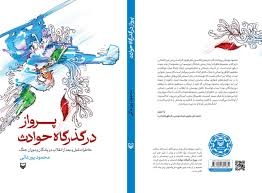
According to a reporter from the Iran Book News Agency (IBNA), the book ‘Flight Through the Passage of Events,’ which consists of Mahmoud Poorali’s memoirs from before and after the revolution in the barracks and during the war, has been published by Soureh Mehr.
Mohammad Ali Oloumi, a novelist and mythologist, writes about this personality: ‘Mahmoud Poorali is a journalist, translator, and Cobra helicopter technician. I have the honor of working on fictional literature and memoir writing. Creating a connection between emotions and moral and human concepts with war, which is inherently violent and deadly, is a very difficult task, as there is a possibility for the writer to fall into superficial emotionalism or remain within clichéd slogans. Therefore, he has successfully accomplished this important task. Mahmoud Poorali, who personally witnessed the events within the barracks, has been able to portray and express the reasons for joining the revolution in a narrative space. In one of the memoirs from this collection, the battalion commander enters the line with his flight bag and goes towards Mr. Smith, an experienced American mechanic. But Smith distances himself from him, then says ‘Sorry’ in English, turns his back, and continues his behavior, astonishing them.’
Mahmoud Poorali begins his memoirs about his motivation for writing them with such sentences: ‘When I left the Air Cavalry with all my attachments and dependencies, I didn’t think that one day I would take up a pen and write down parts of my memories. In early 1975, at 17 years old and in the first days of my youth, after seeing television images of helicopters and brave, self-sacrificing Iranian youths in the Dhofar region of Oman, and hoping to join them, I stepped into this newly established unit of the Army Aviation (Air Cavalry). I served for nearly fifteen years in Air Cavalry units as a Cobra helicopter technician and troubleshooter. In late 1988, after the end of the eight-year Sacred Defense, I was involuntarily forced to leave the army. Now, having spent more than thirty years of my life in the editorial office of ‘Ettela’at International’ newspaper, which was published for Iranians abroad, and then ‘Ettela’at’ newspaper, and having spent most of my working life in the media and journalism, and having become somewhat familiar with the importance of history and the recording of scattered events of the time, I felt it necessary to write down a part of what I had seen and experienced in this air unit in the days before and after the revolution.’
Mahmoud Poorali begins his memoirs frankly and goes back to high school, talking about his first mistake in high school: ‘I was sixteen when I chose the natural science field for my secondary education in high school. At that time, in the early 1970s, choosing a job was not very difficult. Newspapers like Ettela’at and Kayhan and magazines were full of employment advertisements for attracting labor with any educational level, available for any young job seeker. For me, the army was the best option. I would undergo a year of training, then become a salaried employee, and then get married without needing military service.’
I wasn’t a studious pupil, but I had a good relationship with reading books and novels; only textbooks didn’t attract me. For this reason, when I was cheating during the repeat exam for the fourth year of high school – which was then called the secondary education level – I faced a strong reaction from Mr. Shahsavari, the high school principal. Because I was a teenager, I thought whatever I did was right, so I turned his natural and disciplinary reaction into a confrontation. May God bless Mr. Shahsavari! He was the only university graduate in our small town and held prestige among teachers and people. He was respected, and all high school students feared him. He was a kind and compassionate person, but despite these good qualities, he was strict and his dealings with students were sharp and unpredictable.
The narrator recounts that one early autumn morning in 1982, the operations team, as usual, had taken off from Saqqez barracks, fresh and ready, to deliver provisions and ammunition to their mission point. Cobra helicopters, along with 214s, flew as cover and protection. The weather was clear, but mountainous terrains are always unpredictable.
He narrates that while passing over the peaks, suddenly one of the Cobras—the one Hussein was piloting—faced a severe loss of engine power; a dangerous sign that, at that altitude, meant nothing but a crash. The team decided to leave the mission unfinished, and all three helicopters quickly headed back to the barracks.
The narrator writes that the first helicopter to land on the sandy parade ground was Hussein’s Cobra. However, Hussein did not turn off its engines until the other two helicopters had also landed safely. Seconds after everyone landed, unit members gathered around the Cobra. Ali, the operations manager, went straight to the cockpit and took a close look at the status of the indicators and precise instruments.
Poorali recounts in his memoirs that one of the most daring and yet troublesome incidents of his service occurred one day when he and two other personnel, contrary to usual procedures and outside flight regulations, carried out an operation that they later realized how close to disaster it had been. Although the incident had a happy ending, when reports and military hierarchy came into play, everything took on a different color. He writes that on that very day, in the command building, the colonel stood before the barracks commander with suppressed anger, raising his voice while pointing to the reports: ‘Do you see, Sir? Look at this audacity! They don’t even know what foolish thing they’ve done! They shouldn’t be alive right now… According to flight regulations, they should have been killed. A Cobra helicopter would also have been destroyed. Do you know what he’s lying on? He—in that small cockpit—is lying on the Essex! On the helicopter’s computer brain! If it broke, they would have crashed right there. Because they have no sense! Now he stands straight and firm in front of me and says, ‘Do you want me to show you?’ Show me what? Your foolish act?’
The narrator writes that the barracks commander had already seen the written report from the operations commander and now stared at them with a heavy, scornful gaze. After a moment’s pause, he turned to the colonel and confirmed his words: ‘That’s right. The actions of these three are nothing but foolishness. It’s unclear why they did this. This act means death; it means the destruction of the helicopter. I wonder why they weren’t killed.’
Then he continued with a bitter sarcasm: ‘It would be better to write a letter to Bell Company in America and ask: Can three people fly a Cobra? Because we flew, and nothing happened!’ The narrator writes that at that moment, they feared neither the colonel nor the commander; what pressed them was that they knew they had done something that bordered on both daring and foolishness, and now they had to answer for it.
Poorali skillfully describes the barracks atmosphere in his memoirs, and even more interestingly, a scene where he encounters one of the barracks’ important personalities: ‘Our comings and goings from their unit were always accompanied by fear. Some of these powerful servicemen had been killed in the Dhofar battle in Oman, and their pictures were framed on the walls of the buffet. Our dormitory building was behind the Special Forces brigade, and our only way of transit was through the main street of this brigade. Sometimes we would pass in a group, and sometimes, if we had to, we would have to endure every taunt.’
One autumn day, when the leaves of the bushes and trees had turned multi-colored, I left the language class unfinished and headed towards the dormitory with the intention of leaving the barracks, which we colloquially called ‘jime fang’ (playing hooky). As I entered the main street of the Special Forces brigade, I quickened my steps to escape my fear and anxiety. At that moment, I noticed four green berets at the end of the street, carrying Uzi weapons, with one person among them, coming towards me. As they got closer and their faces became clearer, I was able to recognize General Khosrodad among them. Involuntarily, I felt a tremor in my legs. Khosrodad was short in stature, with a serious and grim face. With the fabric badges, metal medals on his uniform, golden rank on his shoulders, a peaked cap with a crescent-shaped golden wheat sheaf on the cap frame that covered his eyebrows, and powerful strides, he appeared fearful and imposing. I didn’t know what to do, I had no power of decision…’
The curiosity of other forces was aroused. When they reached the entrance of the forest park, they noticed several children standing next to their cars, pretending to be busy; one had lifted the car hood and was looking at it, another was searching for something in the trunk. Gradually, their number increased.
According to the narrator, the work was nearing its end, and there was no longer any possibility of waiting for the guard to lower the chain. He says the situation was becoming more dangerous moment by moment, and the possibility of being outsmarted was high, so they had to execute their decision. With a signal to each other, they got into the cars and headed towards the front gate. The four cars in front were driven by colleagues who were aware of the plan.
The narrator writes that there were three guards at the front gate, and they stood in front of the cars to prevent them from leaving during official hours. He says there was no time for hesitation; everyone got out of the cars and asked the guards to lower the chain. When faced with their stubbornness, with a coordinated movement, they pulled all three guards to the side of the gate, and one of the guys lowered the chain. The guards threatened to report them, but they got in and drove away.
The narrator continues that as they left, the other children also followed suit and drove after them. Moments later, everyone was in the street. The narrator’s car was a Peugeot 404 with an open roof; one of his friends, who was Kurdish—and whose name the narrator no longer remembers as he writes the memoir—was half out of the roof and shouted, ‘Death to the Shah!’ upon seeing the pedestrians. They also rolled down their windows and repeated his slogan.