Mashhad University’s Faculty of Literature Has a Global Outlook / Review of Memories of Literature Department Professors
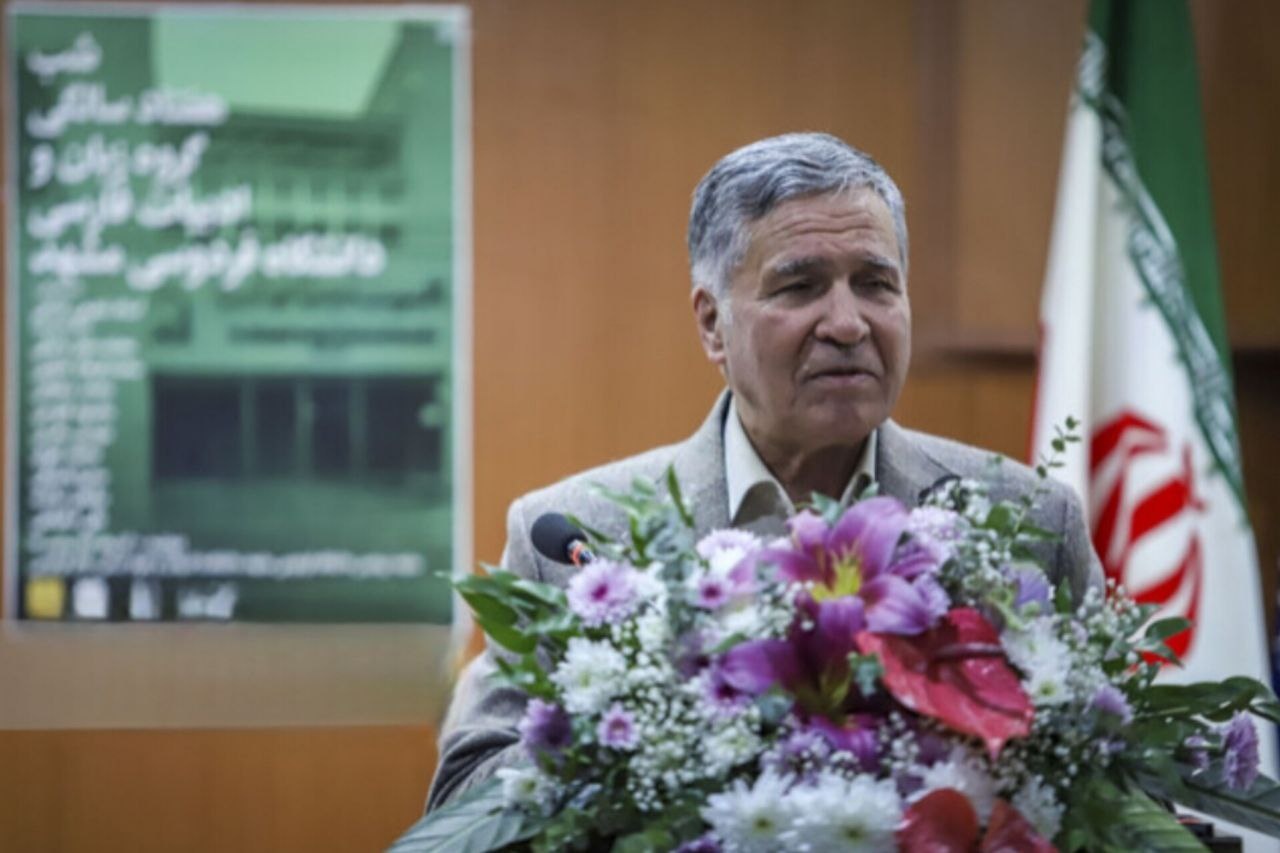
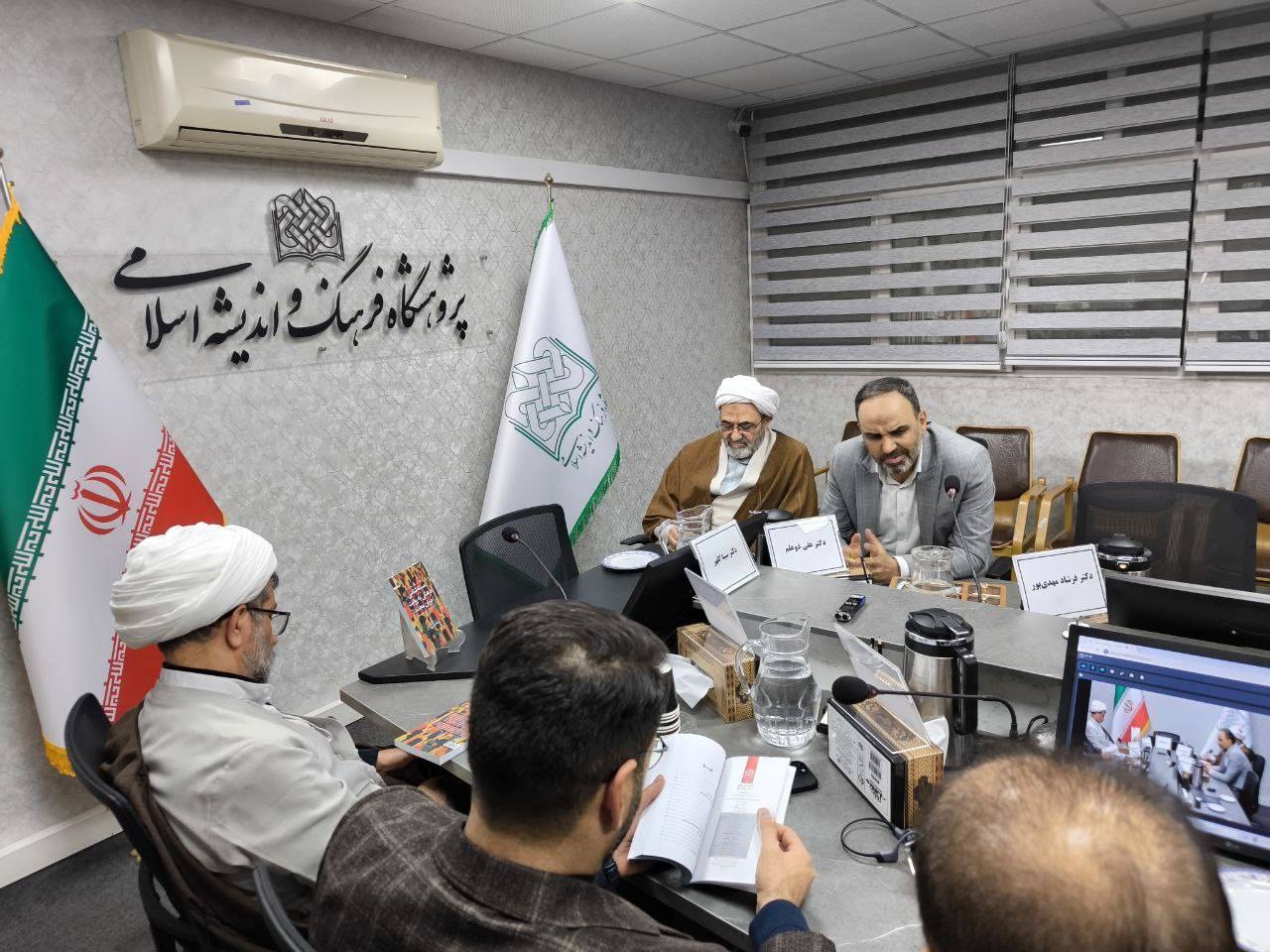
According to the Iran Book News Agency (IBNA) correspondent in Mashhad, Mohammad Jafar Yahaghi, a distinguished professor of Persian language and literature at Ferdowsi University of Mashhad, spoke at the 70th-anniversary celebration of the Persian Language and Literature Department, held on Monday evening by Bukhara Magazine at the university’s Faculty of Literature. He stated that Ali Akbar Fayyaz was the founder of the Faculty of Literature and Theology, both established in 1344 (1965). Dr. Fayyaz laid a strong foundation for the Faculty of Literature. After Ali Akbar Fayyaz, figures such as Shafiee Kadkani, Gholamhossein Yousefi, and Seyyed Ahmad Khorasani also made significant efforts to establish this faculty.
He added: “I read in the history of this faculty that Ali Akbar Fayyaz, in its early years, struggled to find professors like Ahmad Khorasani to teach there. He handpicked individuals and transferred prominent figures like Gholamhossein Yousefi and Ahmad Ali Rajaei from all over Iran to this university, forming the initial core of this faculty.”
Yahaghi, noting that he has been present at this faculty for 59 years and is witnessing the fruits of Ali Akbar Fayyaz’s work, recalled: “Many years ago, I remember a book from Greece was brought to one of Mashhad’s cultural centers. No one could read it, and they were all holding it upside down, but Ali Akbar Fayyaz read the book with ease.”
This distinguished professor of Persian language and literature stated that the Department of Literature at Ferdowsi University, upon its establishment, had a supra-university and supra-national foundation. This faculty had a global outlook, and its current students should be aware of this background, know where their sun rises, and continue the path of their predecessors by understanding these issues.
Yahaghi continued: “Important literary figures of the country have studied at this faculty. Gholamhossein Yousefi, the governor of Khorasan’s literature, was also at this faculty. In those days, any matter concerning Khorasan’s literature in the country was approved under the supervision of this faculty, and everyone referred to Yousefi for examination and verification. Yousefi thought globally and looked to the world, bringing the latest literary works from around the globe here, organizing numerous conferences. During our studies, we saw cultured individuals from East and West in this faculty.”
This distinguished professor of Persian language and literature expressed: “Following the establishment and activity of the Persian Literature Department at Ferdowsi University, History, Geography, and French departments were formed. We even had Pashto, Urdu, and other sub-departments here, so this international character is very important. The Faculty of Literature Journal also owes its existence to the Persian Language and Literature Department.”
Faculty of Literature Journal with 60 Years of Resilience
Mahmoud Fotouhi, a professor of Persian language and literature, also spoke at this event about the ups and downs of publishing the Faculty of Literature Journal. He stated: “The Faculty of Literature and Humanities Journal, now named ‘New Literary Essays,’ has published a special issue for this very ceremony as its 70th number. The fact that the Faculty of Literature Journal has managed to stay active for 60 years and be continuously published is commendable; this journal is a product of the Faculty of Literature.”
Lack of a National Plan
Fotouhi described the 70-year scientific record of the Faculty of Literature as lacking a national plan. He stated: “This faculty suffers from the absence of a large-scale, continuous plan supported by a governmental body, with a joint team of researchers from different generations collaborating, where each researcher continues the work of the previous generation. Such a plan should also have a strong foundation of literary and philosophical theories, only then will it be effective in shaping cultural memory and national narrative.”
Necessity of Establishing Specialized Chairs in Universities
Fotouhi further stated that the lack of specialization is the cause of many problems among university researchers. He continued: “Having specialized chairs in universities can solve many research problems among researchers.”
Literature and the Digital Age
Fotouhi, mentioning that the digital world confronts us with new realities, stated: “Literature must also enter the digital arena. National literary projects, if they do not enter the digital arena, will be of no benefit.”
Mashhad Faculty of Literature, One of Iran’s Oldest Faculties of Literature
Following this session, a video message from Mohammad Reza Shafiee Kadkani was played. Shafiee Kadkani said in his message: “Mashhad’s Faculty of Literature is one of the oldest faculties in Iran after the University of Tehran’s Faculty of Literature. When the Faculty of Literature was established in Mashhad, I believe only Tabriz University in Iran had a Faculty of Literature; Shiraz did not yet have one. Therefore, this faculty had prominent professors who were at the forefront of these fields in terms of scientific and educational standing.”
He added: “All those who taught at Mashhad’s Faculty of Literature were mostly prominent and cultured and are considered among our cultural luminaries. Ali Akbar Fayyaz was an exception, not just for the Faculty of Literature but for all of Iran. Without exaggeration, I can say that among the universities I know in the Islamic world, Dr. Fayyaz was an outstanding example for all university education throughout the Islamic world. Because, as far as I know, there was no one like him anywhere else in the Islamic world.”
This poet and instructor of Persian language and literature continued: “He knew several languages—Greek, French, English, Russian, etc.—to perfection; he was a very proficient Russian speaker. He was also unparalleled in Islamic world knowledge and seminary studies. We had no one with his comprehensiveness. His worth is still not recognized because he is not yet known; he was a gift from God to us.”
The Role of Gholamhossein Yousefi and Launching Ferdowsi University Press
Mohammad Farhad Ataei, a professor of law at the University of Tehran and another speaker at this cultural event, said: “Gholamhossein Yousefi, after entering the Faculty of Literature and studying under Mohammad Taqi Bahar, Forouzanfar, and others, earned a bachelor’s degree in Persian Language and Literature and Law. In 1946, he received his doctorate under the supervision of Badiozzaman Forouzanfar. In 1955, he played a significant role in establishing the Faculty of Literature at Ferdowsi University. After that, he taught part-time at the same faculty, and in 1957, he was officially employed as an associate professor. This employment marked the beginning of a path that not only led to the training of generations of students but also gave a new shape to the scientific and research structure of this faculty.”
He stated that Yousefi managed this literary group from 1964 to 1977, approximately 13 years. He developed good educational programs, and through his efforts, master’s and doctoral programs were inaugurated at Ferdowsi University in 1970 and 1976. He had a great share in the establishment and management of Ferdowsi University Press, focusing on the publication of scientific works, especially in the field of classical texts. He also played an active role in establishing the Literature Journal. He retired from Ferdowsi University on September 23, 1979.
Ataei said about Yousefi’s character and method: “He paid special attention to teaching, believing that the prerequisite for teaching is a love for the work and for the students. However, the teacher’s job is not merely to impart knowledge; the teacher shapes the students’ thinking. He gave students the opportunity to ask questions, loved this profession, and would say, ‘My entire life has been spent learning and teaching; in the classroom, I forget all problems.’”
He added: “Yousefi left behind 30 books and 136 scientific articles. Every word in his works was the result of months and weeks of research. He single-handedly served Persian language and literature as much as a university.”
Persian Literature is Like a Deep-Rooted Tree
Mohammad Taghavi, the head of the Faculty of Literature and Humanities, also spoke at the 70th-anniversary celebration of the Faculty of Literature. He said: “Persian Language and Literature, by which our educational group is known, is the builder of our national identity. Some of us have even tied our professional identity to it. This precious heritage is like a deep-rooted tree that can keep future generations steadfast against the gales of events. Persian Language and Literature departments are important because, by nurturing talents and giving opportunities to future generations, they can ensure the continuation of this path.”
Intellectual and Literary Traditions Need Reconsideration
He added: “According to Shariati, classic literary works serve as raw cultural material, impacting each of our lives. By re-examining them, we create new products and make life easier for ourselves. So far, this important matter has been neglected; we have only repeated what has been said and heard. Therefore, a re-examination of intellectual and literary traditions seems necessary.”
Taghavi stated: “Our literary works preserve our spiritual life throughout history, but few pay attention to this re-examination. We must reflect on this important matter so that the younger generation turns to Persian literary and classical works, which guarantee our spiritual health and well-being. Our fathers were those who left us magnificent structures; we must be guardians of these structures.”
Faculty of Literature is Indebted to Mohammad Fazeli and Rashed Mohassel
Mohammad Dehghani, a professor of Persian language and literature, also said in another part of this session: “I studied at three universities: Ahvaz, Mashhad, and Tehran, and saw all three, but I do not consider myself a product of any of them because I was removed from these universities since their establishment.”
He added: “In one of my articles, I wrote that we have two types of culture: the culture of will and the culture of devotion. I regret to say that what prevails in faculties of literature is the culture of devotion. We must avoid excessive praise and exaggeration for growth and development.”
Dehghani, mentioning Mohammad Fazeli, said: “At this faculty, I only had two courses with Mohammad Fazeli, a professor in the Arabic Language and Literature and French Literature History departments. I learned ethics, teaching, and more from him. From Rashed Mohassel, with whom I only had one course, I learned ethics and the approach to history. He saved me from expulsion during my master’s degree. At that time, the head of Ferdowsi University was expelling me because of the book ‘The Temptation of Love,’ but the only one who helped me was Rashed Mohassel.”
He continued: “It is better to approach the scientific lives of professors with a non-exaggerated view so that their image is not tarnished.”
The Faculty of Literature, a Historical Memory
Mehdi Mahabbati, a professor of Persian language and literature, continued: “This faculty is not just an institution; it is a historical memory. In its 70 years of existence, this faculty has had 50 faculty members, 20 department heads, and 7 or 8 experts.”
He added: “However, in this department, no one has registered a method in their name that became a standard method. Zarrinkoub established the historical method, Forouzanfar the analytical method, Khanlari founded his specific method in psychology, and Mohammad Moin did the same. But in the Mashhad faculty, no specific method was introduced. On the other hand, the largest volume of work fell on text correction, meaning the Mashhad Faculty of Literature did the greatest work in the field of correcting ancient texts.”
Mahabbati said: “The professors of this faculty are divided into three generations, and in all three generations, text correction is paramount. Two of its graduates, Dr. Shariati, who followed this path with an interpretative method, and Dr. Shafiee, who popularized structuralism and formalism, also put in great efforts, but I wish they had registered a method in their names.”
Seven Decades of Uninterrupted Effort
Samira Bameshki, the head of the Persian Language and Literature Department at Ferdowsi University of Mashhad, said: “70 years is not just a number; it is seven decades of unconditional effort for our land. Thanks to these seven decades, we are now at a point where we look to the past with pride and step towards the future with hope.”
She added: “We are guardians of a great future. We honor the memory of all those who paved this path over the years. I hope this faculty remains a center for the flourishing of thought and a guardian of Iran’s culture. This tree has its roots in the soil of knowledge.”
An Opportunity to Express Different Viewpoints
Salman Saket, an associate professor of Persian language and literature, thanking the professors and guests, described this event not only as the 70th birthday celebration of the Faculty of Literature but also as an opportunity to present different viewpoints. He stated: “There might be bitter memories in the minds of some professors, but what is important is that all are dedicated to this academic institution.”
Saket also referred to the history of the Faculty of Literature’s establishment, which dates back to before 1955, and highlighted the great efforts made by Mahmoud Farrokh and Ali Moayyed Thabeti in this regard.
He then recounted the history of professors’ presence in the Faculty of Literature until the 1990s, describing the ups and downs of these professors joining and leaving the Persian Language and Literature Department.
A Rich Record of Scientific Collaborations
Saket also referred to the rich record of the Faculty of Literature in holding meetings, conferences, and national and international collaborations before and after the Islamic Revolution. He mentioned: “Scientific gatherings such as the commemoration of Abolfazl Beyhaghi in 1970, the Second Congress of Iranian Studies in September 1971, as well as the annual Ferdowsi Commemoration Day conferences since 2003, the Second Grand Gathering of the Association for the Promotion of Persian Language and Literature in 2007, the Iqbal Lahori Conference in 2012, and others, each of which has been effective in scientific and cultural ties with scholars inside and outside the country.”
He further elaborated on the history of the Faculty of Literature Journal’s establishment, the faculty’s impact on teaching Persian to foreigners, the establishment of the Center for Teaching Persian Language and Literature, and how an honorary doctorate was awarded to Mahmoud Farrokh.
He stated that the continuation of successes depends on utilizing the scientific and ethical qualities of great literature professors at this faculty. He added: “To achieve these successes, one must keep in mind Fayyaz’s magnanimity, Yousefi’s scientific, supportive, and paternalistic approach, Rajaei’s courage and frankness, Matini’s prudence and management, Rashed Mohassel’s open-mindedness and sacrifice, Anzabi Nejad’s sincerity and broad vision, and Dr. Yahaghi’s zeal and effort.”
According to IBNA, at the end of this ceremony, the 70th issue of the Faculty of Literature Journal was unveiled.