From the Rise of Ahmad Shah Durrani to the Taliban Government
According to the correspondent of Iran Book News Agency (IBNA), the book ‘Afghanistan: A Summary of History, Geography, and Political Structure,’ authored by Mehdi Sohrabi, a political science expert and Afghanistan researcher, was published in 297 pages by Erfan Publishing Institute after seven years of study and research.
Mehdi Sohrabi, born in 1999, holds a bachelor’s degree in political science. In addition to authoring this book, he has collaborated with various news and analytical outlets in recent years, including Iranian Diplomacy, the Institute for Iran and Eurasia Studies (IIES), Didpress, Sharghnegar, Siagh, Tahririeh, Tanin, Nikroo, and the Institute of Contemporary World, publishing dozens of analytical notes on Afghanistan.
The introduction to this book states: Parallel to the formation of the Safavid government and the establishment of Shi’ism in Iran, and ultimately the Hotaki uprising against the Safavid king, Afghan society practically achieved a separate identity from Iran. Finally, in the twelfth Hijri century, with the rise of Ahmad Shah Durrani, modern-day Afghanistan was founded.
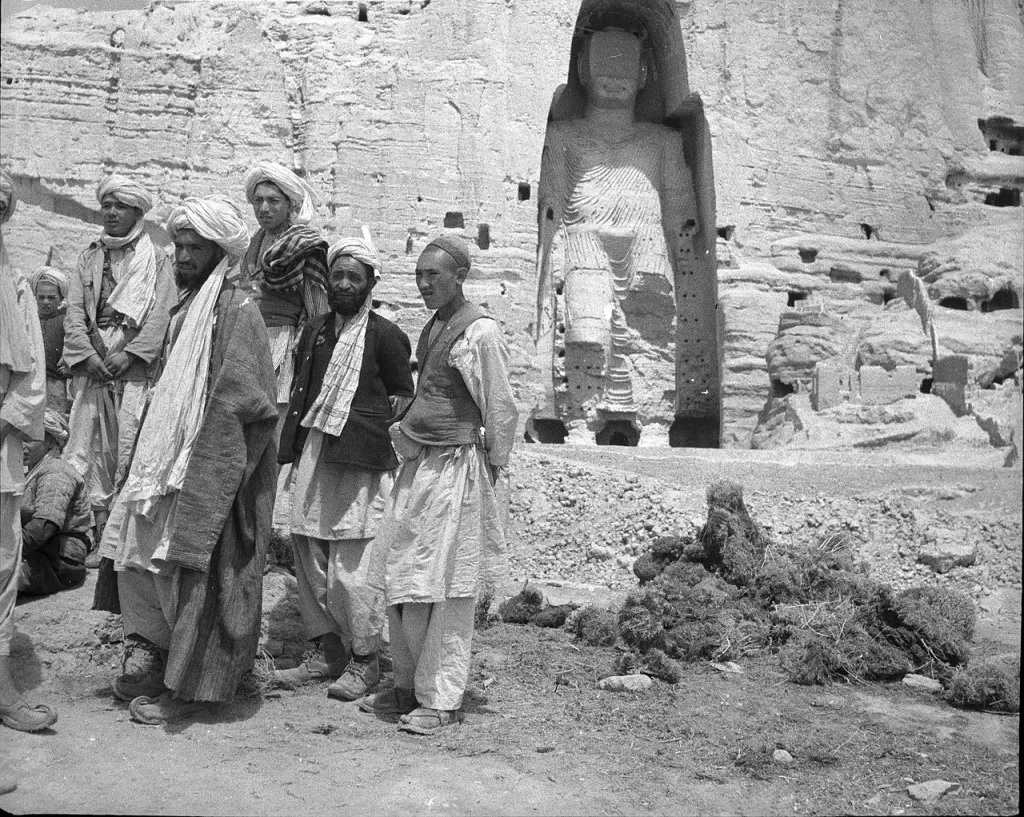
Afghanistan is a country with a complex mix of ethnic groups and the result of a historical accumulation of various traditions and cultures. These ethnic groups and traditions have ultimately come together in a remarkable combination: from the Pashtun people, who are ethnically one of the Iranian peoples, to the Mongol tribes, and to the remnants of Alexander the Great’s army, who are present in Afghanistan with distinctly European features and have coexisted for centuries. Due to its geopolitical position, this country has also always been pregnant with desired and undesired transformations and changes throughout its history.
This book has endeavored to familiarize readers with the history and significance of Afghanistan, while briefly providing researchers with the latest available information in the fields of natural, political, and human geography, as well as the country’s political structure.
Mehdi Sohrabi, a political science expert and Afghanistan researcher, has published a book after seven years of study and research, which, according to him, is an effort to re-examine all historical, cultural, geographical, and political dimensions of Afghanistan; a country whose developments have always influenced Iran.
In an interview with an IBNA correspondent, he explained his motivation for writing his new book: ‘Developments in Afghanistan have a direct impact on our country in various cultural, economic, security, and political aspects. From migrants and historical ties to human trafficking and drug smuggling; all these factors have made it impossible for Iran to remain indifferent to the developments in Afghanistan.’
He continued: ‘Approximately 925 kilometers of shared border between the two countries, trade relations, and complex security issues that have emerged in recent years have increased the necessity for the Islamic Republic of Iran to have a deep understanding of Afghanistan’s developments.’
He emphasized: ‘About seven years ago, I began a systematic study of Afghanistan’s developments. Examining the history, geography, political, and social structure of this country was the main focus of my research. My goal was to provide a comprehensive picture of Afghanistan that could be useful for Iranian researchers and policymakers.’
Sohrabi explained the scientific approach of the work: ‘In this book, I have tried to present a clear summary from Afghanistan’s historical and ethnic background to its current situation. My perspective in this book is analytical, not merely descriptive; I want the reader to gain a deeper understanding of this country’s relations with Iran and regional developments.’