Isfahan; From Iran’s Publishing Hub to a Marginal City in the Book Arena
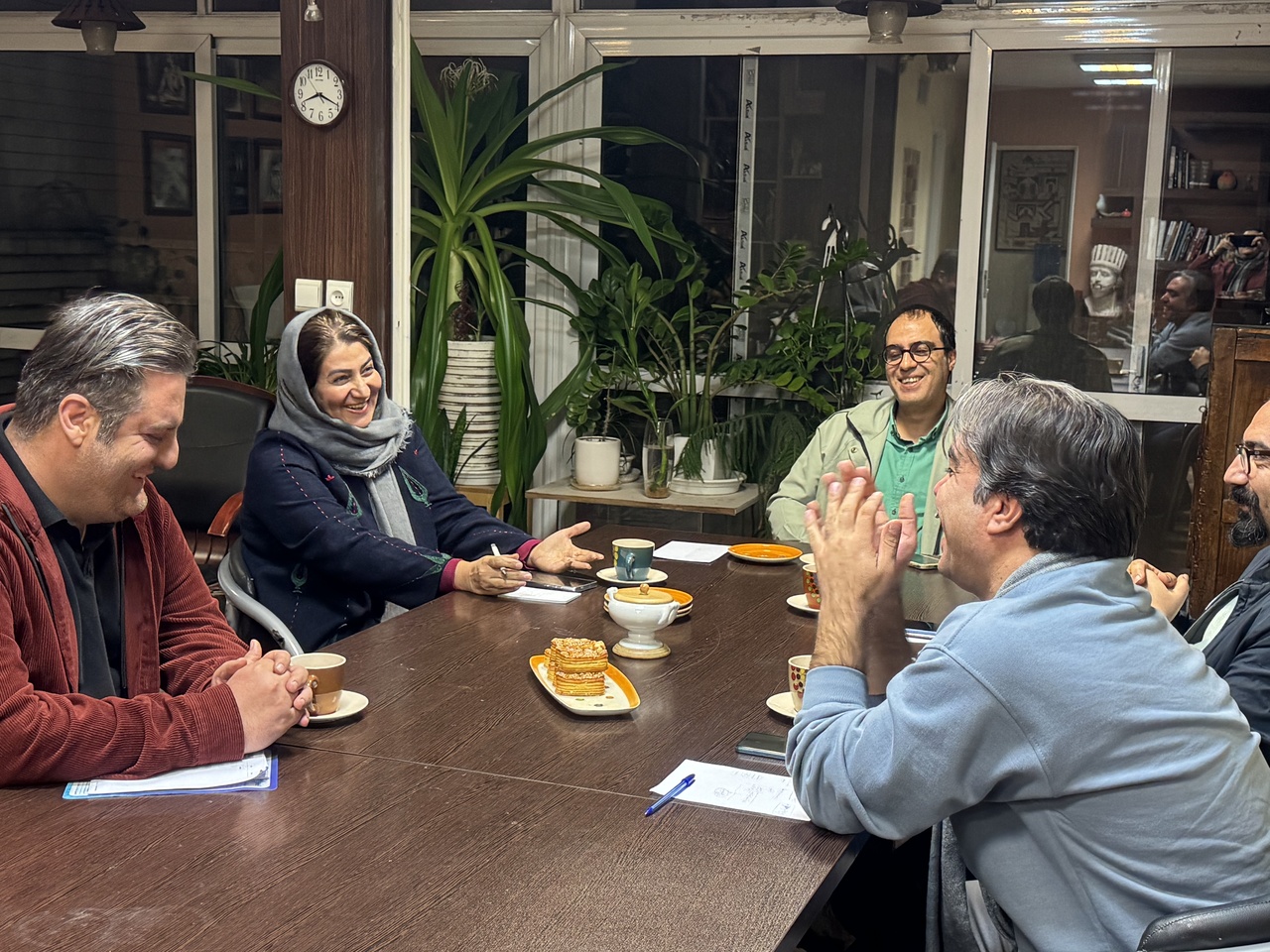
Iran Book News Agency (IBNA) Provincial Service – Koorosh Dibaj: Isfahan, a city whose history is intertwined with literature and culture, is today facing a situation that has created serious challenges for those interested in publishing and books. While this city was once the hub of the country’s press and publishing, and works published there helped shape Iran’s cultural discourse, structural limitations, weak professional networks, and a traditional approach in the publishing sector have now rendered many of its potential capacities unused. These issues were the focus of the first part of a specialized roundtable organized by the Iran Book News Agency (IBNA) in Isfahan titled ‘Isfahan and the Crisis of Unseen Works: Unraveling the Roots.’ The roundtable was attended by Mehdi Tamizi, author and visual artist; Farhad Bardbar, author and documentary filmmaker; Marzieh Golabgir Esfahani, author and researcher; and Mostafa Heydari, director of Oghnoum Publishing. In that section, participants examined Isfahan’s historical position in publishing, the weakness of narrative in research works, media limitations, and the necessity of redefining the city’s role in national and international publishing, presenting a challenging picture of the current situation.
Discussions in the first part showed that reviving Isfahan’s position in publishing not only requires re-examining its history and literary heritage but also necessitates a change in professional outlook, strengthening communication networks among writers and publishers, and focusing on content quality and narrative centrality. It also became clear that to reach national and international standards, one must simultaneously consider institutional structures, administrative and media limitations, and utilize local opportunities to enhance cultural capacities.
In the second part of this roundtable, the discussion moves into practical and strategic stages; this time focusing on real publishing experiences in Isfahan, challenges of censorship and licensing, restrictions on holding book launch events, interactions with bookstores, and support for private publishers. The second part provides a roadmap for reviving publishing and enhancing the city’s cultural standing, and by offering specialized analyses and solutions, it seeks to restore Isfahan to its historical and deserving place in the realm of literature and culture.
Publishing is Part of Isfahan’s Cultural Identity
Mehdi Tamizi, author and visual artist, stated: ‘The reality is that Isfahan is our city, and all of us must strive to restore it to its golden era in the field of publishing and book production.’ He added: ‘We do not want what was once the pride of Isfahan to be lost today. Just as we should not allow another country to confiscate our heritage, from Rumi and Avicenna to Chogan and Lenj-building. We must also stand firm regarding our cultural, literary, and scientific heritage. Publishing in Isfahan has been a part of our urban identity.’
Referring to Isfahan’s glorious past in the press and book publishing, he said: ‘Once, Isfahan was proud of its newspapers and publishing houses that moved Iran forward, but today, in this city, we do not even have a single newspaper that is famous and read outside of Isfahan. Even news agencies whose main offices are in Isfahan lack the ability to assert themselves nationally and have confined their activities to the city limits, contenting themselves with just these four corners of Isfahan. While they can and should be able to operate globally or at least nationally.’
The author and visual artist continued: ‘Many of Isfahan’s press and media outlets see themselves within this small and limited framework and are unwilling to compete with new movements. For this group of people, progress is not important, and they are only looking to fill a resume; a resume that suffices for themselves and their narrow circle of thought.’