Tom Stoppard Dies at 88
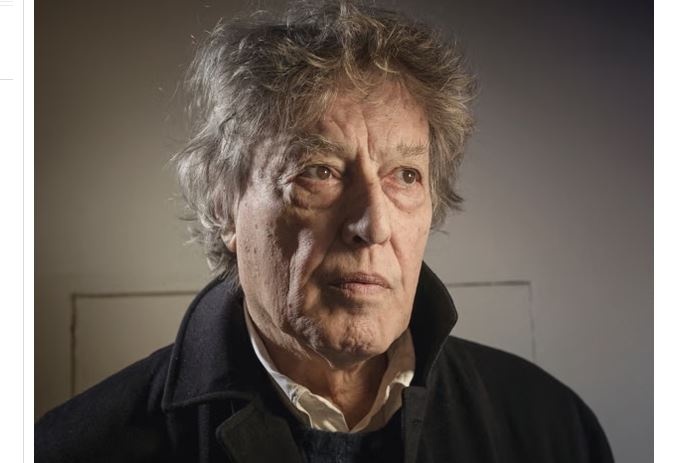
According to Iran Book News Agency (IBNA) – Elaheh Shams: Citing The Guardian, United Agents announced Stoppard’s death in a statement full of respect for his ‘brilliance, humanity, and endless love for the English language.’ The theater community quickly reacted, with artistic figures from various fields commemorating him. Mick Jagger called him an ‘intellectual and humorous giant’ and said Stoppard drew inspiration from classical to pop music, an inspiration prominently present throughout his works. Nicholas Hytner also described him as a writer who ‘always followed the work of others with curiosity and generosity’ and brought ‘warmth and energy’ to the lives of those around him.
The lights of West End theaters are set to be dimmed on Tuesday as a sign of respect, reflecting Stoppard’s stature among audiences and artists. Cush Jumbo, president of the London Theatre Association, said Stoppard’s voice ‘transformed modern theater with a combination of intellectual courage, emotional delicacy, and sharp wit.’
Praise was not limited to theater figures. Writer Kathy Lette described him as ‘one of the funniest people,’ and Rupert Goold wrote of his ‘inherent kindness and generosity.’ These tributes recall something that had been said about him for years: Stoppard was one of the few writers whose name-derived adjective entered the dictionary; ‘Stoppardian.’ He was a master at bringing together disparate worlds: from philosophy and gymnastics in Jumpers to chaos theory and garden design in Arcadia, and the clash of rock music with Sappho’s poetry in Rock ‘n’ Roll.
Stoppard’s rise began with Rosencrantz and Guildenstern Are Dead, a play that shone at the Edinburgh Festival in 1966 and was nurtured by the National Theatre. From there, his path quickly became global. He wrote over 30 plays and was simultaneously active in television, radio, and cinema: from The Russia House to Brazil and his involvement in the Oscar-winning screenplay for Shakespeare in Love. For years, he was also the uncredited writer for many major projects; films that sought him out for ‘final polish.’ The famous story of Steven Spielberg’s emergency call while working on Schindler’s List exemplifies this status.
Despite a vibrant social life, many have noted that Stoppard was inherently a solitary writer. He had three marriages and a wide circle of friends, but in the political sphere, he leaned more towards the libertarian right than his contemporaries, even signing a letter in 1984 supporting the US invasion of Grenada. He was also awarded the CBE in 1978 and a knighthood in 1997.
However, his life did not begin with these successes. He was born Tomáš Straussler in Czechoslovakia and fled the Nazi occupation with his family at the age of two. A few years later, he was evacuated to India with his mother and brother, while his father died during the Japanese occupation. His mother then married a British officer, and the family returned to England after the war. Stoppard left school at 17 and entered journalism, an experience whose traces later became evident in his sharp dialogue and narrative.
His mid-period plays, including The Real Thing, changed the public perception of him, showing he could move away from intellectual games and closer to the more emotional layers of human relationships. In later years, he reached the peak of his maturity; many consider Arcadia his best work and The Invention of Love his most poetic. Even Hapgood, which was accused of being ‘too clever,’ was re-evaluated and praised in a 2015 performance.
In his final period, Stoppard increasingly returned to his Central European roots. Plays like Every Good Boy Deserves Favour and the television screenplay Professional Foul were written with a Cold War atmosphere and dedicated to his friend Václav Havel. The late discovery of his Jewish roots also led him to write Leopoldstadt; a story of decline and survival that became one of his most brilliant late works.
Stoppard is gone now, but his legacy remains on theater stages and in the minds of future generations; the legacy of a writer who, through a combination of wit and profundity, created a language uniquely his own.





