Memoirs of Bashir Khaqan Published
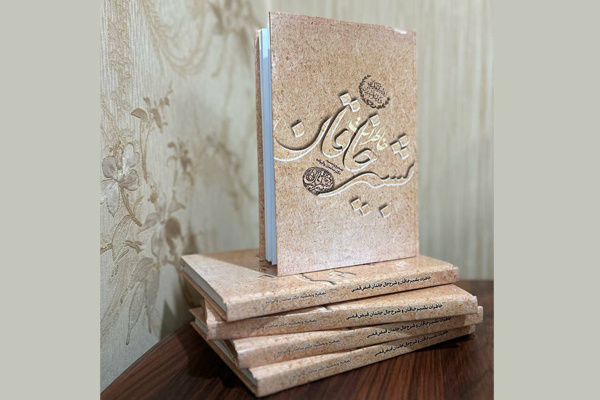
According to the correspondent of Iran Book News Agency (IBNA) in Khorramabad, «Bashir Khaqan» was one of the dignitaries of the Naserian and Mozaffarian eras of the Qajar dynasty and belonged to the cultural Faiz family. In 1310 AH, he was in charge of the blessed telegraph office in Khorramabad, and after his dismissal, he wrote his memoirs from his stay in this city until his return to Dar-ol-Khelafeh with a sweet and engaging pen.
Sasan Valizadeh told the IBNA correspondent: «Noble Iranian families are factors in preserving Iran’s culture and civilization, and among the important topics in cultural studies, history of science and culture, and anthropology is the subject of ‘cultural families’.»
The author of the book further explained: «Prominent and educated families have provided numerous services to Islamic and Iranian culture throughout history. By preserving long-standing traditions, they have prevented cultural discontinuity and scientific fragmentation, and have always maintained the lamp of knowledge through centuries with their family talents, preventing cultural decline despite the decline of power and politics at certain points in Iran’s history.»
Valizadeh added, giving examples of cultural families: «From the Barmaki family in the Abbasid Caliphate to numerous Iranian families such as the Sohravardi family, who played a role from the 5th to the 9th centuries, to cultural families in the Safavid and Qajar periods whose descendants continue this glorious lineage in the present era, such as the Esfandiari and Khajeh Nouri families in Mazandaran, the Samiei family in Gilan, the Qavam family in Shiraz, the Hedayat and Farmanfarma families in Tehran, the Sepehr family in Kashan, and others. In Lorestan, one can also refer to the Tabatabaei family, the Etemad family, the Yarahmadi family, and the Bahr-al-Oloom family in Borujerd, the Fouladvand family in Azna, the Ghadanfari family in Tarhan, the Ghazi and Chagharvand families in Khorramabad, and so on.»
The author of ‘Mo’in al-Saltaneh’s Travelogue’ added: «The continuity and cultural perseverance of ancient and noble families have also played a role in the flourishing of Iranian culture and even in maintaining the bureaucratic system. These families have sometimes served for centuries as intellectual refuges for people, symbols of Iranian identity, factors in the strength and durability of intellectual traditions, and the embodiment of Iranian erudition. Studying the historical trajectory of these families and the biographies of their prominent figures and celebrities is effective not only in strengthening national identity but also in understanding the local history of provinces.»
The author of the book ‘شناختنامه نویسندگان لرستان’ (Encyclopedia of Lorestan Writers) discussed the connection of the recent book with cultural families and said: «One of these families is the Faiz dynasty, which has been culturally influential from Kashan to Qom, Tehran, and other provinces for several centuries, and has, of course, reached the peak of its flourishing and fame in Qom during the last two centuries.»
To further introduce the Faiz family, Valizadeh said: «The day after Fath-Ali Shah’s death, the residence of two brothers named ‘Ali Mohammad Qargi’ and ‘Mirza Mohammad Faiz’, under the pretext of custodianship of the tomb of the deceased Khaqan, laid the foundation for a lineage of scholars and artists in this land. A family that became pioneers of their era in literature, jurisprudence, and art. A family whose lineage and ancestry, of course, traced back to the wise scholar, Hadith narrator and jurist, devout cleric, active scholar, and perfect mystic of the Safavid era, Mulla Mohsen Faiz Kashani.»
Valizadeh named Bashir Khaqan as originating from this family and said: «Mirza Ali Asghar Khan Bashir Khaqan is one of the first officials and old heads of telegraph offices in Iran, who, in many provinces of Iran such as Gorgan, Hamedan, Lorestan, and Kerman, was not only in charge of the telegraph office but also managed city affairs and served as deputy governor. Besides his governmental positions, Bashir Khaqan is also a skillful writer and a talented poet whose cultural aspect has remained hidden until now.»
According to IBNA; this book also includes a treatise titled «Description of the Faiz Family» in its second section, which is a corrected version of a treatise of the same name by Bashir Khaqan’s literary and learned father, Mirza Ali Akbar Faiz. This book, in addition to introducing this lineage and ancestry, is a reliable and valuable source for understanding the political relations of the Qajar period, prosopography of government officials, familiarity with Qajar prose, access to the history of telegraphy in Iran, knowledge of local dignitaries of the provinces, and similar information. In the final section of the book, a collection of first-hand images and documents adorns the book, adding to its historical and research value.
The book «Memoirs of Bashir Khaqan», corrected and annotated by Sasan Valizadeh, has been released to the publishing market in 256 pages, hardcover, in quarto format, by Havir Publications.