‘Everything About Eve’; A Classic Work from the Heart of Literature
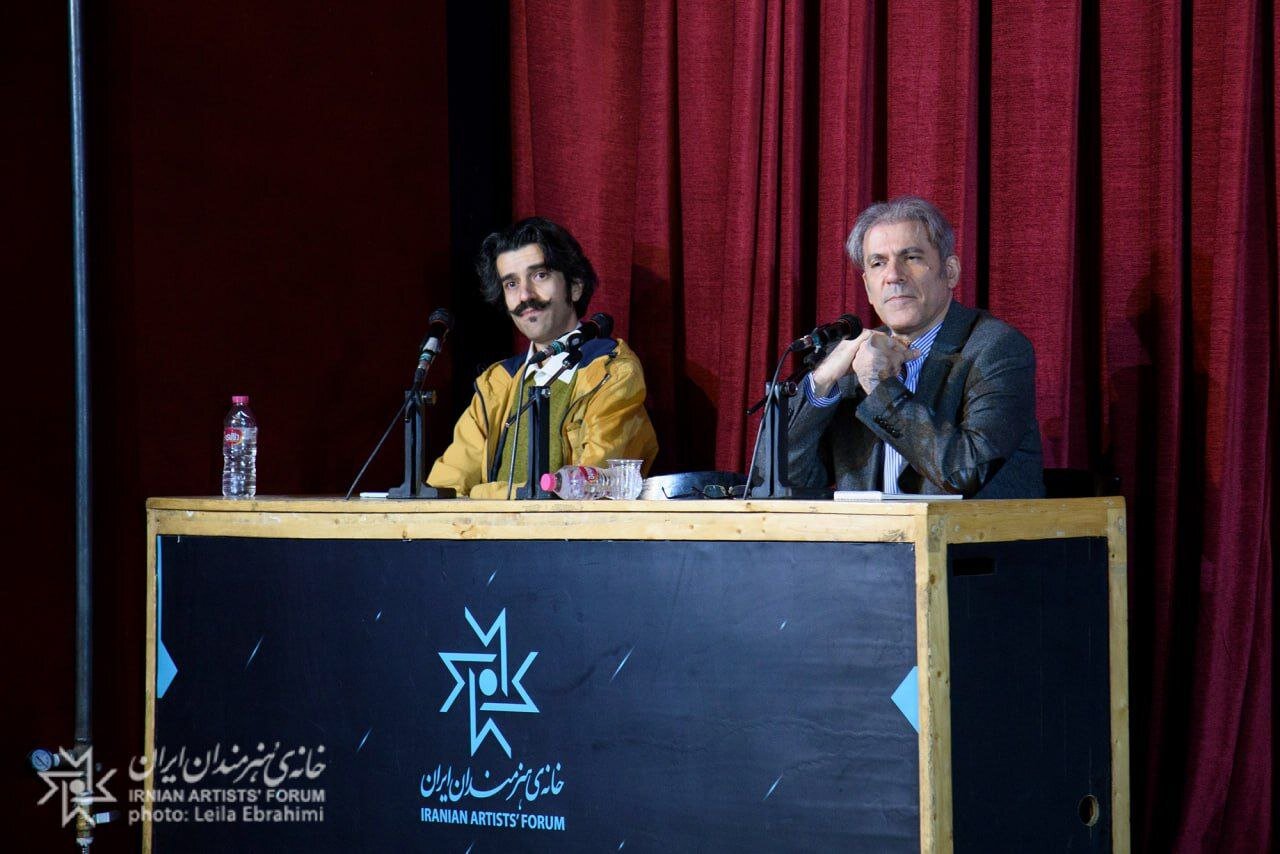
According to Khabaronline News Agency, quoting the Artists’ Forum, the fiftieth program in the series of prominent film-theater screenings featured ‘Everything About Eve’ (2019), based on Joseph L. Mankiewicz’s play script and directed by Ivo van Hove and Nick Wickham. It was held on Wednesday, December 5, 2025, in a joint collaboration between the Association of Critics, Writers, and Researchers of the Theater House and the Cinematheque of the Iranian Artists’ Forum. This work was the first program of the “Face in Mask; Play and Identity” package, with theater critic Mahmoudreza Habibi undertaking its critique and review.
Habibi began his talk by referring to the origin of the play: a story first presented as a literary text, which was then adapted into a film in 1950 by Joseph L. Mankiewicz. To this day, it remains one of the record-holders in Oscar history, with fourteen nominations and several awards, which immortalizes ‘Everything About Eve’ as a seminal work.
He emphasized that the current fame of this play, rather than stemming from its theatrical adaptation, is a product of the cinematic version that has captivated audiences for decades and solidified its position.
From Habibi’s perspective, the core content of ‘Everything About Eve’ is essentially a study of the actor’s position; from the moment they step into the world of theater until they reach the pinnacle of fame, followed by the sudden fall that awaits them.
He explained: The story shows how the desire to be on stage leads to dominance, ambition, and then collapse. All characters are caught in a cycle where ascent is glorious, but descent is ruthless and swift.
The theater critic continued: If we analyze the story like a novel, this work is polyphonic; several narrators appear in different sections, each recounting a part of the truth to the audience.
He added: This polyphony makes conflicts and paradoxes more visible. The audience constantly shifts between narratives, which complicates judgment and highlights the multi-layered value of the work.
Habibi emphasized: The year 1950, the year the film was made, is not merely a production date; rather, it is key to understanding the work’s world. These years mark a period when the world had just emerged from World War II. Modern man, after the Renaissance, humanism, and then experiencing two devastating wars, faces a new sense of emptiness. Art, philosophy, and politics are all redefining themselves.
Habibi continued: This historical context makes themes such as ambition, collapse, identity anxiety, and the instability of human relationships gain deeper meaning in ‘Everything About Eve.’ This period marks the beginning of a “new generation” and the formation of a new wave in art, an era when humans were internally empty and sought to create new meaning.
Habibi further explained that American theater is still influenced by the era of the actor’s reign; a period in which the actor is considered not merely one element of the work, but the driving force and central axis of directorial and writing structure.
He emphasized: While Europe, after World War II, moved towards new patterns, anti-realistic and management-centric performance methods due to political, social, and artistic transformations, America, by preserving more classical structures, solidified its economic and cultural position and continued the actor-centric tradition.
The theater critic, referring to the fact that the play script of ‘Everything About Eve’ was written in the 1950s, at the peak of this era, said: “It was a period when the actor was still the main producer of ‘brilliance’ on stage. The author of the work also remained faithful to that tradition and tried to maintain a kind of simplicity and realistic coherence in the narrative, while preserving the performance tone and acting style of the time.”
Referring to the 2019 version discussed at the session, he said: “Although today’s American performances are still influenced by the same actor-centric foundations, a significant distance has emerged from the structures of the 1950s. In the 2019 version, although classical acting principles are still present, the use of color, light, stage design, and performance rhythm moves further away from the actor-centric aspect and towards creating a promotional and visual layer, a layer whose goal is not to immerse the viewer but rather to shape a visual brand of the actor.”
Habibi then addressed the main storyline, stating: “A young girl who, dreaming of becoming an actress in America, gradually approaches the stage; the narrative is actually about the path many actors traverse; from childhood experiences to creating a new identity in the world of theater. This is the same path referred to in the title of the session: Role, Identity, Face; a process in which the actor not only plays a role but also creates a new identity and ultimately becomes a recognized figure.”
This researcher, continuing his analysis of the play ‘Everything About Eve,’ emphasized: “The essence of acting is built upon achieving belief and the ability to create a new identity. If an actor does not reach this internal point, the process of acting fundamentally does not take shape.”
He stated: “Eve, in her encounter with Margo, confesses that from childhood, she believed in playing roles and experiencing different identities; to the extent that sometimes she couldn’t distinguish between her ‘real self’ and the ‘played role’.”
Habibi considered this characteristic one of the foundations of an actor’s creativity; the same power that many acting teachers repeat in a famous phrase: “An actor must be able to lie convincingly.”
Habibi explained: “From the moment Eve enters Margo’s life, she exhibits this ability to ‘create character’ not only in her acting but also in her daily life. The maid character correctly points this out. Eve observes everything: Margo’s walking, dressing, manner of speech, and even daily habits.”
He continued: “This hidden observation and copying is the very ability Eve denies, but it is precisely this skill that allows her to create multiple personalities simultaneously and transcend the boundaries of her own individuality.”
Habibi noted, quoting Margo’s husband’s character: “Nine-tenths of theater is hardship.” This expression also emphasizes Margo’s difficult journey. Margo has been on stage since she was four, and her first experience, according to the text, occurred in ultimate nakedness.
Habibi explained: “This nakedness is not merely a dramatic element, but a sign of the very ability that acting masters deem essential. An actor must reach such a stage of character liberation that they can become one with any mold and any costume; like dough taking shape in a role’s container.”