The Hard Core of Iran’s Political Thought
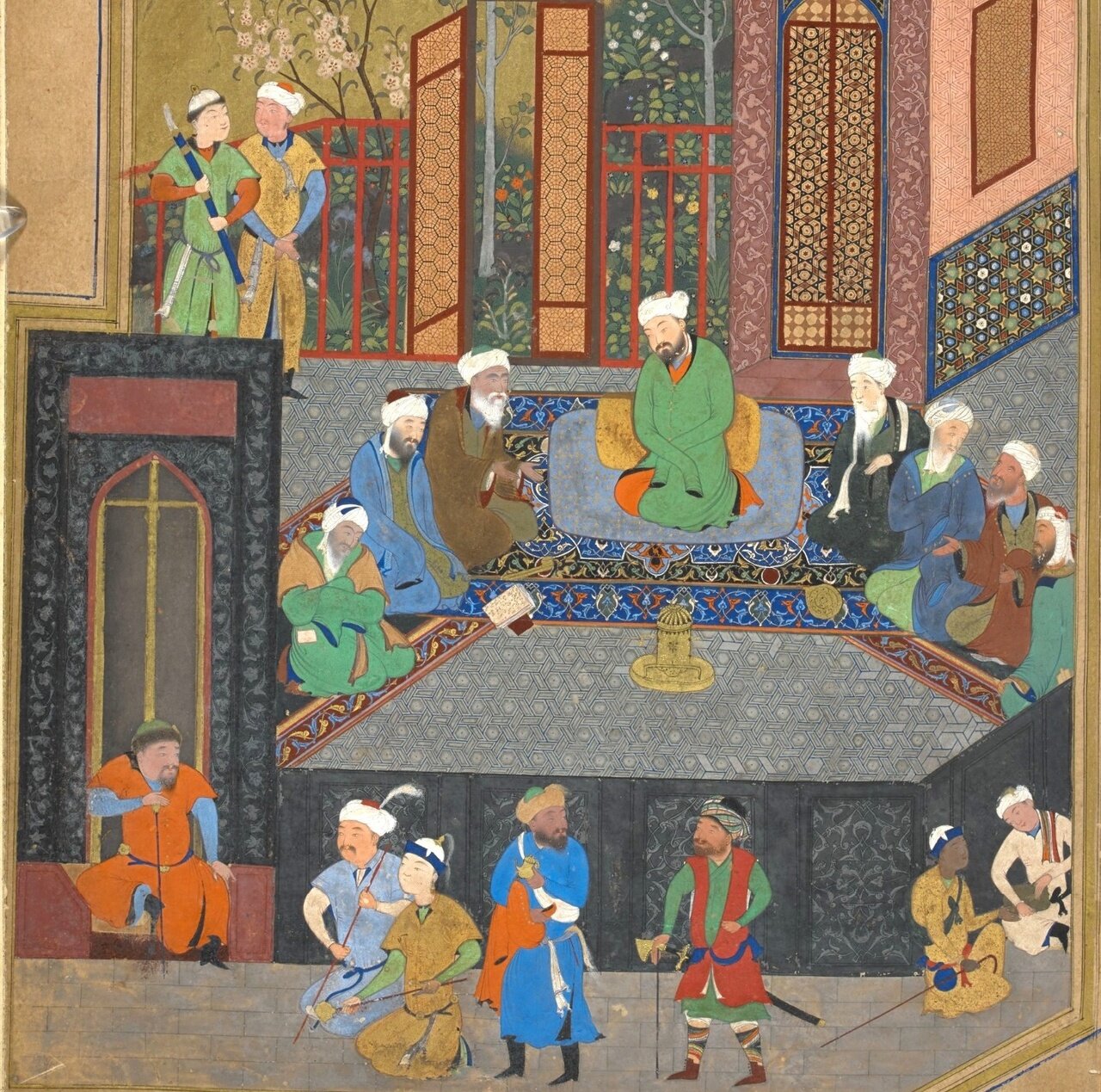
The book “Manners of Governance: Basic Texts of Persian Literature and Politics” by Ruhollah Eslami is an analytical and interdisciplinary research that, with a new approach, re-examines the legacy of Persian literature as the foundation of Iranian humanities. The author insists on the idea that “humanities in Iran is Persian literature itself,” and the roots of political thought, the manners of power, and methods of just governance must be sought in the historical layers of the Persian language and literature. This book is a return to Iran’s intellectual heritage from ancient times to the contemporary era; a heritage shaped by the nexus of politics, ethics, wisdom, and literature, sustained through enduring texts from foundational wisdom literature to treatises of the Constitutional era.
In the book’s introduction, the author emphasizes the importance of the “continuity of the Iranian rational tradition”; a continuity that is not only narrated but also institutionalized in Persian literature. Persian literature, in Eslami’s view, is the language of tolerance, abstinence from harming people, and an invitation to rationality; a language that curbs power and strengthens ethics. Therefore, studying the manners of statecraft and understanding the logic of government in Iran is not possible without reviewing literary texts, because literature in Iranian history has always had a political-social function, and advice literature (andarznamehs), historical narratives, and ethical treatises have formed the main pillars of the Iranian governing mindset.
The book is organized into several chapters, with each chapter dedicated to one of Iran’s great thinkers and foundational literary-political works. The first chapter introduces the rituals of governance in classical Persian literature, and the author, by reviewing texts such as Minu-ye Kherad (The Spirit of Wisdom), ancient andarznamehs (books of advice), and the tradition of Nasihat al-Muluk (Advice to Kings), shows how the structure of the state in Iran was based on the ethics of power, empirical wisdom, and spiritual order.
The next chapter examines the works of Khajeh Nizam al-Mulk Tusi and his role in the institutionalization of the Seljuks. In this chapter, the author considers Nizam al-Mulk’s Siasatnameh (Book of Government) as one of the first classical texts on public administration in the world, in which security, justice, and the organization of bureaucracy are defined as the foundations of governance.
In the third chapter, Alaeddin Ata-Malik Juvayni and his important work Tarikh-e Jahangosha (History of the World Conqueror) are analyzed; a work that the author calls “the reflection of Iranian statesmanship in the face of the crisis of the Mongol invasion.” This chapter demonstrates how Juvayni’s historiography is a synthesis of politics, ethics, realism, and historical wisdom. The fourth chapter is dedicated to Qabusnameh and the tradition of advice literature (pandnameh-nevisi); a work that describes political education, the manners of power, worldly wisdom (aql-e ma’ash), and the ethics of governance in connection with daily life.
In the next chapter, the author discusses Ubayd Zakani and his “Risalah-yi Akhlaq al-Ashraf” (Treatise on the Ethics of the Nobles). In this work, Ubayd uses his sharp satire to criticize political corruption, the hypocrisy of elites, and the inversion of power ethics. Eslami shows in this chapter how Ubayd, through the language of satire and insinuation, presented one of the most serious criticisms in Iranian history against power brokers, and how this critique remains important for analyzing contemporary governance. The book then moves to the treatises and writings of the Constitutional era and examines the role of thinkers of this period in transforming traditional political ethics into a modern theory of the state; an era in which concepts such as law, freedom, public participation, and the rule of law entered Persian texts, and the manners of governance gained new meaning and structure.
Ruhollah Eslami, throughout the book, demonstrates how Iranian intellectual currents, from ancient times to the Constitutional era, have always stood against various forms of Iranophobia and have strived, through literature, to curb power and reconstruct the manners of governance.
He emphasizes that Persian literature is not merely an art, but a “living political tradition” that has shaped the logic of Iranian governance. From the author’s perspective, a return to this heritage is essential for understanding contemporary governance; because many of today’s crises in Iranian politics and state are due to a rupture from this tradition and the forgetting of classical political literature.
The book “Manners of Governance” is an analytical, critical, and text-based work that holds special importance for researchers in political science, Persian literature, historical sociology, and those interested in the evolution of Iranian political thought.
The author, with a fluid yet research-based prose, builds a bridge between literature and politics, demonstrating how texts such as Minu-ye Kherad, Ahd-e Ardeshir, Siasatnameh of Nizam al-Mulk, Tarikh-e Jahangosha of Juvayni, Qabusnameh, Akhlaq al-Ashraf, and the treatises of the Constitutional era have shaped the hard core of Iran’s political thought.
This book is published by the Scientific Works Publishing Group, its author is Dr. Ruhollah Eslami Shabjareh, it was published in its first edition in Autumn 1404 (Persian calendar, approximately 2025 CE) and has 200 pages.
Interested individuals can view additional information and related books on the Ferdowsi University of Mashhad Press website at press.um.ac.ir.





