Mohaghegh Damad’s narrative on opponents and proponents of book publication among early Muslims / Religious leaders as promoters of the translation movement
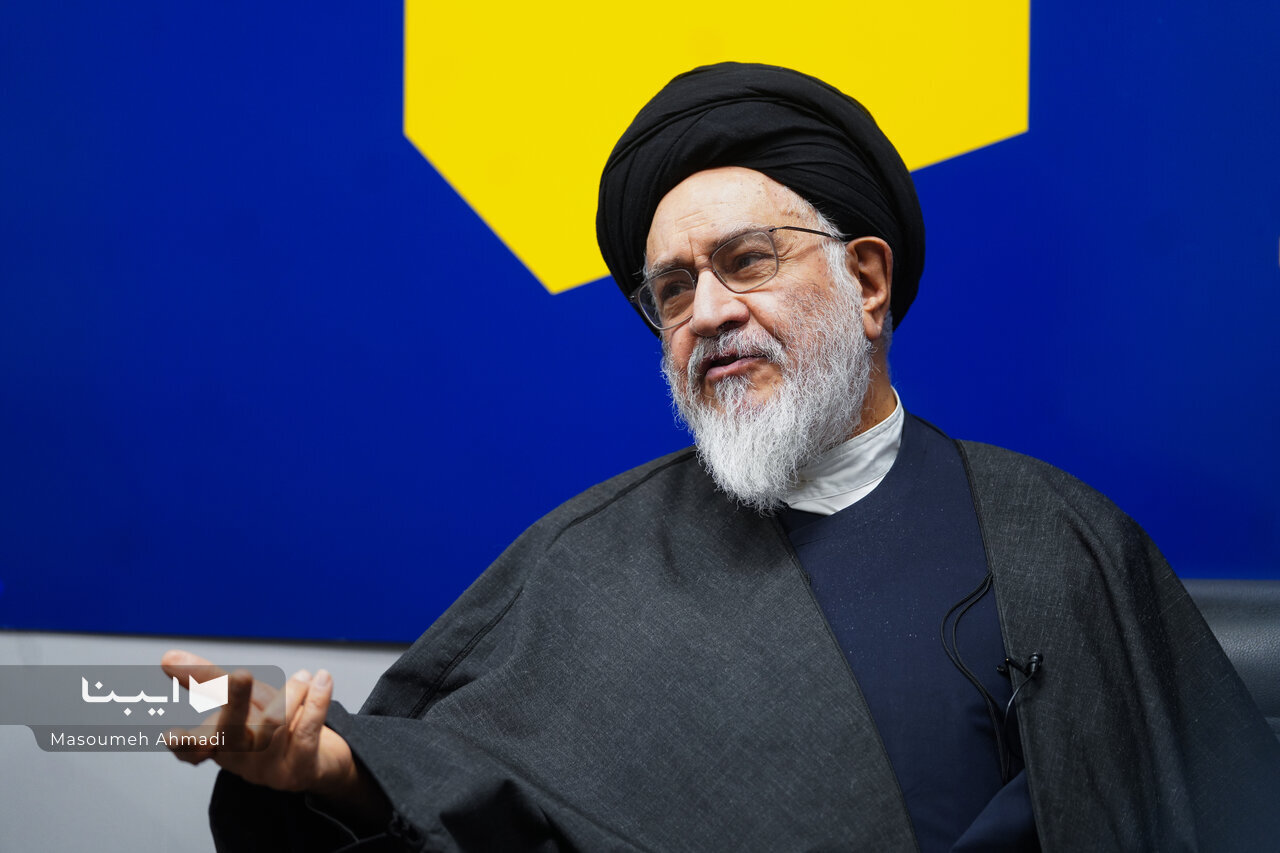
The Thought Group: Hamed Zare, editor-in-chief of IBNA, conducted an interview with Ayatollah Seyyed Mostafa Mohaghegh Damad, a jurist, lawyer, and head of the Islamic Studies Group at the Academy of Sciences of the Islamic Republic of Iran, on the occasion of Book Week, and published it in the Thought service. In this interview, Mohaghegh Damad examines various viewpoints and traditions in Islamic civilization regarding the writing and dissemination of non-religious (non-Quranic) knowledge, and finally addresses and evaluates the status of reading in the contemporary era. One of the important axes of this interview is the tension between the sufficiency of the Quran and the movement of writing. In his view, the Islamic tradition in dealing with the writing and dissemination of sciences has not followed a uniform and simple path from the beginning, but has rather fluctuated between a strict approach based on the sufficiency of the Quran (“Husbuna Kitab Allah”) and an encouraging approach to the compilation and documentation of knowledge (“Qayyidu al-‘Ilm bi al-Kitabah”). Ultimately, the second approach prevailed, leading to the translation movement and the development of science. Mohaghegh Damad discussed the reasons for the initial opposition to writing by some early Muslims. Mohaghegh Damad said that some early Muslims opposed writing books (other than the Quran) due to a widespread fear that non-religious books or interpretations, similar to what happened to Jewish holy books, would overshadow the credibility and originality of the Quran and lead to myth-making and distortion in the stories of the prophets (such as the stories of Joseph and Mary). The slogan of this group was “Husbuna Kitab Allah” (The Quran is sufficient for us). He then discussed the emergence of the writing movement and the support for non-religious sciences among Muslims, stating that despite the above approach, it was not long before the translation movement began, Greek sources entered Islamic civilization, and powerful institutions supported it. Mohaghegh Damad stated in a part of this interview that in the vast expanse of Islamic civilization, the lack of communication facilities led to the spread of forgery and fabrication (especially based on sectarian enmities) in the transmission of news and hadiths, and to counter this problem, Shiite Imams emphasized extraordinary precision in the chain of transmission (sanad), text (matn), and context of issuance of hadith. An example is the story of Muhammad ibn Abi Umayr and his correspondence, which demonstrates sensitivity to the preservation of documents. Mohaghegh Damad is very seriously concerned about the contemporary state of books, as he believes that serious reading and book-reading have significantly decreased today (despite the existence of digital books), and people spend their time browsing websites. Mohaghegh Damad, presenting his solution, believes that authors should write attractively, fluently, and readably (like Martyr Motahari, who “brought Islamic philosophy to the daily table of the people”), and publishers should have a cultural mission and not merely be merchants.
Ayatollah Mostafa Mohaghegh Damad
Initial Resistance to Book Publishing: “Husbuna Kitab Allah”
Is there tolerance, leniency, or encouragement in Islamic tradition regarding books other than the Quran, meaning books that provided non-religious knowledge? Was this strengthened or remained limited?
In the name of Allah, the Most Gracious, the Most Merciful. Firstly, I am very grateful to you and other friends who provided this opportunity for me to become acquainted with this center. Truly, as a relatively elderly teacher, I reproached myself for being unaware of this center, while I had been invited to this building many times for other matters. This is indeed a very important place; the Book News Agency holds a very valuable position.
But regarding your question: The reality is that, regardless of the research and opinions of the late master, Mr. Motahari, concerning the burning of books in Iran and Alexandria, whether we accept them or not, it seems certain that some were not very much in favor of books and book publishing. This is almost an accepted fact. The reason, apparently, was that the books prevalent at that time were mostly considered “sacred scriptures”; meaning a kind of connection to the heavens and a divine امر (command) was imagined for them.
They were concerned that the same fate that befell Jewish books might happen to the Quran. For this reason, some opposed book writing and publishing and insisted that the Quran was sufficient: “Husbuna Kitab Allah.” Of course, their intention by “book” was the Quran; and their mindset was that the origin and foundation of religion is this Quran, and it must be preserved in the hearts of Muslims, and inferences should also be based on the Quran.
Preserving the Quran and Preventing Fabrication in Prophetic Stories
What was the reason for this emphasis on preserving the Quran?
You can see that if the Quran is set aside, how much myth-making and fabrication occurs in the stories of the prophets. Truly, the insistence on referring to the Quran for understanding the stories of the prophets was a very important point.
For example, compare the story of Joseph in the Quran with the story of Joseph in the Old and New Testaments; or the story of Lady Mary (peace be upon her) in the Quran with the narration of the New Testament. In the Quran, these events are narrated very beautifully and precisely, while other narratives are sometimes full of accusations and myths. Therefore, the insistence on “sufficiency of the Quran” in stories is understandable.
Hamed Zare, Editor-in-Chief of IBNA
Beginning of the Translation Movement and the Command “Qayyidu al-‘Ilm bi al-Kitabah”
However, as mentioned, the approach of Muslims to books is not limited to this narrow view.
Yes. There is another reality as well. It was not long before the “translation movement” suddenly began. Original Greek sources entered Islamic civilization, and professional translators began translating them. The powers that be also supported this movement.
Alongside that, a sacred and influential saying from religious leaders was narrated by Muslims: “Qayyidu al-‘Ilm bi al-Kitabah”; meaning, “Restrain knowledge with writing so that it does not escape.” This saying was precisely contrary to the previous approach and led to a greater prevalence of writing, authorship, and written transmission.
Necessity of Writing Due to the Vastness of Civilization and the Problem of Forgery
Why was there such an emphasis on writing?
Do not look at the situation today. Nowadays, communication facilities are such that if someone writes a lie or a weak statement, or makes an unfair accusation, it becomes clear within a day or two. But 1400 years ago, it was not like that. The expanse of Islamic civilization was vast: it covered from Medina to Syria and Iran. Whoever wrote anything, who was there to correct it? Who would check if it was right or wrong? Many false accusations were written; and not only based on personal likes and dislikes, but especially based on sectarian enmities.
When sectarian differences arose, each side would show enmity towards the other “for God’s sake” and make accusations of forgery. This caused many problems in transmitting news. For example, in the science of Usul (principles of Islamic jurisprudence), we have traditions called “Akhbar Alajiyah”; meaning traditions related to resolving contradictions. A person asks Imam Sadiq (AS): If two contradictory reports are narrated from you, which one should we act upon? The Imam teaches a method of investigation. In the Quran itself, there is also a verse that blames people who spread every news they hear without investigation.
The Quran has stated the solution: news must be entrusted to the people of istinbat (deduction); meaning those who extract the truth of the news like drawing pure water from the bottom of a well. This issue became very important in the second century, during the time of Imam Baqir (AS) and Imam Sadiq (AS). The companions of the Imams were experts in discerning news. This is because the Imams sometimes practiced taqiyyah (dissimulation) in front of political agents. Shiism was an opposition; and the work of the opposition is usually confidential. If it became public, they would be immediately arrested.
An Example of Strictness on Sanad: Mursal Hadiths of Muhammad ibn Abi Umayr
Do you recall an example or instance?
Yes. An example is Muhammad ibn Abi Umayr; a cloth merchant who, whenever Imam Sadiq’s (AS) lesson began, would close his shop, take out his notebook, and write down the Imam’s words. The Abbasid caliphate, realizing this, pursued him; he fled but was arrested. His sister, knowing he would be tortured and might be asked for the names of the Imam’s companions, hid all his writings under the soil in the garden and watered it so that no trace remained.
Years later, when Ibn Abi Umayr was released from prison, he found that all his notes were lost. He was forced to rewrite whatever he remembered. But he did not remember many of the chains of transmission (sanads), and only the text of the narration remained. These are called “Mursalats of Ibn Abi Umayr,” meaning narrations whose chain of transmission Ibn Abi Umayr forgot but remembered the text. Jurists, due to his trustworthiness, have accepted his Mursalats as if they had full chains of transmission.
The Process of Compiling Shiite Hadith Books and the Role of Ayatollah Boroujerdi
So, the reason for precision in the chain of transmission and strictness in narrating hadith becomes clear.
Yes. Shiite jurists, especially, had great precision in the chain of transmission (sanad), text (matn), and context of issuance of hadith. In contrast, many hadiths of the “Sahih Sitta” of Sunnis have been weakened according to contemporary research, because the necessary precision was not applied to their chains of transmission. In Shiism, four main hadith books remained: “Usul al-Kafi” by Kulayni, “Man La Yahduruhu al-Faqih” by Shaykh Saduq, “Tahdhib” and “Al-Istibsar” by Shaykh Tusi.
Then scholars like Allameh Majlesi gathered more sources, one of which is “Bihar al-Anwar,” and of course, it contains weak narrations. During the Safavid era, “Wasail al-Shi’a” by Hurr al-Amili was organized, which is a very colossal work and has systematically collected the chapters of jurisprudence in the style of jurisprudential books. The greater work is the effect of the late Ayatollah Boroujerdi, which is a very colossal work.
In Ayatollah Boroujerdi, sparks of tolerance and leniency are seen. He, with a precise view, categorized hadiths under headings such as “Ijtihadat al-A’immah”; meaning cases where the Imam did not directly narrate from the Prophet, but rather extracted from within the Quran. This work, titled “Jami’ Ahadith al-Shi’ah,” is still unfinished and in publication. In any case, this is our history of writing.
On the other hand, to examine the position of writing in Islamic civilization, a comparison with Western civilization must also be made; because many Western philosophical schools were transferred to the West through Muslims. The West also had serious opposition to writing in the Middle Ages. Comparing these two paths is a very important research, and it would be good if work is done in this field.
Evaluating the Status of Reading in the Contemporary Era and the Crisis of Ethics
How do you evaluate the status of reading today?
Nowadays, my concern, as a relatively elderly author, is that studying and reading books have significantly decreased. You might say that digital books have replaced printed books; but the question is: how many hours a day does a young person today spend reading books, and how many hours browsing websites and reading news? My feeling is that even with digital books, the society’s need for serious reading has not been met.
What do you think is the problem?
In my opinion, part of this problem goes back to authors. Authors should write attractively, fluently, and readably; in such a way as to make the reader eager to acquire the book. Publishers also should not just be merchants; they must consider themselves to have a cultural mission. Old publishers were limited, but they were people of culture, not merely traders. Today, too, publishers must be trained who care about culture, not just sales. In theology fields, too, there should be more new authors who present old ideas in a language suitable for daily needs.
Emulating Martyr Motahari
You mentioned the martyred master Motahari; and you are absolutely right. He was an author who both wrote stories for children, like “Dastan-e Rastan,” and expressed deep philosophical and theological topics in a fluent and understandable language for the general public. Unfortunately, today we do not have such figures among seminary scholars.
This point is entirely valid. The late Master Motahari did two things. One was that he wrote “Dastan-e Rastan” for children, and the second was that he brought Islamic philosophy to the daily table of the people. Therefore, this point is entirely valid; perhaps it has various causes, including the political and social atmosphere.
At any rate, no one like him has been nurtured. I myself, despite having 48 authored works, when I looked, I saw that only six or seven of them are general-purpose, and the rest are specialized. Among my general books, I can mention two volumes of “Religious Enlightenment.” It has been published by Ettela’at newspaper and has been printed 6-7 times so far.
I have three other books named “The Catastrophe of Holy Ignorance,” “In the Court of Holy Ignorance,” and “Holy Ignorance, the Fiery Coffin,” which are general-purpose. For this reason, I decided to do more general works, and I have two works under publication: one will be released next week, and the other will go for printing next week. The first is a moral book titled “Admonition to the Jurist,” which is a commentary on Allameh Hilli’s moral testament to his son in the eighth century AH; this testament was published at the end of the book “Qawa’id.”
I wrote a commentary on it, which has become about 400 to 500 pages and is understandable to the general public. When this book is published, I am sure that old and young will read it. My other work is an eloquent commentary on “Ziyarat Aminullah,” incorporating Saadi and Hafez. Another general work consists of articles published in Bukhara Magazine. In these articles, I have tried to instill ethics in the younger generation through literature. One of my problems and concerns is that ethics are currently deteriorating in our society and have become very weak. I write these articles under the title “Quran in Golestan.”





