Because we do not read books, we do not overcome problems

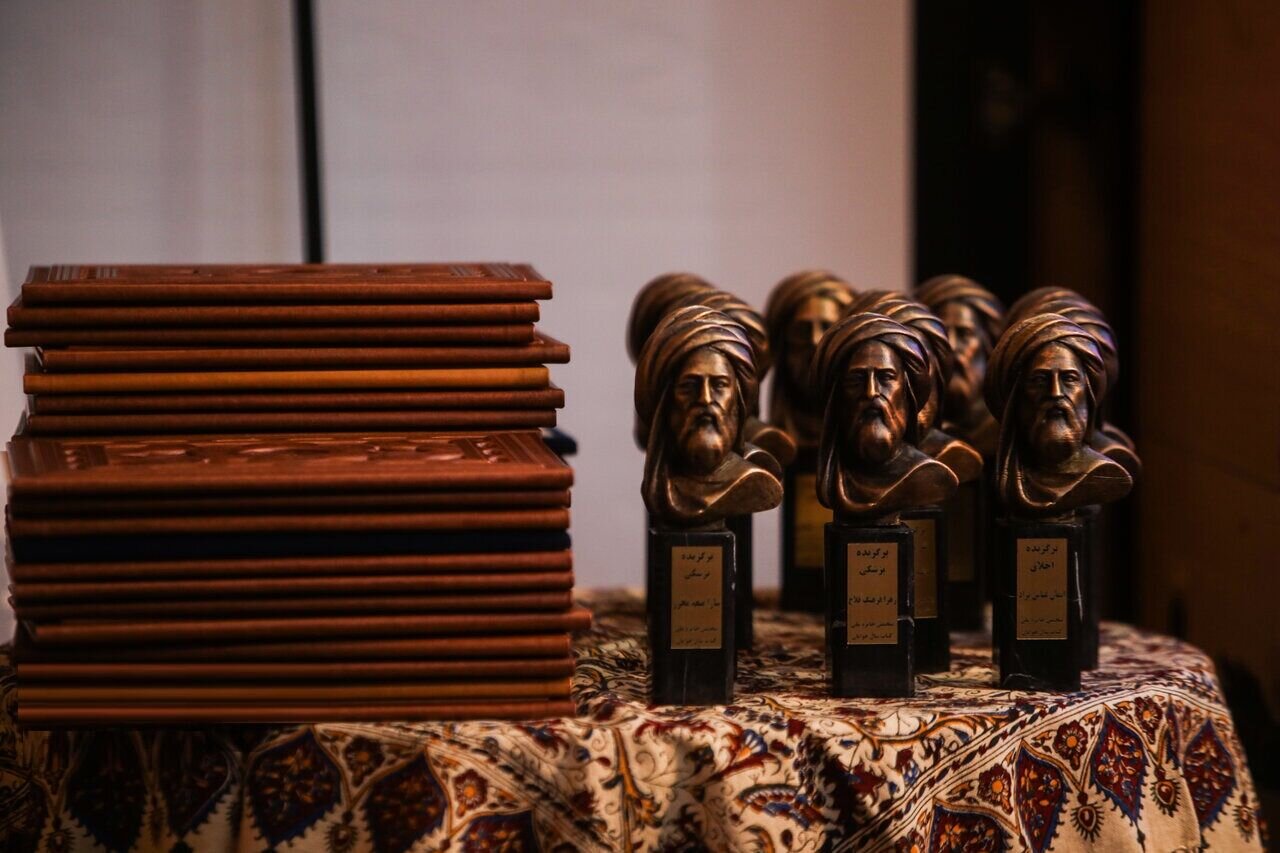
According to a reporter from the Iran Book News Agency (IBNA), on the occasion of the 33rd Book Week of the Islamic Republic of Iran, the ceremony commemorating “Book, Book Reading, and Librarian Day” and introducing the winners of the first “Hamkhaan; Iran Public Library Award” was held at Vahdat Hall on Saturday, November 15, 2025 (Aban 24, 1404 Solar Hijri), with the presence of President Masoud Pezeshkian, Minister of Culture and Islamic Guidance Seyyed Abbas Salehi, and Secretary-General of the Public Libraries Institution Azadeh Nazarboland.
Pezeshkian, emphasizing the exalted position of books in the intellectual and social life of nations, described books and reading as “the path to the country’s salvation from problems” and “the secret to a vibrant society and not falling behind the caravan of growth and progress in today’s world,” stating: In an era when the country faces various issues and challenges, it is books that can offer solutions to problems from within themselves and untie their knots.
He further added, referring to Sermon 16 of Nahj al-Balagha and the words of Imam Ali (AS) that “whoever knows the past events and trends and places them before his eyes, if he has piety, will not fall into doubt and will act correctly,” that learning the experiences of predecessors and placing them before one’s eyes is made possible through books. If we face multiple imbalances today, it is because we have not read books, have not properly observed the history of our predecessors, and have not benefited from their experiences.
President Pezeshkian continued by explaining the consequences of neglecting the heritage of knowledge and the surrounding nature: When we do not appreciate nature and the earth, nature itself sends calamities upon us. If we do not correctly recognize the value of land, water, soil, and even our people and youth, and do not know how to interact with them, we will undoubtedly suffer harm. It is reading and learning lessons from history that teaches us how to deal with issues, and the importance of this matter is such that in the words of Imam Ali (AS), it is introduced as a part of faith.
In response to the question of what is the way to correct incorrect trends in the country and how to bring it to its rightful place, Pezeshkian considered the role of books ‘decisive’ and said: The question of what book, with what quality, and for which audience it should be written and published is a fundamental issue. Visual attractions play an important role in attracting people of all ages to books and gradually draw the mind towards reading, just as a toddler learns to walk step by step. This process should begin in schools, and educational experts should actively get involved.
He further explained the role of knowledge and education in the growth of organizations: To create change, every department and organization needs an evaluation system. A living organization is a learning organization that adapts itself to today’s rapid changes. To revive organizations and departments, the best available resources in the world that cover their needs must be translated and converted into educational methods so that personnel can read, learn, be promoted, and evaluated.
The President, referring to the vastness of knowledge resources in the world, said: Today, millions of books exist in the world, but for an individual to choose which book for their growth and empowerment requires a clear definition, and librarians can play a very important role in this regard.
Pezeshkian emphasized that all departments and organizations should have a collection of books related to organizational improvement and consistent with their mission, and provide them to their human resources so that the progress of employees continues during their service.
He added, stating that as long as a human is alive, they must traverse the path of growth and excellence: There is no point where we can say we have reached our destination. If this way of thinking prevails in departments, organizations, schools, and universities, we will have a lively, dynamic, vibrant, and active society.
The President, referring to the existing challenges in the country, noted: We cannot live as Muslims in a region and be unable to solve problems such as water shortages, inflation, and unemployment; there are thousands of solutions for each of these challenges in today’s world. If we cannot overcome these problems, we are to blame ourselves for not benefiting from the experiences of others.
Pezeshkian, emphasizing the importance of faith and motivation in societal advancement, said: Science shows the way, and faith moves humans to action. If we want to find the path and have the motivation to pursue it, it is books and the experiences hidden within them that can guide us to success.
The President, pointing out that the country’s current position is not worthy of our nation, added: The force that can lead us from this situation towards the peaks of excellence is books. You, the people of books and reading, can play a significant and lasting role in this path, and the government, in its policymaking capacity, has plans for the advancement of organizations and will pursue them. The Minister of Culture and Islamic Guidance will also follow the government’s policies in the field of books for the production and publication of suitable books for organizations and departments in cultural, political, and economic sectors.
In the final part of the program, with the presence of the President, 12 awards from the ‘Hamkhaan’ National Award were presented to the winners in categories such as children, the elderly, special groups, family-friendly, reading families, user education, outreach libraries, promoting reading in individual sections, promoting reading among public and volunteer groups, journalists, supporters of public libraries, Iran Book Capital Award, and Endeavor Award.