Opening a New Window to the Outlook of Cultural Cooperation Between Iran and Norway

Pål Bjørnstad, the Ambassador of the Kingdom of Norway to Iran, emphasized the necessity of creating a “two-way cultural highway” between the two countries during his visit to Central Shahr-e Ketab (Book City) on Tuesday, November 4, 2025. In this meeting, held with the presence of senior managers of Shahr-e Ketab and aimed at outlining a roadmap for future cooperation, both parties reviewed four decades of literary and cultural relations, stressing the establishment of direct communication between publishing institutions of Iran and Norway and introducing contemporary Iranian cultural figures to Scandinavian audiences as main priorities.
This program, planned with the aim of familiarizing Scandinavian audiences with one of the most important private sector cultural institutions in Iran, began with a tour of various sections of Central Shahr-e Ketab. Pedram Alvandi, the store manager, provided explanations about the store’s various sections, introducing the Norwegian Ambassador to the scope of activities of this complex.
Subsequently, a specialized meeting was held with the presence of Ali Jafar-Abadi, CEO of Shahr-e Ketab Institute, senior managers of Shahr-e Ketab’s cultural, commercial, and publishing departments, and the Norwegian Ambassador, to discuss and exchange views on the outlook for future cooperation.
Jafar-Abadi: Shahr-e Ketab is a Cultural Holding Company
At the beginning of this meeting, Ali Jafar-Abadi, CEO of Shahr-e Ketab Institute, while welcoming the guests, described Shahr-e Ketab’s structure as beyond just a bookstore, stating: “Today, Shahr-e Ketab operates as a cultural holding company that includes a chain consisting of 100 branches across the country, a reputable publishing house named Hermes Publications, a trading company active in the international sphere, and a dynamic cultural deputy.”
Mohammadkhani: The Literary Bridge Between Iran and Norway Has Been One-Sided So Far
Ali Asghar Mohammadkhani, Cultural Deputy of Shahr-e Ketab Institute, referring to the twenty-year history of this deputy in creating “literary bridges” with more than forty countries, analyzed the status of translation of works by Norwegian writers in Iran. Presenting remarkable statistics, he said: “In the past four decades, nearly 800 print runs of works by Norwegian writers have been published in Persian. This statistic demonstrates the depth of Iranian audience’s interest in Norwegian literature and thought.”
Mohammadkhani added: “Writers such as Henrik Ibsen and Jostein Gaarder have become part of our cultural memory, and in recent years, the awarding of the Nobel Prize in Literature to Jon Fosse has created a new wave of attention to contemporary Norwegian literature. However, we must say that this literary bridge has largely been one-sided so far. It is interesting for us to know what the Norwegian audience knows about contemporary Iranian literature and thought? Our goal in this meeting is to find a way to make this connection two-way.”
Kardar: Copyright is Our Professional Principle in Introducing World Literature
Following this meeting, Morteza Kardar, Manager of Hermes Publications, elaborated on this publisher’s approach to international interactions. Referring to the long and successful history of this publishing house in introducing Jostein Gaarder to Iranian audiences, he considered this cooperation a clear example of a professional and sustainable cultural interaction. Mr. Kardar said: “The interesting point is that the beginning of Mr. Gaarder’s global fame almost coincided with the start of translation and publication of his works by Hermes Publications. From the very first book, ‘The Solitaire Mystery,’ we pursued this author as a serious cultural project.”
He emphasized that this success would not have been possible without adhering to international professional principles, adding: “The fundamental principle for us from the very beginning was to acquire exclusive publishing rights (copyright) for all his works. This approach is not only an ethical commitment but also a long-term investment for the proper and deserving introduction of an author to Iran’s cultural society.” The Manager of Hermes Publications, by introducing the illustrated version (comic book) of ‘Sophie’s World’ as the latest product of this collaboration, clarified: “This process has not stopped, and we continue to invest in new formats, striving to keep this connection alive. The publication of this illustrated version demonstrates our commitment to a dynamic and long-term cultural relationship.” He concluded by expressing hope that this successful model of cooperation can serve as a template for introducing other Norwegian writers and thinkers in Iran.
Nazari: From Specialized Children’s Book Imports to Comprehensive Cultural Trade; Explaining Three Decades of Activity
In another part of this meeting, Ms. Farah Nazari, CEO of Shahr-e Ketab Trading Company, elaborated on the international activities of this institute and the challenges ahead. She explained that this company was established about thirty years ago with the primary goal of importing children’s and young adult books for Shahr-e Ketab’s first specialized exhibitions, but today the scope of activities has expanded to include the import and export of various books, cultural products, stationery, music, educational toys, and handicrafts.
She identified two key factors as the main challenges in cooperation with European publishers: high shipping costs and low discount percentages, which directly impact the final price for the Iranian consumer. She added: “To overcome these obstacles, our strategy has been to cooperate with publishers and distributors who have warehouses in England. This allows us to consolidate shipments and send them to Iran at a more reasonable cost.”
The CEO of Shahr-e Ketab Trading Company further emphasized the principle of intellectual property rights as Shahr-e Ketab’s main policy, stating: “Acquiring copyright is a principle for us. This professional approach has led us to continuous cooperation with over 400 reputable global publishers and companies today.” Nazari concluded by expressing hope for the formation of a trade-cultural relationship with Norway, announcing the company’s full readiness to establish communication with Norwegian publishers and facilitate the process of bringing Norwegian literary and cultural works into the Iranian market.
Appreciation for Norway’s ‘Awakened Conscience’ in the Cultural and Human Sphere
Continuing the program, Ali Jafar-Abadi, CEO of Shahr-e Ketab Institute, outlined the outlook for cooperation with Norway as beyond conventional cultural exchanges, calling it a step towards a “new cultural dialogue.” He stated that in a world full of “walls of distrust,” people of culture “have no mission but to build bridges,” describing Shahr-e Ketab not just as a store, but as “a home for people of thought” and an arena for the clash of ideas. In another part of his speech, Jafar-Abadi, praising Norway’s cultural and human standing, referred to it as a land that has not only introduced great figures like Henrik Ibsen and Jostein Gaarder to the world, but also, at historical junctures, has raised its “independent and humanitarian voice” in defense of humanity. He likened this stance to an “awakened conscience” praised in Ibsen’s works, emphasizing that the goal of this cooperation is not to hold episodic events, but to “create a movement” and establish a “sustainable and deep dialogue” through bridges of literature, philosophy, and theater.
Norwegian Ambassador: Shahr-e Ketab Reminds Me of Norway’s ‘Houses of Literature’
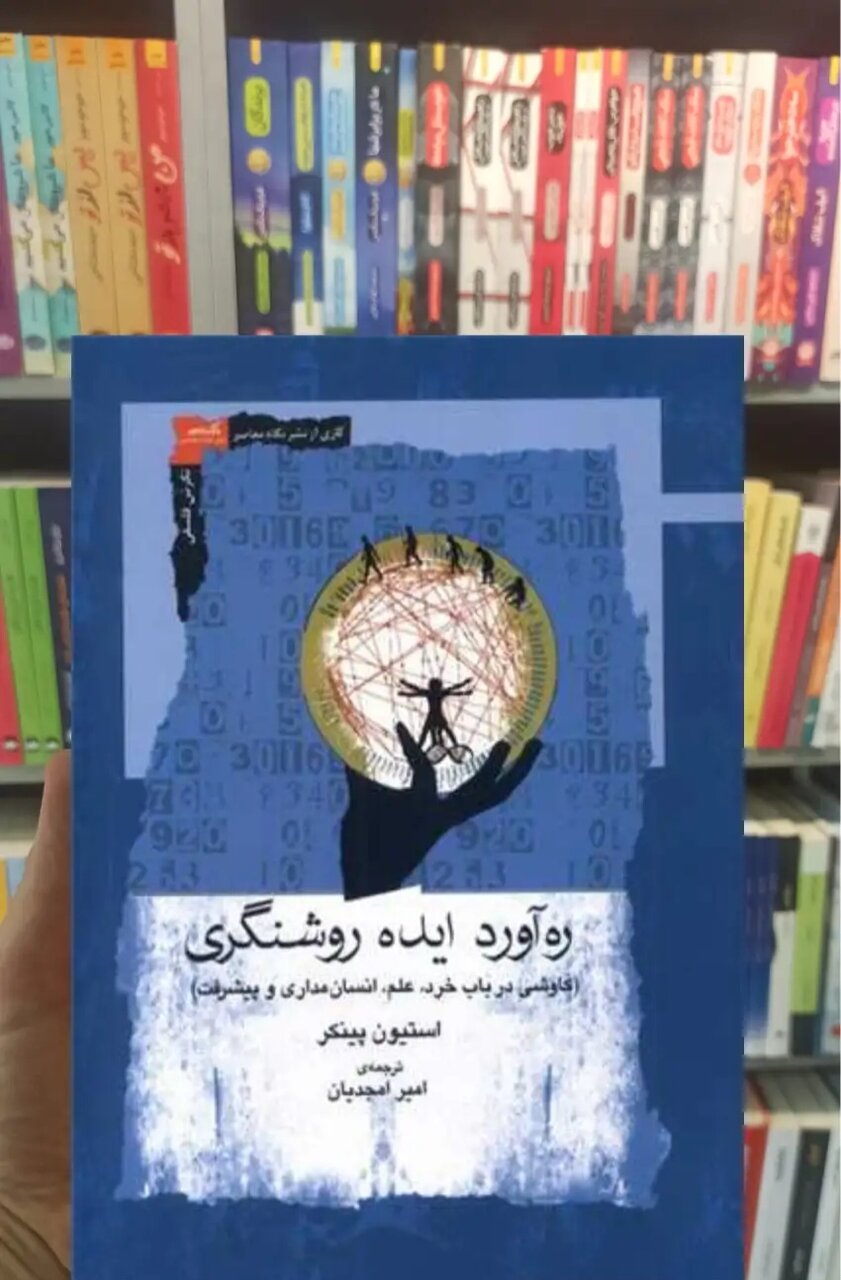
At the end of this meeting, Pål Bjørnstad expressed surprise at Shahr-e Ketab’s extensive activities and the statistics presented at this meeting, saying: “I was very impressed. It is interesting to me that a philosopher like Lars Svendsen, who might not be considered a widely public figure in Norway itself, is so widely read in Iran, and nine of his books have been translated into Persian. This demonstrates the depth and seriousness of Iran’s cultural society.”
He likened Shahr-e Ketab’s operating model to an important institution in his country, adding: “This space reminds me of the ‘Houses of Literature’ (Litteraturhuset) in major Norwegian cities, which are main centers for cultural events, dialogue, and exchange of ideas.”
The Norwegian Ambassador attributed the one-sided nature of the literary relations between the two countries to insufficient knowledge on the Norwegian side, adding: “We are fully ready to establish direct communication between you and institutions such as the Norwegian Publishers Association and the managers of the Houses of Literature. We can also provide the grounds for the presence and dialogue of Iranian writers in Norway. The Norwegian Embassy will exert all its efforts to facilitate this process.”
The meeting concluded with the agreement of both parties to continue contacts for drafting a practical and executable roadmap to expand cultural and literary exchanges between the two countries.