Chinese Islam, Born of Iranian Islam / Han Kitab: Ibn Arabi’s Mysticism in the Garb of Daoism and Confucianism / China’s Invitation to Iranians to Reform the Chinese Calendar
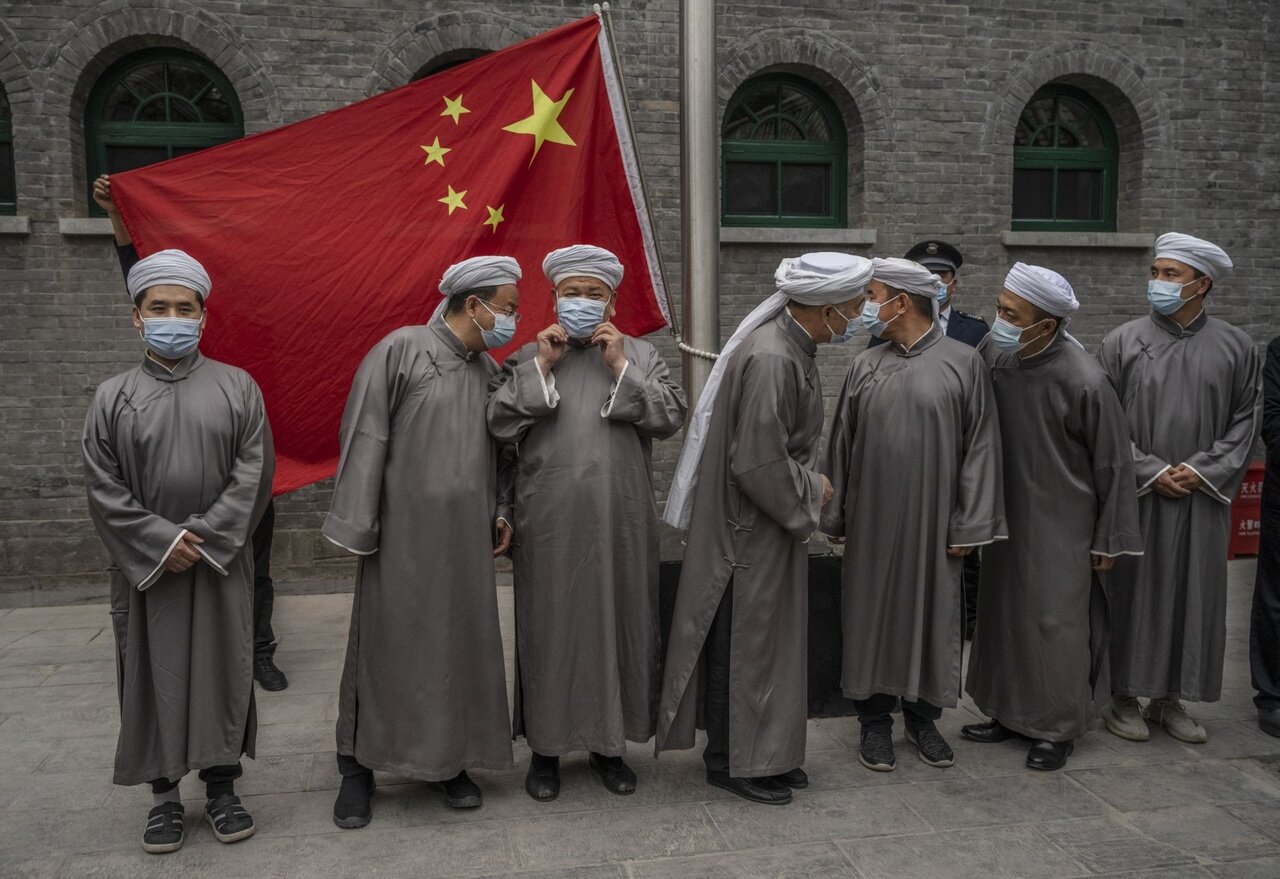
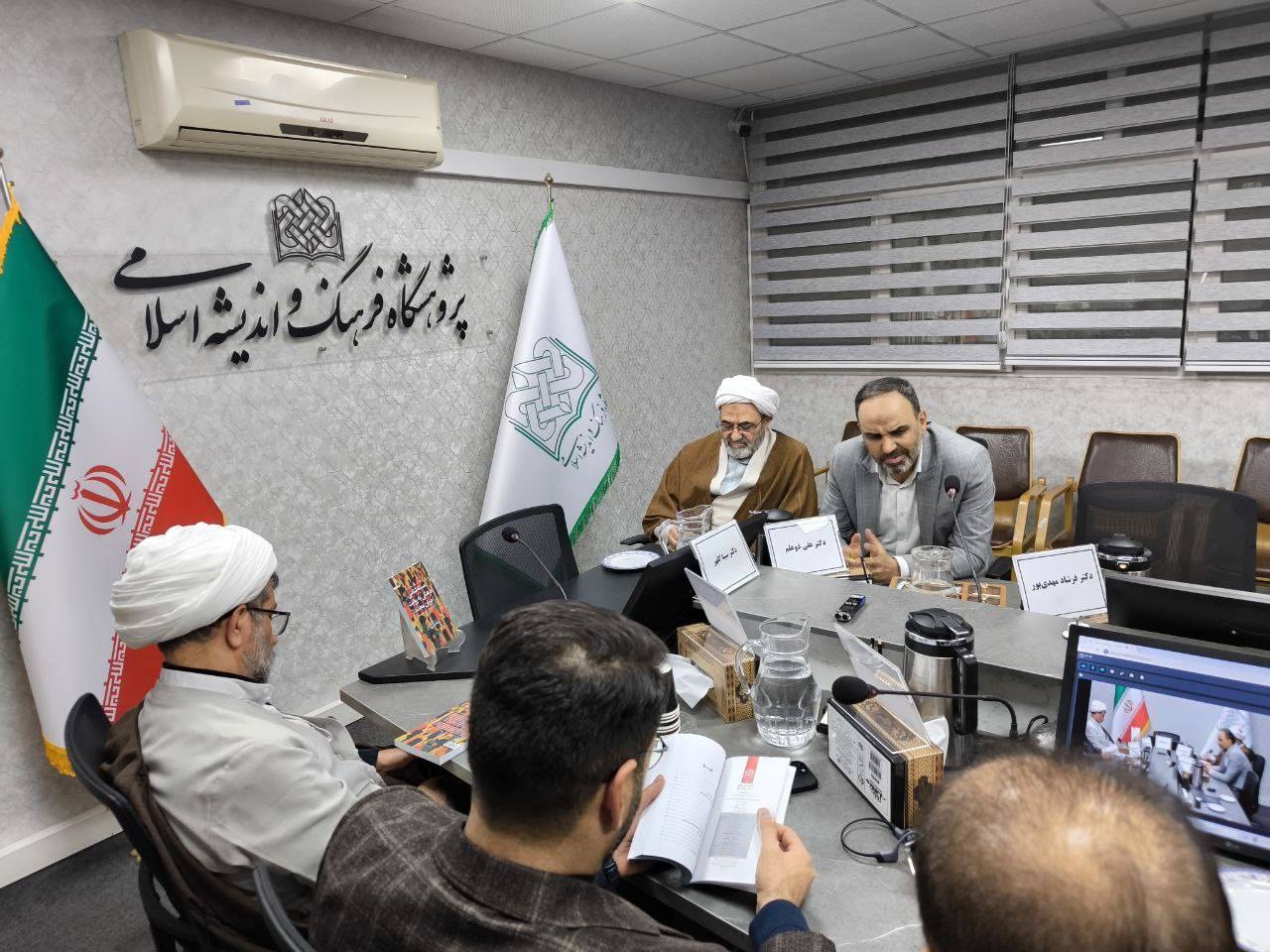
According to Khabar Online News Agency, Reza Dastjerdi wrote in IBNANews’ Religion and Thought service: ‘Han Kitab’ is the process of translating and compiling Islamic books into Chinese, and its works serve as a gateway for us Iranians to better understand Eastern teachings. According to the scholars of this movement, Islam has no conflict with the Three Teachings, and today, a version of Chinese Islam exists that is a valuable treasure for the history of rationality in China. The scholars of ‘Han Kitab’ succeeded in expressing Islamic teachings with a Chinese flavor in such a way that these works were welcomed even by non-Muslim Chinese scholars. What follows is the outcome of IBNANews’ interview with Malihe Rahmani, a translator and researcher, as well as the translator of Sachiko Murata’s book ‘The Dao of Islam,’ one of the prominent works that analyzes religious and cultural concepts of Islam from a new and different perspective.
Why did you turn to the topic of Chinese Islam? I ask this because our knowledge of this subject is very limited.
I have long been interested in Chinese tradition, especially Daoist tradition, as well as Islamic mysticism, particularly Ibn Arabi. Through the translation of the book ‘The Dao of Islam,’ I became acquainted with its author, Ms. Sachiko Murata. After this book, Ms. Murata began working on the ‘Han Kitab’ works of Chinese Muslims and has been busy translating these works into English for a long time.
‘Han Kitab’ consists of works written by Muslim thinkers in China, in which Islam, and especially theoretical Islamic mysticism, is explained within the framework of Neo-Confucian tradition, and this combines my two constant interests! After ‘The Dao of Islam,’ I also started translating one of the important ‘Han Kitab’ works, which is Ms. Murata’s latest published work. But as you said, our knowledge in Iran about this subject is very limited, and although a part of another work by Ms. Murata related to this, titled ‘Chinese Enlightenment of Sufi Illumination,’ has been published, this book has remained largely unread and unappreciated.
When did Islam enter China, and how did it penetrate this country despite its closed geography?
Islam entered China almost in the first century AH (7th century CE). In China itself, there are legends about the arrival of Muslims in this land, and figures from early Islam are introduced as those who brought Islam to China. In any case, Islam entered China in its early days, during the Tang Dynasty, probably via the Silk Road and Muslim traders. However, the mass entry of Muslims and their gaining social status occurred through the Mongol invasion of China, during the Yuan Dynasty.
In fact, just as many Easterners went West with the Mongol incursions, many Westerners also came East, and numerous Muslims from Central Asia entered China and even the imperial court. For instance, Wang Daiyu, a prominent Muslim scholar in the 17th century, says that his ancestors, who were astronomers from Iran, were invited by Emperor Gao three hundred years before him to the imperial court to reform the Chinese calendar.
Many Iranians who entered China, either for trade or because of their knowledge and art, settled in this land and its various important cities of that time. After being accepted into society and receiving Chinese surnames, these Muslims, after several centuries, completely transformed into “Chinese” Muslims. These Muslims have no relation to the Uyghur ethnic group, who are Turkic in race and language and lived in Turkestan adjacent to ancient China.
When we speak of the “difficulty of penetrating Chinese society” at that time, we must understand that our intention is not the impassability of the route to China or the difficulty of entering Chinese territory! For several thousand years, people from India, Iran, and Rome easily traveled to and from China via the Silk Road, by land and sea. Rather, the point is that China’s largely Confucian class society made it very difficult to be accepted as a “non-foreigner.” The idea of “China being surrounded by mountains” should also not be understood geographically; rather, this form of thought in China is a symbolic expression of its “preserved and impenetrable” nature.
What are the characteristics of the Chinese version of Islam, and how does it differ from Islam in other regions?
First, let me say that the phrase “Chinese Islam” means nothing other than Islam itself. The “Chinese” suffix merely indicates the local flavor, or, in other words, the form and attire that the essence of “Islam” has adopted. Henri Corbin also uses the phrase “Iranian Islam.” Some dislike these phrases because they rightly say that Islam is Islam, and it has no Iranian, Chinese, or Indian version.
When we say Chinese Islam, we do not mean that we are dealing with something completely different; rather, we mean the local flavor that Islam has acquired by being in the land of China. For example, when a Chinese Muslim sage wrote a book about the life of the Prophet of Islam, he tried to emphasize the Prophet’s “heavenly charisma” more than historical events, because this charisma of sages and wise men is a familiar and deeply rooted concept in Chinese tradition.
So this is a “Chinese Sīrat al-Nabī” (Biography of the Prophet), in the sense described. Or, in a book on Islamic metaphysics, the Chinese Muslim author tried to emphasize dualities, such as God’s two attributes of “Power” and “Knowledge,” and then named other dualities, for example, the duality of intellects and souls in the angelic realm, because dualities are very important in Chinese tradition, and the entire universe originates from the eternal duality of heaven and earth, or Yang and Yin.
A very important difference in this way of expressing Islamic concepts compared to other civilizations where Islam entered, relates to the Chinese script itself. This script is ideographic and pictographic, so phonetic transcription and the introduction of foreign concepts into it are very difficult. For example, consider the word “Kitab” (book) in the phrase “Han Kitab”; to phonetically transcribe it, three words are used: “kē,” “tā,” “bū,” meaning “to overcome,” “pagoda,” and “fabric”! Now, if someone wants to write a book about Islamic concepts in Chinese, to avoid difficult phonetic transcriptions, they can translate the intended Islamic concept into an equivalent concept in Chinese tradition.
This is precisely what began in 16th-century China, when Chinese Muslim sages, for various reasons, started writing books in Chinese. The result of their work is the collection of works known as “Han Kitab.” In “Han Kitab” texts, various Islamic subjects are presented in a Neo-Confucian expression, which was the dominant tradition in China at that time. This way of expressing Islamic subjects in the framework of Chinese concepts can be called “Chinese Islam.”
Islam and Buddhism, as two Eastern and Western religions, have many differences, making dialogue between them difficult. How did the exchange of ideas take place?
Much can be said about the similarities or differences between Islam and the Buddhist tradition, and there is no space here to discuss this topic. But in short, the Islamic spiritual tradition and the Buddhist tradition are very close in many respects. Our discussion here focuses on China from the 16th to 19th centuries, and naturally on Chinese Buddhist tradition and how Chinese Muslims interacted with it.
It is interesting to note that at the beginning of Islam’s entry into China, in the Tang Dynasty, one of the words Muslims used to express “God” was “Buddha”! Wang Daiyu, a prominent Muslim sage in the 17th century, debated extensively with Buddhist monks. He even recorded his conversations with a prominent Buddhist monk in one of his works and stated that this monk became his student after several days and nights of discussion and dialogue!
Naturally, some beliefs of the Buddhist tradition, such as the belief in reincarnation, were in conflict with the beliefs of Chinese Muslims. Furthermore, Muslim sages criticized the absence of a “positive aspect” in Buddhist metaphysics, and its purely apophatic nature. However, this criticism did not mean that they did not use Buddhist teachings to express Islamic concepts and benefit from this intellectual foundation of Chinese rationality. For example, Wang Daiyu used the Buddhist teaching “ten thousand dharmas return to the one” to express the concept of “numerical unity” or the station of “Waḥidiyya” (oneness) in theoretical mysticism.
Please explain the “Han Kitab” project. What is its core content and what are its characteristics?
For centuries, Chinese Muslims had to study classical Islamic works in Persian and Arabic to learn about Islam. From the 16th century onwards, as Islamic schools with various educational systems emerged across China, the need for Chinese resources for studying Islam intensified. Following this need, a group of Muslim scholars began translating important Islamic works into Chinese.
One of the most important of these works was “Mirṣād al-ʿIbād” by Najm al-Din Razi. This Persian work was so important in China that legends grew around it: that “we” dreamed of our grandfather pointing to a tree in the yard and telling us to dig it up, and after waking and digging, that person found a chest containing a book… and this “discovered” book was “Mirṣād al-ʿIbād.”
Persian works by Jami, such as “Lawa’ih” and “Ashiʿat al-Lamaʿat,” were also among the first translated works. In fact, the presence of Naqshbandi Sufism among Chinese Muslims contributed to the importance of these works among them. Books based on these translated works were also authored in Chinese. This movement of translating and compiling Islamic books into Chinese and its resulting works became known as “Han Kitab.” “Han” was a word the Chinese used for China, and “Kitab” (book), an Arabic word phonetically transcribed with a Persian pronunciation, was used to indicate the Islamic nature of these works.
An important point in this regard, as mentioned, is that the authors of “Han Kitab” used various Daoist, Confucian, and Buddhist concepts (the Three Teachings) to express Islamic ideas. Part of this work was due to the unique characteristics of the Chinese script, but part of it was also for introducing Islam to the elite and scholarly classes of China. The scholars of “Han Kitab” succeeded in expressing Islamic teachings with a Chinese flavor in such a way that these works were welcomed even by non-Muslim Chinese scholars. For example, a book that Liu Zhi wrote about Islamic Sharia was very well received by the scholarly class in China because they found it to be a book that spoke of “Li,” meaning “rites” and correct social actions that bring about balance.
Liu Zhi’s art in compiling this book was to highlight and make understandable the Islamic “Li” for the Chinese audience, instead of focusing on the details of legal rulings. The scholars of “Han Kitab” also tried to express concepts related to the origin and return of the universe (mabda’ wa ma’ad) in a Neo-Confucian framework that could influence these teachings and open up a new horizon for the Three Teachings.
What are the differences and similarities between Iranian Islam and Chinese Islam?
If we take Iranian Islam and Chinese Islam in the sense described, both share the characteristic of having a local flavor. Islam was primarily introduced to China by Iranians, and Iranian Sufism was also present among Chinese Muslims. Thus, Chinese Islam was born through Iranian Islam.
It was mentioned how much Persian works like “Mirṣād al-ʿIbād,” “Lawa’ih,” “Ashiʿat al-Lamaʿat,” “Maqṣad-i Aqṣā” by Aziz al-Din Nasafi, etc., contributed to the formation of “Han Kitab.” The similarity between Iranian Islam and Chinese Islam lies in these teachings; for example, in both, the way of expressing Islamic teachings, whether Iranian or Chinese, the concept of “farr” (divine glory/charisma) and “farr-possessed human” has a deep history and roots.
For both Iranians and Chinese, this concept was equally understandable due to their cultural and intellectual backgrounds. However, the difference between these two expressions of Islam relates to the Neo-Confucian background of Chinese Muslims. The way the origin of the world is expressed through this intellectual background has differences compared to Iran and other Islamic lands.
The absence of concepts like “God” or “creation ex nihilo” in the Chinese context led the authors of “Han Kitab” to seek other analogous concepts, the details of which cannot be elaborated here. The same applies to the expression of the concept of “ma’ad” (the return/afterlife).
Today, Chinese Muslims are under pressure. What is the cause of this pressure? Is it political or does it have social and cultural origins?
What I have explained so far concerns Chinese Muslims from the 16th to the 19th centuries. Regarding their current situation, I do not have sufficient expertise or information to comment. We all know that “Communist ideology” tolerates no belief other than itself, and it is obvious that Muslims, like Daoists, Buddhists, and Christians in China, are under pressure.
It is necessary to emphasize again that we are talking about Chinese Muslims, and not Uyghurs, who are neither Chinese-speaking nor of Chinese ethnicity. The pressure on Chinese Muslims might be greater than on other religions in China due to their shared faith with the Uyghurs, but due to the closed media environment within China, we do not have accurate information about the extent and nature of this pressure. And we cannot trust the dominant media in the world, which are dependent on rival powers of communism, not to exaggerate these pressures!
How familiar is Iran with the Chinese version of Islam?
Almost none! Although this movement was greatly influenced by Iran, it is virtually unknown in Iran. So far, only one book from this movement has been translated into Persian: “Chinese Enlightenment of Sufi Illumination.” This book is by Sachiko Murata, and it is actually an English translation of the Chinese translation of Jami’s “Lawa’ih,” along with translations of parts of several other works to introduce them.
Unfortunately, in the Persian translation, the esteemed translator apparently felt no need to translate Jami’s “Lawa’ih” because it was originally in Persian, and thus only the first part of the book, which serves as an introduction to the second part, was translated, leaving this book incomplete! The Chinese translation of Jami’s “Lawa’ih” is a masterpiece of adapting Islamic mystical concepts to Chinese concepts, and if this Chinese text translation, along with the original Persian “Lawa’ih,” had been included in the book, by placing the Persian and Chinese versions of a single text side-by-side, many subtleties and intellectual underpinnings of Chinese thought in “Han Kitab” could have become tangible for the reader.