What role did sound play in Hitchcock’s films?
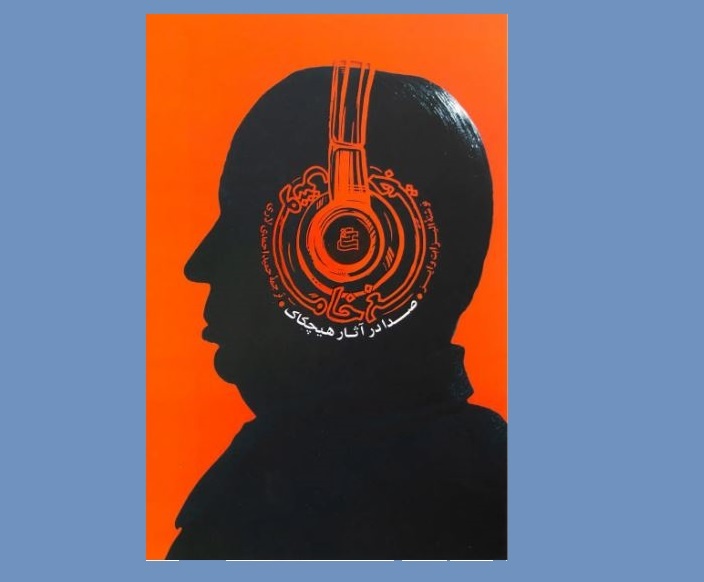
Art Service of Iran Book News Agency (IBNA) – Maryam Mohammadi; There are many books about sound and the art of sound recording, but most of them focus on sound engineering training and sometimes on techniques for recording sound in studios and on film sets. One of the few different books in the field of sound is “The Silent Scream, Sound in Hitchcock’s Works,” written by Elisabeth Weis, translated into Persian by Hamidreza Ahmadilari, and published by Saqi Publishing.
“The Silent Scream” offers a deep analysis of the role of sound in the films of the cinema master, Alfred Hitchcock. This work is one of the first attempts to precisely and scientifically examine Hitchcock’s complex use of sound as a narrative tool in his works. Weis shows how Hitchcock utilized sound and music to reinforce psychological themes, create tension, and advance his complex storylines.
The book includes nine chapters with the following titles: First Experiences with Sound, Expressionism at its Peak, Establishing a Classic Style, Music and Crime, Rear Window, Acoustic Assault and Single-Location Films, Beyond Subjectivity, and Silence and Scream.
In this book, the author, through precise analysis of films such as “Vertigo,” “Dial M for Murder,” and “Rear Window,” emphasizes that sound in these works is used not merely as an auxiliary element, but as an essential and necessary part of the viewer’s experience. Weis utilizes perspectives such as formalist analysis and film psychology to explain the effects of sound and addresses its profound impact on the audience and the dramatic structure of Hitchcock’s works.
In the first chapter of this book, we read: “Penelope Houston, in a famous critique of Hitchcock’s film, claims that in ‘The Birds’ (1963), the primary source of terror originates from the film’s soundtrack to conceal the birds’ inability to perform this task.”
However, the heavy reliance of “The Birds” on sound effects possesses not only strong aesthetic capabilities but is also a logical consequence of Hitchcock’s creative innovations during that professional period. In any case, this critic’s interpretation implicitly suggests that Hitchcock’s use of sound does not have a very strong connection with his manipulations in the visual realm. Of course, the notion that the expressive capabilities of sound are inferior compared to image is almost a prevailing opinion among cinema researchers and even many filmmakers.
Throughout the book, the author refers readers interested in the topic of sound in Hitchcock’s works to excerpts from Hitchcock’s interviews about his films and the use of music, soundtrack, and its application in his important films, including “Rear Window,” “The Man Who Knew Too Much,” and “The Birds,” to prove her theories about Hitchcock’s creative use of the film soundtrack to the reader.
In the ninth and final chapter of this book, the author states: “Silence is a thematic and formal element in almost all of Hitchcock’s films.” She presents examples from all of Hitchcock’s films to prove her point.
The author explains: “The association of silence with the power of control is not as evident in any of Hitchcock’s works as it is in the montage sequences where he creates maximum tension and audience engagement with the film. It seems that Hitchcock, like a criminal, thinks such actions are more effective if performed in silence.” This is why Hitchcock’s thematic and stylistic interests intersect precisely at points where crime or murder is committed by the anti-hero in silence and filmed/depicted as a silent montage sequence.
By examining Hitchcock’s use of sound in suspense, horror, and the psychological complexities of characters, especially in films where sound often becomes part of the narrative background, this book has become an essential resource for cinema students and enthusiasts of Hitchcock’s work.
Hitchcock is always known for his creative uses of imagery and complex visual techniques, such as moving shots in films like “Notorious,” “Vertigo,” and other prominent works. The view that Hitchcock also demonstrated special creativity in his use of silence, soundtrack, and music, alongside imagery, changes the perspective of critics and fans toward him.
One of the interesting sections of this book is its appendix, which lists images of posters and names of 53 feature films Hitchcock directed during his artistic career, and also mentions Hitchcock’s television works, mostly produced for CBS.
It should be noted that “The Silent Scream, Sound in Hitchcock’s Works” is considered a valuable resource for analysis and learning about sound and its effective use in the filmmaking industry, especially for those interested in a deeper understanding of the art of filmmaking and the use of audio tools in cinema.