Story of a female librarian who travels to border villages with her personal car
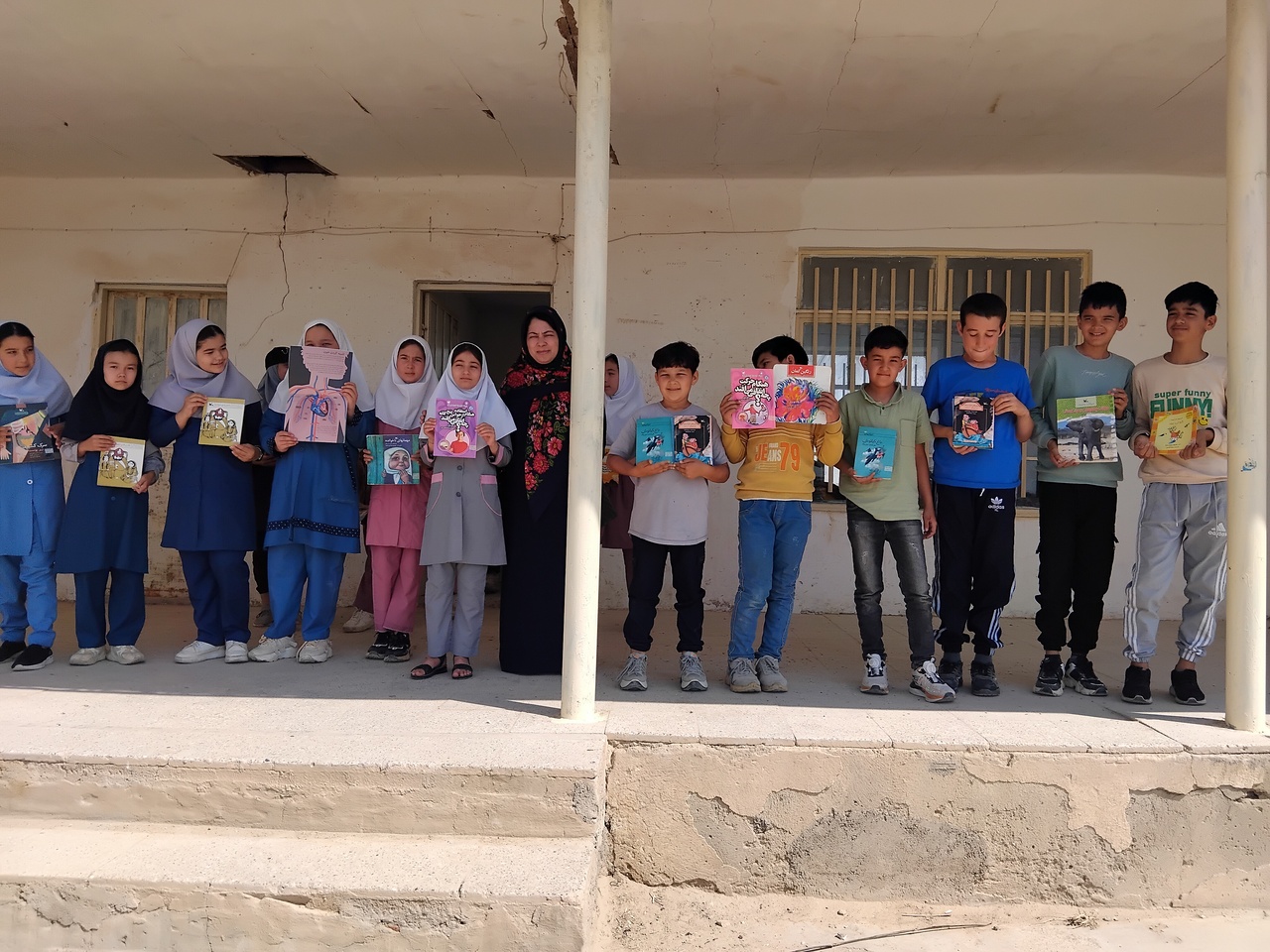
In the border and underprivileged region of Dashliborun in Golestan province, where the distance between children and books and educational facilities is sometimes greater than the distance between villages themselves, a female cultural instructor has decided to bridge this gap with her determination and responsible approach.
Every week, she travels on the scattered and border roads of this region in her personal car to deliver books and a few educational aids and recreational items to the children; children whose only opportunity to become familiar with the world of stories might be this small mobile library.
This woman faces difficulties every step and every day of her work; from a shortage of educational aids to difficult routes and high travel costs; but she continues because she believes these simple books can open new doors for the children of Dashliborun and keep the sense of life and hope alive in them.
This hardworking woman’s name is Fatemeh Zahmatkesh. A graduate of public administration and instructor of the Dashli Borun border mobile library, she began her work in March 2024 with love and interest for children and related books.
We sat down for an interview with her to narrate her experiences, concerns, and perspective; a calm and persistent woman who transports books and learning from the heart of the borders and roads in her personal car to reach children who might need them more than anyone else.
With a personal car for underprivileged children
Fatemeh Zahmatkesh began by pointing out that the village of Dashli Borun and 11 surrounding villages, including Torshkali, Khair Khojeh Najaf, Khair Khojeh Sofla, Khair Khojeh Olya, Shordgash, Elyas Haji, Ozbak Abad, Dozalum Markazi, Dozalum Janubi, Qara Dong, and Peshe Lar, are her areas of work. She said: “From the beginning of my work until today, I have recruited approximately 80% of members.”
Zahmatkesh added: “Since a vehicle for visits is currently not available to me, I cannot visit the surrounding villages much; but as much as possible, I visited each village several times with my personal car without receiving fuel costs or other expenses, just to familiarize the children with the activities of the center and lend books.”
She continued: “Currently, there are over 7,000 volumes of books in the Dashli Borun mobile library, among which I also have old and worn-out books that I am in the process of separating.”
Children’s happiness alongside hardships and shortcomings
Fatemeh Zahmatkesh then referred to some of her memories and concerns since starting her work. She said: “The excellent reception of children for book borrowing, intellectual and board games, and crafting activities are among the memories that are constantly appealing, pleasant, and unforgettable for me every time I visit the children.”
She added: “The happiness of the children from the small prizes I bring for them at my own expense and the gratitude of their mothers for their children becoming interested in reading and moving away from cyberspace, the children’s feeling of intimacy with me, especially girls, at the library and even outside my workplace at various village events, are all memories that keep me hopeful to continue this path.”
Zahmatkesh continued: “However, alongside all these beauties and pleasant memories, unfortunately, the lack of educational and play facilities in the border and underprivileged schools is saddening. I have experienced firsthand many times that some children have never even seen crayons or the play items I bring for them, or numerous unknown talents that may never be recognized.”
Attention to today’s children; investment for tomorrow
The Dashli Borun border mobile library instructor listed new books, educational and play materials, crafts, small experiments, and gifts brought to the children every so often as needs for her mobile library. She said: “Paying attention to children today is an investment for tomorrow, and promoting and encouraging reading, keeping children away from sometimes unsafe and uncontrolled cyberspace, and aimless games are among the issues we must take seriously and act better to fill their leisure time in a healthy way and create a safe environment for play and entertainment for our children.”
In another part of her speech, she described a typical workday and said: “I come to my workplace from 8 AM with the goal of promoting reading and cultural and artistic activities. I go to the surrounding villages as much as I can, and I try to send books to the children through managers who come from Gonbad to the villages. In the meantime, several managers have taken the trouble to take books from the library for students on their way.”
Zahmatkesh added: “Because the Dashli Borun mobile center is close to the school, children have an extraordinary reception for both borrowing books and playing during recess; so much so that due to lack of space, I had to schedule girls for even days and boys for odd days.”
Zahmatkesh continued: “Last summer, in addition to the 5 classes I taught myself, including local arts (Alajeh), crochet, crafts, origami, etc., 4 classes were also held in cooperation with Gonbad Technical and Vocational Training, such as Arghavan weaving, mat weaving, pastry making, etc., which were met with an extraordinary reception from teenagers and parents.”
Support for better services
The Dashli Borun border mobile library instructor stated in another part of her speech: “I request that a vehicle be provided to me as much as possible. Provide play and entertainment items, colored cardboard and paper, new books, and any educational equipment necessary for an active center.”
Also, the Dashli Borun mobile center does not have gas lines, and given the lack of oil and capsule gas in the village and the coldness of this region, working in winter is very difficult. On the other hand, since the Dashli Borun mobile center building is very old, it needs fundamental repair.
In conclusion, she also said: “In addition to a vehicle, a male force is also necessary at the center. Currently, I manage all duties myself; but since there are several boys’ high schools in this area, I think it is better to have a male force as well so that male students feel comfortable and have better intimacy and interaction with the instructor.”