‘Homeland writing’ will help the permanence of dear Iran
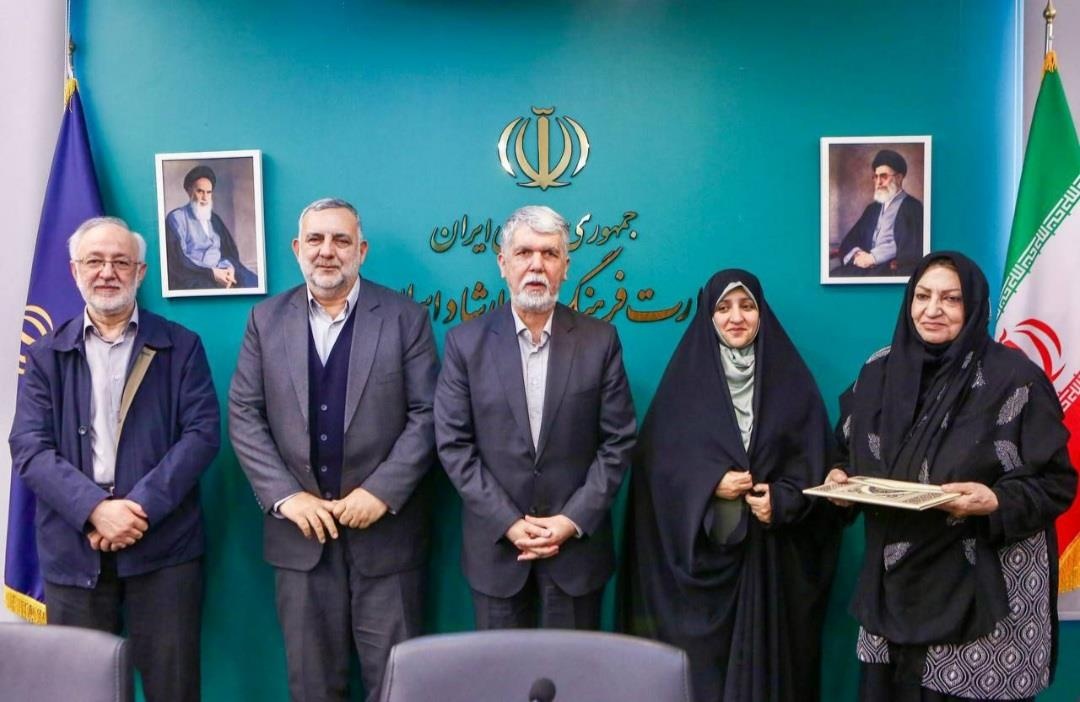
According to the Iran Book News Agency (IBNA), quoting the Public Relations and Information Center of the Ministry of Culture and Islamic Guidance, a meeting of women whose works received commendation from the Supreme Leader was held on Saturday (Azar 22nd) with Seyed Abbas Salehi, the Minister of Culture and Islamic Guidance. Also present were Zahra Behrouz Azar, Vice President for Women and Family Affairs, Alireza Mokhtarpour, researcher and real member of the Public Culture Council, and Mohammadian, Secretary of the Council for Publishing Thoughts and Works of the Supreme Leader.
The Minister of Culture and Islamic Guidance, while congratulating on the birthday of Hazrat Zahra (S), said in this meeting: Sometimes the question has arisen as to why the Supreme Leader pays special attention to resistance literature.
Salehi stated: One angle of his attention to resistance literature is its impact on ethical and religious conduct and education, which is undoubtedly very important and notable; but another perception, which became more prominent for me this year, especially with the events of the 12-day imposed war, is that Iran has always been exposed to significant geographical and historical risks, and for this reason, we need security infrastructure.
The Minister of Culture and Islamic Guidance said: Part of this infrastructure relates to “hard security”; a path that the Leader has consistently pursued and whose results we have seen in the missile and drone fields in the recent war.
He noted that “soft security” is as essential as hard security, stating: This dimension of security manifests in strengthening the spirit of resistance, social resilience, and standing against enemy aggression.
Salehi emphasized the importance of recreating memories, saying: Resistance literature, by recreating memories and bringing new generations closer to the time and place of the Sacred Defense, can strengthen the spirit of resistance for national pride, especially for a generation that has not seen the war and can only connect with it through this path.
The Minister of Culture and Islamic Guidance added: Today, as external threats increase, the importance of paying attention to this kind of literature doubles. Resistance literature is, in fact, literature of social resilience.
He emphasized that the eight-year Sacred Defense is a different phenomenon, adding: Many wars have occurred throughout history in Iran and the world, but few can be found where a nation, with all its segments and classes, participated unitedly.
Salehi stated: The Sacred Defense is a treasure trove of references that can increase social resilience, and everyone can identify with a model; one of the features of the Sacred Defense is that there is so much diversity in the models it presents that different groups can become involved with it and multiply social resilience.
The Minister of Culture and Islamic Guidance stated that one of the prominent features of the Sacred Defense is its “feminine face”, saying: While wars are usually considered a male phenomenon, the Sacred Defense is one of the few wars where the presence and role of women were very prominent.
He further categorized women’s roles in the field of Sacred Defense into three layers: direct, semi-direct, and indirect, adding: Women were able to play a direct role in areas such as aid, medicine, journalism, etc.
Salehi, stating that in the indirect layer, women’s support and services also played an essential role, commented: Here I refer to the interpretation of Imam Khomeini (R.A.) who said: “When I see these honorable women on television engaged in accompanying and supporting the army and armed forces, I feel a value for them in my heart that I cannot attribute to anyone else. We must appreciate this blessing and follow these women.”
The Minister of Culture and Islamic Guidance said: The Sacred Defense has many feminine dimensions, although the face of war is usually masculine, the Sacred Defense has amazing feminine facets. It must be noted that for internalizing soft security, the feminine part of society helps more.
In another part of his speech, while emphasizing that many female narrators are involved in the field of resistance literature, he added: Women’s characteristic attention to detail allows them to focus on subtleties and details in narratives that help better recount the events that occurred.
Salehi stated: Also, women’s deep existential understanding and empathy with women whose lives were directly or indirectly intertwined with the war make female narratives of the Sacred Defense more genuine and impactful.
The Minister of Culture and Islamic Guidance emphasized that our Sacred Defense was not solely a men’s war, and at least half, and perhaps more, was defined by the presence and resilience of women. This feminine face is one of the outstanding features of our Sacred Defense and requires accurate understanding, perception, and narration, and female narration creates and provides a more accurate and effective portrayal. Therefore, the narratives of you dear ladies hold such importance and position.
The Minister of Culture, at the end of his remarks, stating that he does not view the issue of resistance literature solely from an ideological angle, added: Even those without strong religious beliefs will connect with these narratives if they know what sacrifices were made to preserve this land and homeland. This “homeland writing” will ultimately help ensure the stability and permanence of dear Iran.
At the beginning of the meeting, the writers presented challenges and solutions, and the Minister of Culture and Islamic Guidance promised follow-up.
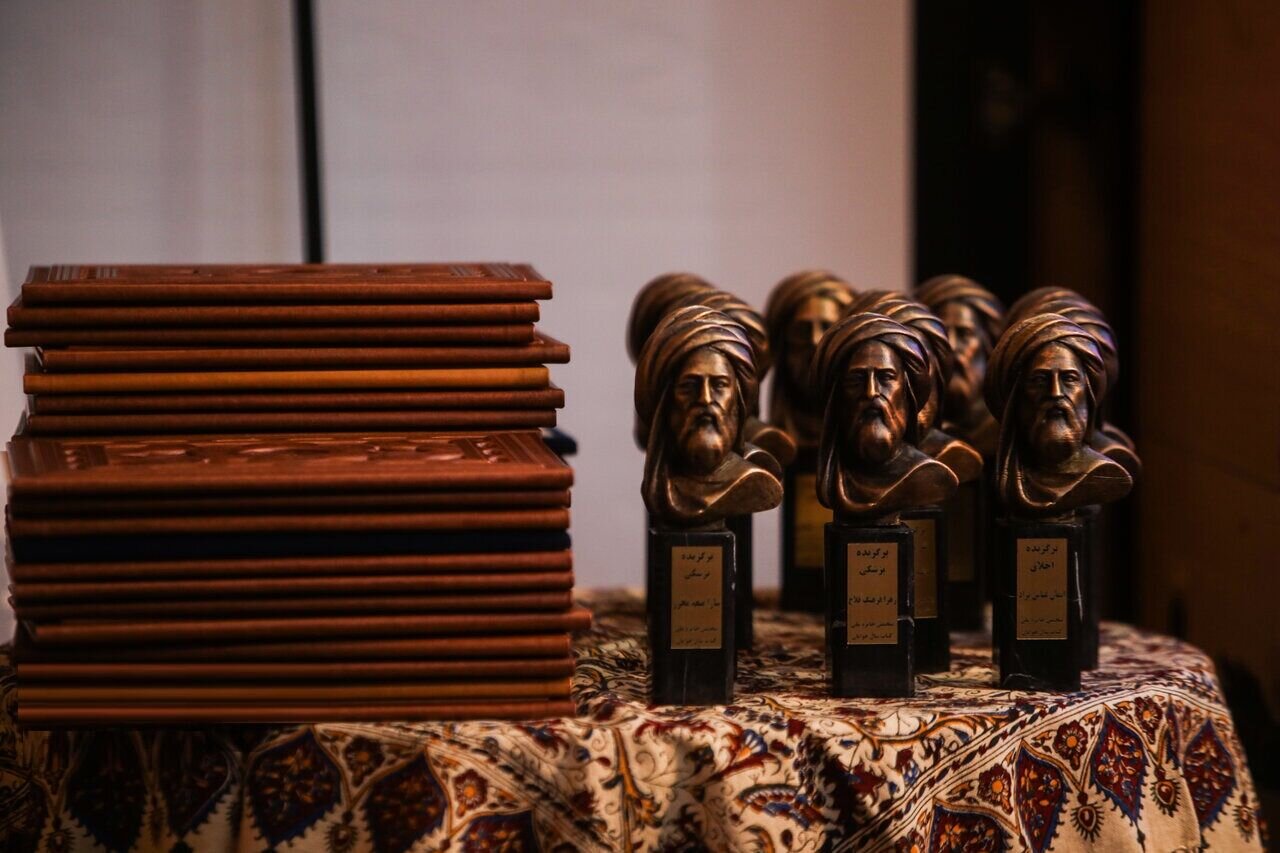
Finally, Salehi thanked the authors present at the meeting by presenting a certificate of appreciation.