The Story of Master and Student in ‘School of Shi’ism’
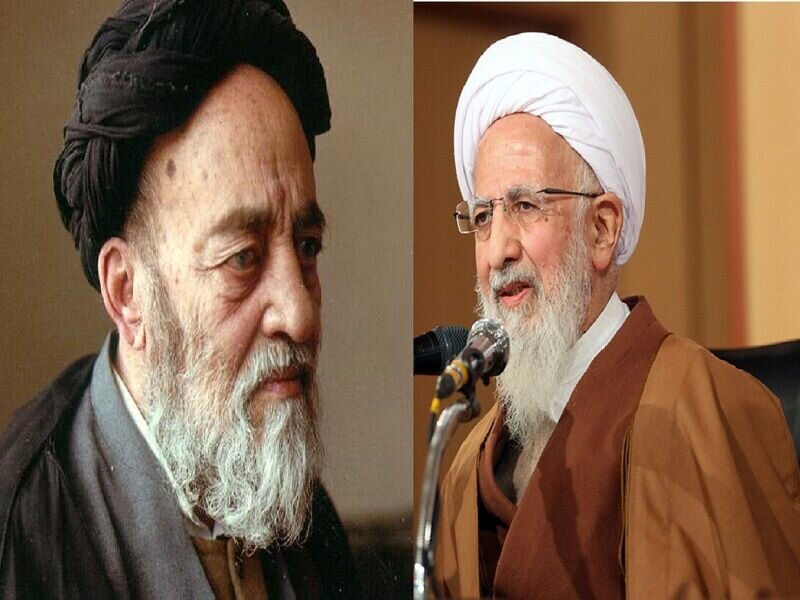
According to Mobalegh News website, the book ‘School of Shi’ism according to Allameh Javadi Amoli,’ authored by Ayatollah Abdullah Javadi Amoli, has been published under the supervision of Ma’arej Institute for Revelationary Sciences and by Asra Publishing Center in 544 pages and 1000 copies.
According to IRNA, in this book, Allameh [Javadi Amoli], besides having a comprehensive look at Shi’ism, has elucidated topics such as Tawassul (seeking intercession), Shafa’at (intercession), the place of ethics in the religious system, the relationship between religion and politics, government in Islam, and the role of people in Islamic governance.
Parts of the book are as follows:
Meaning of Shi’a
Shi’a literally means follower and technically refers to all followers of Imam Ali (AS). Shi’ism itself is divided into multiple sects, and consequently, many views have been attributed to them in theological works (Maa’ther). Sheikh Mufid wrote a book titled ‘Awa’il al-Maqalat’ to differentiate the saved sect from other sects called Shi’a. In this book, he addressed the difference between Shi’a and Mu’tazila, and also the difference between Shi’a Adliya and Mu’tazila Adliya. He then proceeded to differentiate the Imami school from other Shi’a sects, stating the views of other groups in this important matter. (Page 95)
Imam Ali (AS) and the infallible Imams (AS) have scientific authority not only in political leadership but in all parts of religion, including beliefs, ethics, rulings, and all religious teachings. This authority is based on a chain of uninterrupted narrations from the Holy Prophet (PBUH). Therefore, the school of Shi’ism is not a phenomenon that emerged after the era of the Prophet’s mission. Rather, based on the certain history of the Prophet’s era and the teachings of Ahl al-Bayt (AS), it is pure Islam and its continuation. The Shi’a perspective, derived from Ahl al-Bayt (AS), is the only authentic narration of Islam, and Shi’as are followers of the Prophet’s lineage (the lesser Thaqal) and adherents of those familiar with revelation and divine spokespersons. According to the famous Hadith al-Thaqalayn (Hadith of the Two Weighty Things), the Qur’an and the lineage (Itrat) are inseparable. (Page 104)
A Look at the History of Shi’ism
Seyed Kamaleddin Emadi, Head of Ma’arej Institute for Revelationary Sciences, wrote in the book’s foreword: The history of Shi’ism is the same as the history of Islam. Among the companions, the group that believed in the leadership (Wilayat) of the Prophet’s household (Ahl al-Bayt) (AS), especially Amir al-Mu’minin (Imam Ali) (AS), and expressed affection for them, continued the path of pure Muhammadan Islam. The Holy Prophet (PBUH), who emphasized people following Amir al-Mu’minin (AS), continuously reminded them of the virtue of Ali’s followers and Shi’as to strengthen their faith. Finally, at the event of Ghadir Khumm, among the large group of Muslims returning from the Hajj pilgrimage on the 18th of Dhu al-Hijjah in the 10th year of Hijra, he, by divine command, introduced Amir al-Mu’minin (AS) as his Imam and successor, instructing, ‘All present should convey this message to others.’
Based on this, any researcher who refers to the successive texts of the Prophetic era will find that the correctness of the Shi’a belief in the succession of Amir al-Mu’minin (AS) and other infallible Imams (AS) is among the certainties of Islamic history. The school of Shi’ism, which formed during the Prophet’s own time based on his repeated recommendations, especially the noble and successive Hadith al-Thaqalayn (Hadith of the Two Weighty Things) where he said: ‘I am leaving among you two weighty things. As long as you hold fast to them, you will never go astray: the Book of Allah and my household (Itrah), Ahl al-Bayt. Indeed, they will never separate until they return to me at the Pond,’ is not separate from authentic Islam. Rather, it is true Islam and its continuation; however, due to political reasons and the movement to prohibit Hadith and the ban on publishing noble Prophetic narrations for a century, many Muslims were deprived of this truth and took another path. (23 and 24)
A Book to Introduce Shi’a Islam, a Continuation of Allameh Tabatabai’s Book
Emadi also wrote: For a long time, great Shi’a scholars, with their indescribable efforts in introducing the school of Ahl al-Bayt (AS) and Shi’a culture, presented valuable works to human society. One of the most important among them in the recent century is the valuable book ‘Shi’ism in Islam,’ authored by the great Shi’a scholar Allameh Tabatabai. Given the passage of half a century since the publication of this book, the glorious victory of the Islamic Revolution of Iran under the leadership of a Shi’a authority, the establishment of an Islamic government, and facing a cultural invasion against Shi’ism, it was necessary to produce a more comprehensive work suitable for the needs of the current era. The Islamic Culture and Relations Organization, correctly understanding the necessity of such a work, requested Ayatollah Javadi Amoli, may his blessings continue, to write a book for introducing Shi’a Islam in 1401 [Solar Hijri calendar, approximately 2022-2023 AD]. (Page 29)
The head of Ma’arej Institute for Revelationary Sciences, emphasizing that ‘School of Shi’ism according to Allameh Javadi Amoli’ is a continuation of ‘Shi’ism in Islam,’ compared the two books and wrote: The book ‘Shi’ism in Islam’ discusses the history and evolution of Shi’ism from its beginning until the fourteenth century, addressing Shi’a branches and the distinctiveness of Twelver Shi’ism compared to Zaydi and Isma’ili Shi’ism. However, in the current book, the historical development of Shi’ism and its branches are not addressed because Allameh Javadi Amoli considers this a task for researchers in the field of history.
He added: The present book shares common topics with ‘Shi’ism in Islam,’ but they are discussed much more extensively here. Also, the rational approach compared to the transmitted approach in the theological discussions of ‘Shi’ism in Islam’ is more prominent, while in this book, alongside the rational approach, the transmitted approach, especially the Quranic approach, is more significant. In fact, the present book benefits more from both rational and Quranic dimensions.
Emadi continued: The fourth advantage, according to Emadi, is that ‘Shi’ism in Islam’ places ‘religious thought’ as the first topic after historical matters, but the present book, after an introduction about introducing Shi’ism, discusses ways of knowing, stating experience and sense as the first way of knowing—a topic not raised in ‘Shi’ism in Islam’.
He added: In the current book, several independent chapters are dedicated to rights and duties, ethics, and governance. Given the requirements of the time, especially considering the Islamic Revolution and the establishment of a popular government based on Shi’a principles and the theory of Velayat-e Faqih (Guardianship of the Islamic Jurist), governance is considered an essential topic. This topic was focused on by Allameh [Javadi Amoli]…. Therefore, in addition to explaining theological points and responding to theological doubts, the present book addresses some necessary epistemological topics for society, particularly governance. (30 and 31)
Distinction between Shi’a Studies and Proof of Imamate
Ayatollah Abdullah Javadi Amoli, referring to the distinction between the discussion of Shi’a studies and the discussions on proving the principle of Imamate of Ahl al-Bayt (AS), wrote in the book’s introduction: Shi’a studies are different from proving the principle of Imamate and raising its extensive theological issue, which has occupied a broad stage after prophethood. Presenting the acceptance and rejection of different groups, citing and criticizing the arguments of both sides, and reaching a final conclusion and proving the undeniable right of the Imamate of Ahl al-Bayt of revelation and infallibility (AS) are outside the mission of this book and beyond the scope of its introduction. Prophethood, Imamate, miracles, and similar topics discussed in specialized theology are not human sciences in the conventional sense; they are neither common (daraja) nor unfamiliar (ghariba) sciences taught in seminaries, universities, and other academic centers; nor are they like esoteric and non-conventional sciences, such as magic and sorcery. Because all aforementioned sciences have a specific subject, issue, principles, learning method, and practical application that can be accessed after a period of study and discussion. (Page 35)
This Qur’an interpreter in the book’s introduction addresses issues such as the fundamental and deep difference between Shi’a and Sunni regarding Imamate, precise explanation of Shi’a being described as Imamiya and Adliya, Shi’a rationalism, explaining the status of Ahl al-Bayt (AS) and the necessity of avoiding exaggeration and extremism, the adherence of rational conduct (sirah al-uqala) to the legacies of previous prophets, the scientific and theological genius and pride of Shi’ism in reaching Imamate-centered principles and knowledge, and also the mission of Shi’ism in removing ignorance (jahl-zeda’i), fostering intellectual growth (jahl-roobi), and eliminating pre-Islamic ignorance (jahiliyyat-zeda’i).
From Introduction of Shi’a School to Governance
This book is structured in 6 chapters. Chapter 1 is dedicated to introducing Islam and the Shi’a school of thought. The reader becomes familiar with some characteristics of Islam and studies topics such as the definition of Shi’a, the use of the word Shi’a in the words of the Holy Prophet (PBUH), and the link between Shi’a and Islam. In Chapter 2, methods of knowledge are introduced, where the reader learns both generalities of knowledge and specific terms like sense and experience, reason, intuition (kashf and shuhud), revelation (wahy), sunnah, and transmission (naql), as well as the relationships between different forms of knowledge.
Chapter 3 is dedicated to worldview and beliefs, including topics on worldview, theology (God-knowledge), prophethood and mission, Imamate, and eschatology (resurrection). Chapter 4 covers the topic of rights and duties, mentioning points about the concept of right and duty, the relationship between right and duty, sources of rights and duties, foundations of rights and duties, and also the scope of rights and duties.
In Chapter 5, Allameh addresses the topic of ethics, discussing in several articles the meaning and nature of ethics, the place of ethics in the religious system, the Islamic ethical system, foundations of ethics, obstacles to ethics, and the stages of the spiritual journey (sair-e suluk) towards God. Chapter 6 is dedicated to the topic of governance. Allameh, while examining topics such as the relationship between religion and politics and government in Islam, discusses the features and conditions of a desirable government and the qualifications and characteristics of an Islamic ruler, elucidating the role of people in Islamic governance.





