A Page from the Cultural Exchanges of Iran and India
The longstanding connection between the two great civilizations of Iran and India in terms of cultural, religious, linguistic, and other relations within the scope of Aryan civilization building has caused scholars and litterateurs of these two lands to influence each other and play a significant role in creating diverse and varied topics (myth-making, storytelling, etc.) and produce valuable works such as Kalila and Dimna, Sindbadnameh, etc. These works, which were compiled in the history of Indian civilization, were also translated into Pahlavi, Arabic, and Persian during the ancient and Islamic periods of Iranian cultural history.
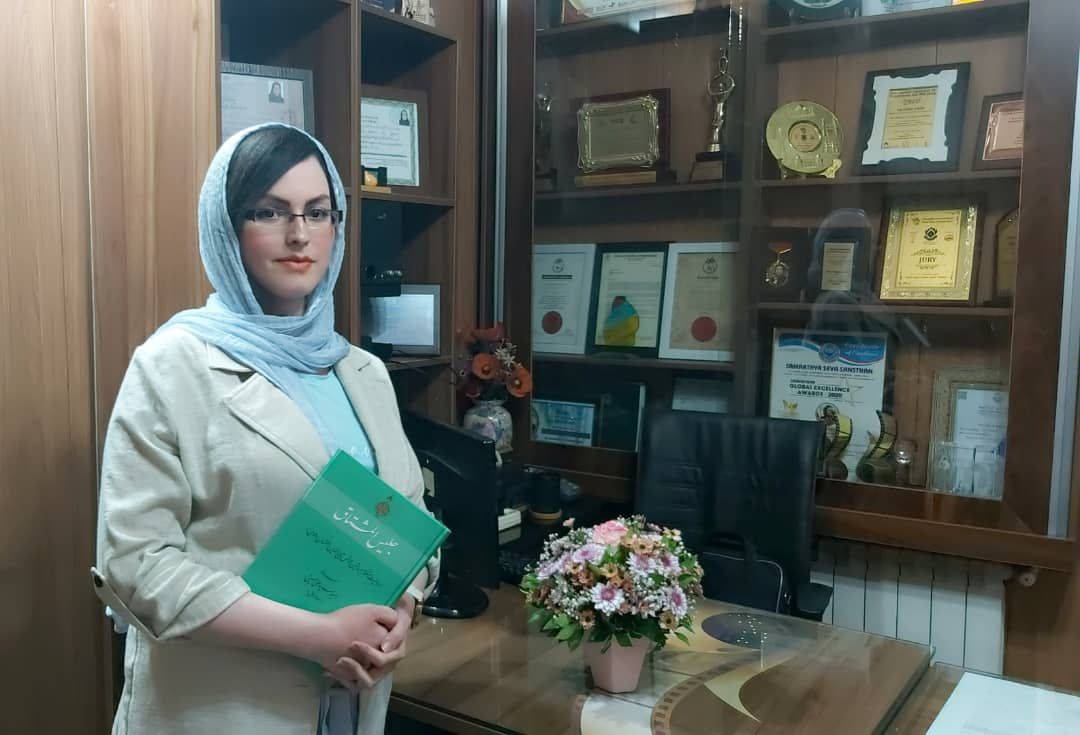
One of the narrative works of ancient India is the romantic story of King Kushwar and Malekara, which was translated into Persian prose by Ikhsan Dehlavi under the title Basatin al-Uns during the reign of Muhammad Shah Tughluq (725-752). This very work was put into Persian verse by a poet named and surnamed Ali / Amir Sayyid Ali Husseini in the following century. The only ancient source that provides some information about Jalis al-Mushtaq is Kashf al-Zunun by Haji Khalifa. The book “Jalis al-Mushtaq” was corrected by Fatemeh Rostami and published by Tamsal Publications. To learn more about this book, we sat down for an interview with her, which you can read below:
How did you become familiar with Jalis al-Mushtaq and undertake the correction of this manuscript?
Apart from my personal interest in manuscript correction and choosing it as the topic of my doctoral dissertation, one of the most important duties of literary researchers is to recognize and introduce unknown texts of the Persian language. On the other hand, the منظومه (poem) Jalis al-Mushtaq, as one of the lyrical reserves of the ninth century, showcases the intertwining of Indian-Persian meanings. It can be said that the current poem is one of the Persian works related to the northwestern region of Iran, especially the Shirvan region of Azerbaijan, as one of the few rare poems by an anonymous poet named Ali / Amir Sayyid Ali Husseini, dedicated to Shirvanshah Farrukhisar in the 9th century. This lyrical work, alongside some recognized works related to this period, especially the Shirvanshah period, including the Divans of Qabuli Harawi, Badr Shirvani, Halimi Shirvani, etc., can clarify ambiguous and unknown points and connect the missing link of the chain of Persian literature during this period, adding a page from the history of literature of this vast land to the thick file of language, literature, social, cultural, etc. especially since this poem is a translation of a great work named Basatin al-Uns, authored by Ikhsan Dehlavi in the 8th century AH during the time of the Tughluq Shahs of India, which demonstrates the depth of cultural exchanges between Iran since long ago and the time of the poet of this poem in the Shirvan Azerbaijan region with the subcontinent, and is also considered a historical document. I would like to take this opportunity to specially thank my distinguished and valuable supervisor, Dr. Alireza Qawjeh-Zadeh, who helped me make this work more fruitful with his expert guidance.
Describe the workflow you undertook to revive this work.
My first step in reviving this valuable work was researching and fully introducing this poem and explaining the circumstances of its poet and the poet’s method, as well as introducing the prose version of this work, Basatin al-Uns, and its author, comparing these two works, and explaining the differences and similarities between the two works in describing stories and characters. I also examined and stated the common composite and idiomatic expressions between the two works and stated similarities in concepts and metaphors. Next, the stylistic features of the poem Jalis al-Mushtaq were fully examined at the linguistic, literary, and content levels, along with corresponding examples in the verses. Also, the special orthographic features of this poem were identified and stated. A summary of the poem’s stories was also described in the form of four stories, and the specifications of the used manuscript were fully introduced. In the next step, the verses of the poem were carefully examined and reviewed, and deficiencies and shortcomings in words and vocabulary and the prosodic weight of the verses were fully corrected and noted in the footnotes, thus reviving the poem. The third step was dedicated to the annotations of this poem, where all specific words and idioms of this poem, such as astronomical terms or musical terms and difficult words and Quranic allusions, etc., were fully described and explained with reliable sources. In the final step, indexes for this work were written, and the used sources were mentioned at the end of the book.





