Baraheni played an important role in establishing non-academic literary criticism in Iran
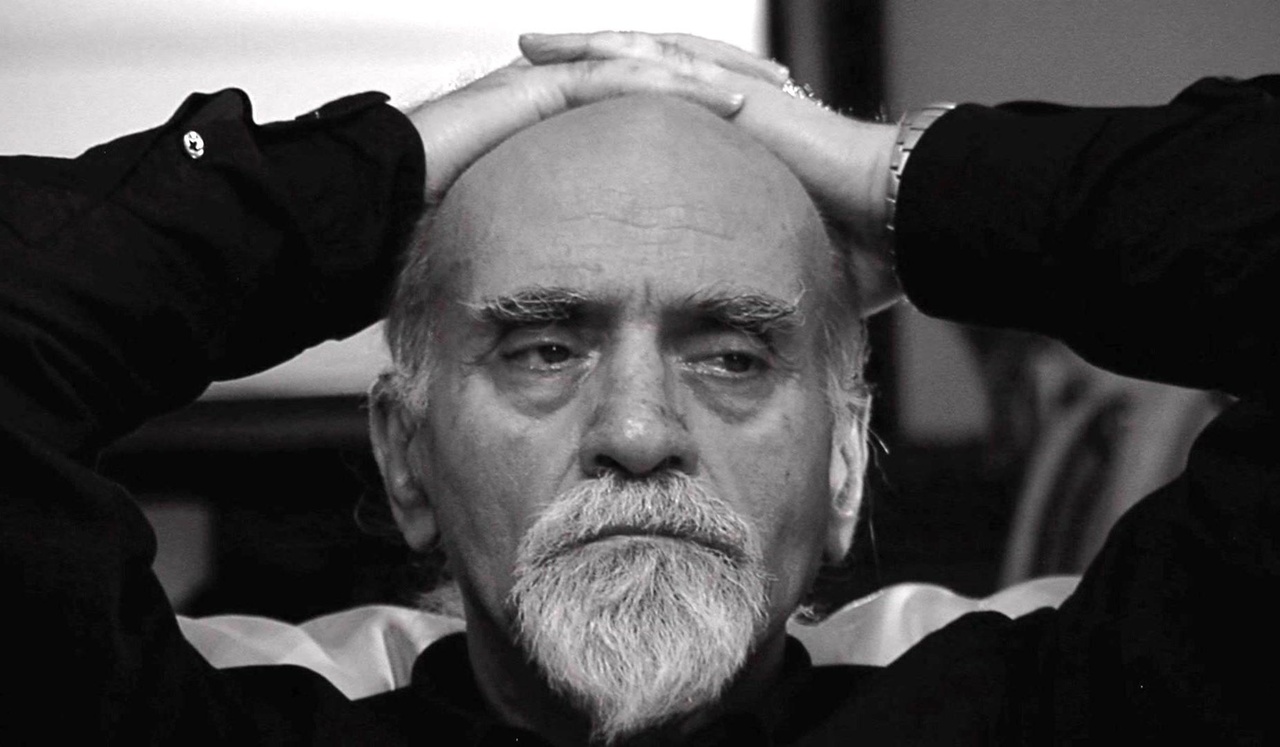
Literature Service of Iran Book News Agency (IBNA) – Marzieh Negahban Marvi: On the eve of December 12th, the birthday anniversary of Reza Baraheni, a prominent contemporary poet, writer, and critic, we have conducted an interview with Ali Satouti Ghaleh, a literary critic and researcher; an interview that tries to take a fresh look at Baraheni’s complex and influential relationship with contemporary Iranian literature. Baraheni, who rose from Tabriz and opened his path from the beginning between poetry, criticism, fiction, and politics, remains one of our most controversial literary figures from the 1960s to today. His presence at Tehran University, his criticism and storytelling workshops, and the students who later created a new movement in the 1990s show that his role is not limited to just being a poet or critic, but that he has contributed to shaping the literary taste and outlook of generations.
Books like «Gold in Copper», «Storytelling», «Alchemy and Dust», «Awake Dream», «Addressing Butterflies and Why I Am No Longer a Nimai Poet?» each changed the equations of literary criticism or Persian poetry at different times.
Ali Satouti Ghaleh, with his book «Bijan Elahi; Collective Production of Poetry and Generic Perfection», has shown that his view on contemporary poetry is that of a researcher who emphasizes the connection between theory, history, and literary creativity. The interview with him is an opportunity to re-read Baraheni’s legacy in literary criticism, from the perspective of a new generation of literary critics. In this interview, while explaining Baraheni’s achievements in literary criticism and his influence and legacy, Satouti Ghaleh also looks at Baraheni’s critical work from a critical standpoint.
Simultaneously with Reza Baraheni’s ninetieth birthday, you read the interview with Ali Satouti Ghaleh about Baraheni’s criticisms:
Mr. Satouti, one of the aspects of Baraheni’s fame and importance in literary criticism, apart from theoretical knowledge, was his sharp tone and controversial approach in criticism. Because of this approach, he made many enemies; but a group believes that Baraheni’s existence and his entry into the realm of literary criticism in the 1960s were necessary to break certain literary taboos and form a frank confrontation with contemporary Iranian poetry, as Baraheni seriously began criticism with poetry criticism. What is your opinion about this aspect of Baraheni’s work and the impact of his entry into the realm of Iranian literary criticism?
The late Dr. Baraheni began writing criticism in the press almost simultaneously with his academic work as a professor of English language and literature at Tehran University, but he preferred journalistic activity over academic work, and today he is remembered not by his academic works, but by the writings published in the press. From this point of view, there is no doubt about Baraheni’s great contribution to the establishment of non-academic literary criticism. However, Baraheni’s position as a literary critic, rather than being indebted to the criticisms of the 1960s, is related to the continuation of his critical activity in subsequent decades. Baraheni did not treat criticism as seasonal and periodic work and continued it throughout his literary life.
But regarding his critical work in the 1960s, two points must be considered: First, contrary to popular belief, before Baraheni began writing criticism, and simultaneously with him, there were others who addressed the criticism of new Persian poetry and presented its theoretical foundations, and incidentally also had a frank tone. One cannot speak about the 1950s and 1960s without seeing the criticisms of Akhavan Sales, Samadi, Aghdashloo (under the pseudonym Khaibari), Hoqouqi, and Nourali. It should not be forgotten that the most important theoretical writing of those years was not the criticisms that Baraheni wrote in Ferdowsi magazine, but the extraordinary article «A Type of Meter in Persian Poetry» written by Akhavan Sales, which was published before those criticisms. Also, the verbal conflict between Shamloo and Naderpour in the late 1950s and one or two writings by Farrokhzad in the same years show that the general lines of «New Poetry» and its distinction from other trends were more or less clarified and stated, and this was before Baraheni stepped into the field of «New Poetry» as a controversial critic.
Secondly, nothing baptizes or justifies personal attacks, ethical judgments, and controversy in Ferdowsi (or, in Farrokhzad’s words, the five-rial magazine) under the guise of literary criticism. These writings are certainly not devoid of critical insights and may have contributed to increasing the circulation of Ferdowsi and thus increasing interest in the phenomenon of «New Poetry», although Ali-Asghar Zarrabi’s interviews in the same years also had the same function, and even a figure like Dr. Arianpour considers them worthy of praise as «oral criticism» and «in-person criticism». But they often have a polemical approach and, from this point of view, not only do not help the growth of critical culture and its democratic foundations in Iran, but move in the opposite direction.
The regrettable encounters that the controversial writer of Ferdowsi had in those years are not merely the product of the non-criticism-acceptance of poets of that era (for example, Nossrat Rahmani); rather, they are a bad consequence of reducing critical activity to journalism in a popular magazine.
What connection and relationship do you see between the approach of Baraheni’s early criticisms, which were published in Ferdowsi magazine and later in the book Gold in Copper, and his approach in later periods of his criticism writing? Because it seems that in later criticisms, while maintaining the same frankness of Gold in Copper, theoretical discussions became more prominent and stronger.
What you refer to as «frankness» is actually the mixing of personal issues with critical activity; a subject that remains in his writings almost until the end of Baraheni’s literary life. Just remember the polemics between Baraheni and Golshiri in the 1980s and 1990s. Today, with little remaining of Iran’s literary spaces, those polemics might seem like an elusive memory to some, indicating the internal dynamism of the literary field, but referring to those polemics simply evokes the regret of any reader who does not see criticism as an opportunity to express personal desires and differences.
Nevertheless, as Baraheni himself mentioned at the beginning of the three-volume print of Gold in Copper, from the beginning of the 1970s, practical criticism in Baraheni’s critical work increasingly gave way to a theoretical and conceptual approach to literature, and those individual ambitions that had little to do with literature and critical work found less opportunity to appear in his writings, or rather, took on more complex and hidden forms. For example, it is unclear how a critic who spent most of the 1980s theorizing the historical and literary priority of the novel over poetry in the post-revolution years, under the banner of «literary criticism crisis», dedicated the bulk of his critical energy in the 1990s to poetry.
Another example: Today when we read in the epilogue of Addressing Butterflies that «Shamloo, with his phonetic proportion, is Kantian, Cartesian, and Hegelian in the sense that established modernism sought», it is difficult to find another meaning and content beyond the theoretical intimidation of this statement. If we remove the theoretical wrapping from this statement, perhaps we once again face Baraheni’s same personal ambitions in criticism writing.
One of the notable points in Baraheni’s criticisms is the style of writing these criticisms. Do you agree that his criticisms – at least some of them – can be read as a literary work in themselves, not just as works written about other literary works?
Yes, in my opinion, re-reading Baraheni’s criticisms from the beginning of the 1960s to the end of his literary life resembles an odyssey in which the personal, political, literary, and theoretical ups and downs of a prolific writer are reflected. At the same time, Baraheni does not consider criticism writing merely as a place to convey only his knowledge and opinion; he also thinks about the form of writing.
The first one or two paragraphs of Baraheni’s criticisms provide exemplary examples of how to begin a note, article, or essay. Among writers in Persian, almost no writer can be found who was as proficient in starting a piece of writing and discussion as he was to this extent. It is a class for all those who aspire to write. There is no doubt about this point.
Baraheni does not see the alternative to essay writing in the guise of criticism as dry and soulless academic writing; the trace of a huge emotional force that drives him forward in this long critical odyssey is searchable throughout his writings. Baraheni himself referred to this great emotional force as the madness of writing in the title of a selection of his works; something that goes beyond the nervousness of his writings in moments when they are tainted with personal biases and connects to the passion for literature.
His critical career forms a rare alloy resulting from the intertwining of theoretical knowledge, critical insight, individual ambitions, political orientations, and scattered memories, and well, this is the same quality that can be found in more complex literary forms like the novel.
Did Baraheni’s criticisms and his method in criticism writing influence later generations of critics and create a current in literary criticism?
Of course, before Baraheni and simultaneously with him, there were poets and writers who also engaged in critical activity, but it was in Baraheni’s presence that the simultaneous pursuit of literary creation and literary criticism took on a more serious aspect. Baraheni had this difference from Sepanlou that he did not see criticism as just reviewing, and compared to Hoqouqi, he did not limit the scope of his criticism solely to poetry, but also dealt with novels, plays, and paintings, and he was not like Nourali whose critical activity was periodic, and his criticisms had this main difference from the literary criticisms of Al-e Ahmad, Golshiri, and Hashiminejad that they were always capable of conceptualization.
From this perspective, perhaps the closest figure to Baraheni among Iranian poets and writers in his continuous and conceptual approach to literary criticism is the late Mokhtari, but alongside all the minor and major differences between the critical careers of these two, the self-reflection aspect was more prominent in Baraheni’s works than Mokhtari’s and in practice had more influence on new Persian poetry in the 1990s.
In this sense, as I mentioned at the beginning of this interview, Baraheni played a significant role in establishing non-academic literary criticism in Iran. The spread of the poet-critic figure in the 1990s was actually the product of several decades of Baraheni’s continuous critical work. This even had more importance than Baraheni’s influence on the inclination of poets and literary critics towards literary theory and philosophical discussions, especially a type of translation-based postmodernism.
Whatever opinion we have about the quality of the writings of the young poet-critics of the 1990s, we cannot deny the fact that Baraheni changed a generation’s perception of poetic work and subjected it to criticism writing and self-reflection. Many of the poets who turned to critical work in those years, perhaps with the exception of Mohammad Azarm, pay less attention to criticism writing today. It was a fever that subsided, but from within those raw theoretical encounters with literature, for the first time, a generation of literary critics emerged outside the thick walls of the Faculty of Literature whose focus was exclusively on criticism, regardless of creative work. The story of Baraheni and the critics who came after him is the story of Gogol’s Overcoat and prominent Russian writers in the nineteenth century. May his memory always be alive.