Writer of ‘Bamdade Khomar’: Our effort was to revive the language and terminology of the Qajar period
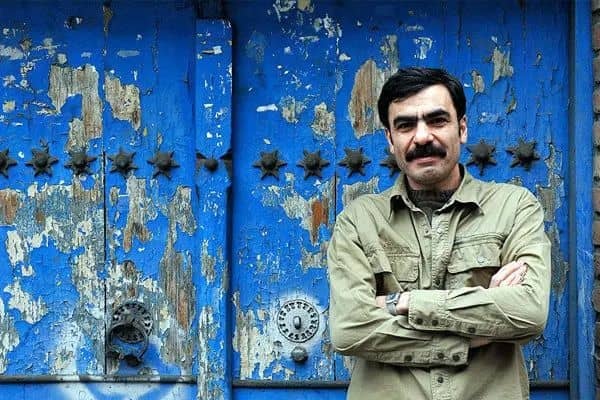
According to the Iran Book News Agency (IBNA), Hossein Kiani, a veteran theater director, discussed his involvement in the series ‘Bamdade Khomar’ and accepting the responsibility for writing the screenplay. He said: In March 2023 and April 2024, I met with Ms. Narges Abyar, and the collaboration officially came up. This project had a history, and part of the work had been produced previously, but that version was entirely set aside. After that, the work was entrusted to Mr. Ghasemi and Ms. Abyar, and I was invited by them as a writer.
Kiani continued: Our cooperation began given my background in folk literature and Qajar-era literature over the past 20 years. It is worth noting that in 2005, I wrote a play called ‘Ash Qajari,’ which was selected as the chosen script for a single radio episode. Friends were aware of these backgrounds, and based on that, they contacted me and the work started.
This theater director, who was talking to the ‘Posht-e Jeld’ program on Radio Namayesh, stated: Ms. Abyar’s emphasis was on reviving the pure and less-heard Qajar-era literature, including terminology, proverbs, and linguistic features of that period, and having them flow in the characters’ dialogues. If you have read the novel ‘Bamdade Khomar,’ you know that the novel does not have a structured language and does not fully utilize the Qajar-era language. It only uses terminology from that period to a limited extent. Despite the attractiveness and pull of the novel, the book is not very linguistic.
Kiani added: We tried to enrich the language of the work, add a few new story lines, and convert fictional literature into dramatic literature, which is usually what an adaptor does. That is, the descriptive situations of the novel must be expanded, conflicts must be added, and characters who are passive in the novel must become active in the series so that they can advance the narrative. The experience of reading a novel is completely different from the experience of watching a comprehensive television series.
The writer of ‘Bamdade Khomar’ series said: Overall, efforts were made to enhance the novel’s attractions and make its language closer to the popular literature and formal literature of the Qajar period. Fortunately, research sources from the Qajar period have become more abundant in recent years, and esteemed researchers have published valuable works that were used.
Kiani, referring to his experience in adaptation for theater, noted: I had adapted several times in theater before, but in the field of Iranian fiction literature and in the realm of visual media, ‘Bamdade Khomar’ was my first serious and notable experience. Those previous experiences were very helpful. That is, I did not enter the work with anxiety and worry, and I was well-prepared.
The director of the play ‘Shorezar’ evaluated the reactions to the series among the audience as positive and said: Our literature, whether Qajar period or previous periods, has a high capacity for connection with today’s audience. One of the points we emphasized greatly was maintaining decorum in the language of the work. Unfortunately, in some home network series, we observe a kind of disarray and linguistic license that leads to language degradation. We tried not only to repair the language but also to add something to it. Today’s language in virtual spaces is eroding, and we wanted to remind people of the capacities of sophisticated language. A polite and dramatic language that can help the linguistic culture of society.
The program ‘Posht-e Jeld,’ produced by Sajjad Kalbadinejad, executed and edited by Ahmad Mohammadtabrizi and Atiyeh Moazzen, and reported by Ava Nouri, airs on Sundays from 21:00 to 22:00 on Radio Namayesh network.