The Spirit of Islam is Ethics, Not Merely Rituals / Musnad and Mursal Narrations from the Prophet in ‘Sunan al-Nabi (PBUH)’
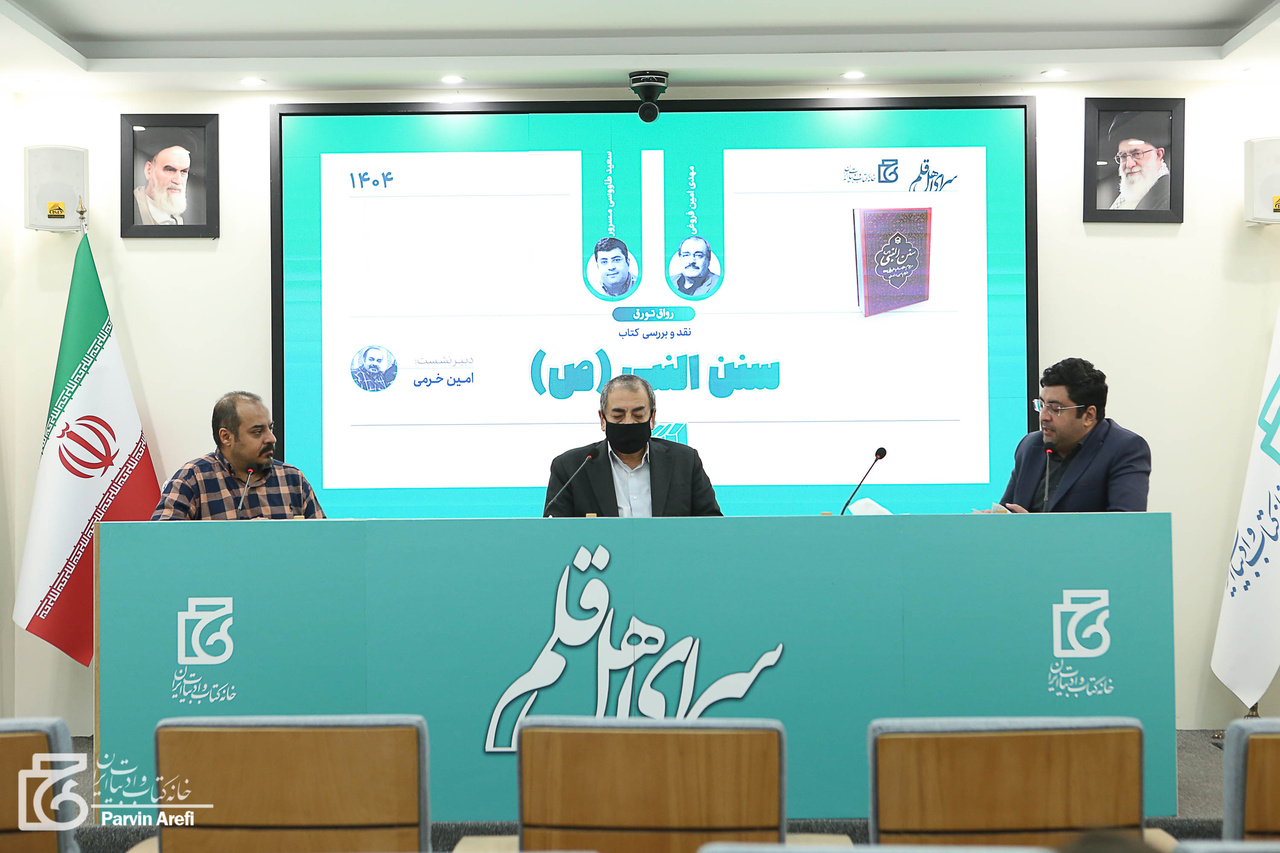
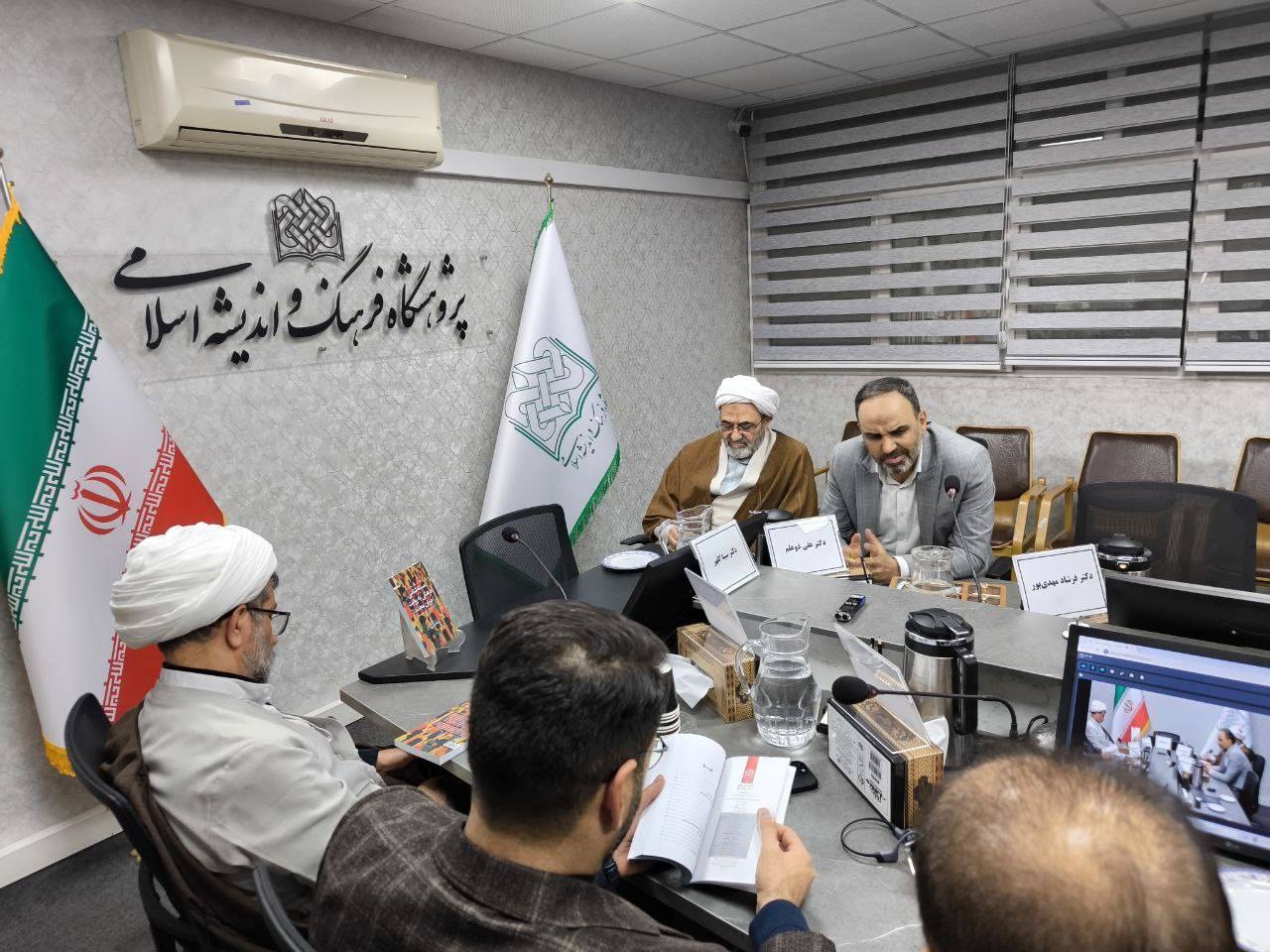
According to the Iran Book News Agency (IBNA), a review session for the book «Sunan al-Nabi (PBUH)» by Allamah Tabatabai was held on Saturday (December 7, 2025) at the Writers’ Forum of the Iran Book and Literature House, with the presence of Mehdi Aminforoughi and Saeed Tavousimasroor, as part of the «Ravaq Tavarroq» series of sessions.
Removal of Narrative Documents; An Error That Incompletes the Text
At the beginning of this session, Saeed Tavousimasroor highlighted the importance of Allamah Tabatabai’s work, stating: Allamah Tabatabai left behind numerous works but is mostly known for his commentary «Al-Mizan» and philosophical discussions. He was comprehensive in sciences and arts, and although he did not author a treatise in jurisprudence, he was prominent in this field academically; the same applies to the field of Hadith. His attention to history is also evident in various works. Allamah Tabatabai, in the book «Sunan al-Nabi (PBUH)», has spoken with great precision about the conduct of the Prophet of Islam (PBUH). In this book, he covered the details of the Prophet’s conduct, from his daily manners and traditions like cleanliness and grooming, to issues such as prayer, i’tikaf (spiritual retreat), supplication, ablution, and fasting.
He added, pointing out that the book «Sunan al-Nabi (PBUH)» was originally written in Arabic and then translated into Persian during Allamah Tabatabai’s lifetime by Mohammad Hadi Feqhi: Narrations that existed in related chapters in Shi’a or Sunni sources and were not used by Allamah Tabatabai were added to the book by the translator as supplements. However, the translation we are discussing in this session was done by Hossein Ostadvali; he removed some of the narrations mentioned in the supplements due to their repetitive content. Allamah Tabatabai bequeathed this book so that the prophetic ethics and traditions would be practiced in society and among the general believers.
He also emphasized: Allamah Tabatabai mentioned the source of each Hadith at its beginning and distinguished between Musnad and Mursal narrations. This means that he exercised great care in selecting sources and cited each narration with its chain of narrators and authentic documents. This precision in using sources is of great importance for any religious and historical researcher. However, what is observed in new editions, especially in Ostadvali’s translation, is the removal of sources and documents, which is not entirely acceptable. Instead, footnotes state that these sources were removed for brevity. This is very strange, as the differences between Musnad and Mursal narrations might be important for a Persian-speaking audience. This removal of sources creates a defect in a text that is supposed to use credible and documented sources. While Allamah Tabatabai himself meticulously cited the sources. This method of source removal in new editions can cause problems.
This researcher added: Researchers should carefully examine all aspects of works and not only think about brevity, but also provide sources completely and accurately so that the work reaches readers and researchers correctly and fully. These points should be considered during the translation and correction of works to rectify the deficiencies of books, rather than presenting an incomplete version to the audience.
He continued by noting that in Hadith books, especially reference books like «Sunan al-Nabi», great care must be taken in selecting and explaining narrations: A point regarding the book «Sunan al-Nabi» is that Allamah Tabatabai exercised great care in selecting narrations. However, it should be noted that he did not claim that all narrations are authentic. Some narrations might not be Musnad or might be Mursal, which are weaker in terms of their chain of transmission. Therefore, one cannot simply accept a narration as an undeniable truth merely because it appears in this book.
Tavousimasroor concluded his remarks by emphasizing the necessity of interpretation and explanation alongside certain words and phrases: In this regard, I personally do not recommend books like «Mafatih al-Hayat» to the general public. Because if a Hadith is provided to individuals without proper explanation and interpretation, it might cause confusion and ambiguities for them. For example, one Hadith narrated from Imam Sadiq (PBUH) states: «The least extravagance is to throw away a date stone.» Without a correct explanation of this Hadith, an individual might make wrong interpretations and engage in irrational behaviors.
The Prophetic Tradition; A Practical Model for Our Lives Today
Subsequently, Mehdi Aminforoughi, referring to the fact that addressing the prophetic tradition was one of the most important matters Muslims engaged in from the early days of Islam, stated: Allamah Tabatabai, in the book «Sunan al-Nabi (PBUH)», with great precision and deep understanding of the conduct of the Prophet of Islam (PBUH), has clearly and plainly expressed details that are less covered in many other books. When a historian or researcher looks at historical documents, they can create a historical work. But when a comprehensive and multidimensional personality like Allamah Tabatabai addresses the conduct of the Messenger of Allah (PBUH), his view on issues stems from various scientific, philosophical, mystical, and religious dimensions, which lends a special charm to the work.
He continued: What distinguishes this book from other works, in addition to Allamah’s comprehensive perspective, is its conciseness and the presentation of a clear view of the Prophet of Islam’s life in 21 chapters. This book not only addresses the details of the Prophet’s manners and traditions, such as sleeping, eating, drinking, ablution, prayer, and worship, but also places special emphasis on ethical sections. The ethics of the Prophet of Islam are expressed in this book in a comprehensive and beautiful way that is interesting and instructive for every Muslim.
He added: The focal point and main axis of the Messenger of Allah’s message is ethics; ethics that transcend boundaries and are based on human nature. If ethics exist, other rituals and worship gain meaning, and if not, and without a person being adorned with ethics, there is no benefit to acts of worship and rituals. If we consider Islam to have a soul and a body, the body of Islam is these ritualistic acts, the shell of Islam, but undoubtedly, the spirit of Islam is chivalry, generosity, and ethical conduct.
This writer and researcher concluded by noting that these prophetic ethics are lost in our time: Today, when many ethical values in our society have been forgotten, revisiting the Prophet’s conduct in this regard becomes even more important. Prophet Muhammad (PBUH), in all aspects of his life, displayed behaviors that can serve as a model for us. From how he interacted with people to how he behaved with friends, enemies, the poor, and even in his manner of eating and drinking. What is presented in the book «Sunan al-Nabi» is, in fact, a depiction of the Prophet’s practical behaviors, which are astonishingly compatible with human nature. For example, when the Prophet spread his cloak for anyone who entered his house to sit on it, this was not only a sign of respect for the guest but also an indication of his ethical upbringing. We have many such behaviors in the life of the Prophet (PBUH) that can be a role model for everyone in today’s society.