The book ‘Azadi Tower’ is unveiled
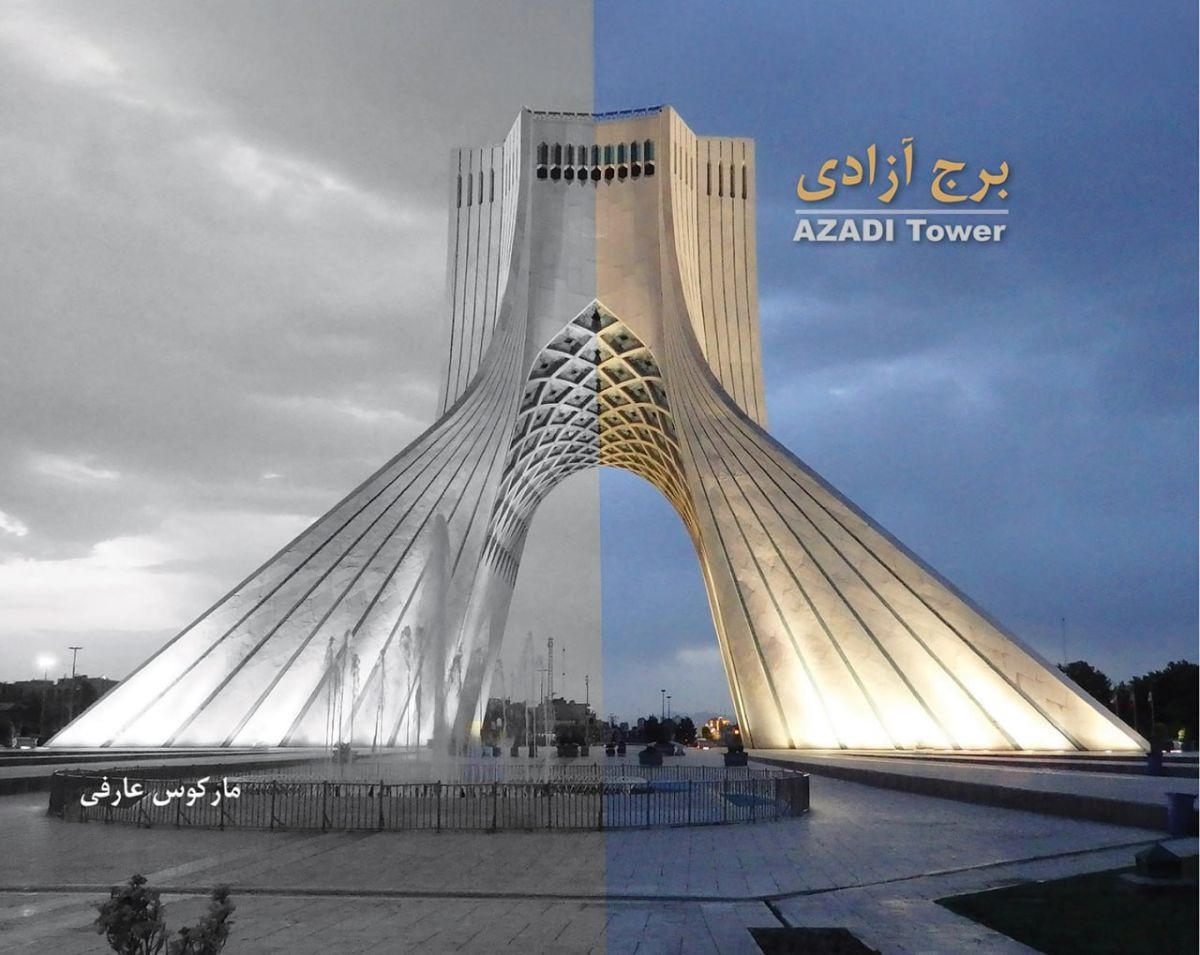
According to the reporter of Iran Book News Agency (IBNA), the book ‘Azadi Tower’ by Marcus Arefi will be unveiled by Iranشناسی Publications in cooperation with Rudaki Foundation and Azadi Cultural and Artistic Complex on Sunday, December 7 (16 Azar), 2025, at 4 PM in Azadi Tower.
This book is an effort to re-examine the symbols of Iranian identity and contemporary cultural manifestations, written with a scholarly and artistic perspective. This structure has witnessed history, tributes and neglects, celebrations and rebellions; serving as a place for various interests and ideologies to recall the past, justify the present, and also to expand a vision for the future of the Iranian nation.
The plan to construct Azadi Tower began with the idea of commemorating the 2500th anniversary of the establishment of the Iranian imperial system by Cyrus the Great, the founder of the Achaemenid dynasty. This idea itself dates back to the second half of the 1950s. Asadollah Alam, the Pahlavi court minister, appointed Shojaeddin Shafa, a writer and translator, as the cultural advisor to the Imperial Court in 1957. Shafa believed that Iranians should become more familiar with their history and civilization, and for this purpose, he proposed the 2500-year celebration in 1957. Chronologically, the year 1961 marked the 2500th anniversary of Cyrus’s reign. This prompted Mohammad Reza Pahlavi to set Azar 1347 (November/December 1968) as the date for the celebration. A central committee titled ‘Central Council of the Imperial Celebrations of Iran’ was also established in 1968 by royal decree and with the support of UNESCO to supervise this celebration, and Senator Javad Boushehri, as the head of this committee, was tasked with organizing the ceremonies. UNESCO played an important role in drawing global attention to this celebration and strengthening Iran’s position in the world and among United Nations members.
The Council’s idea for building a memorial tower in the form of a triumphal arch named Apadana and various celebration programs was finalized in Bahman 1339 (January/February 1961), but until 1969, its activities were limited to planning the construction of the memorial tower and some infrastructure projects related to railways and road construction; a reason that led to the introduction of 26 more individuals by the Shah for this council. Mehdi Boushehri replaced Javad Boushehri in Shahrivar 1349 (August/September 1970) due to Javad Boushehri’s illness. He then handed over the presidency to Abdolreza Ansari, an employee of the Pahlavi Foundation, to manage Iran House in Paris.





