Reza Davari Ardakani’s Great Ideas for Iran’s Development / Americans Oppose Iran’s Development / Underdevelopment is an Affliction of Bewilderment and Ignorance
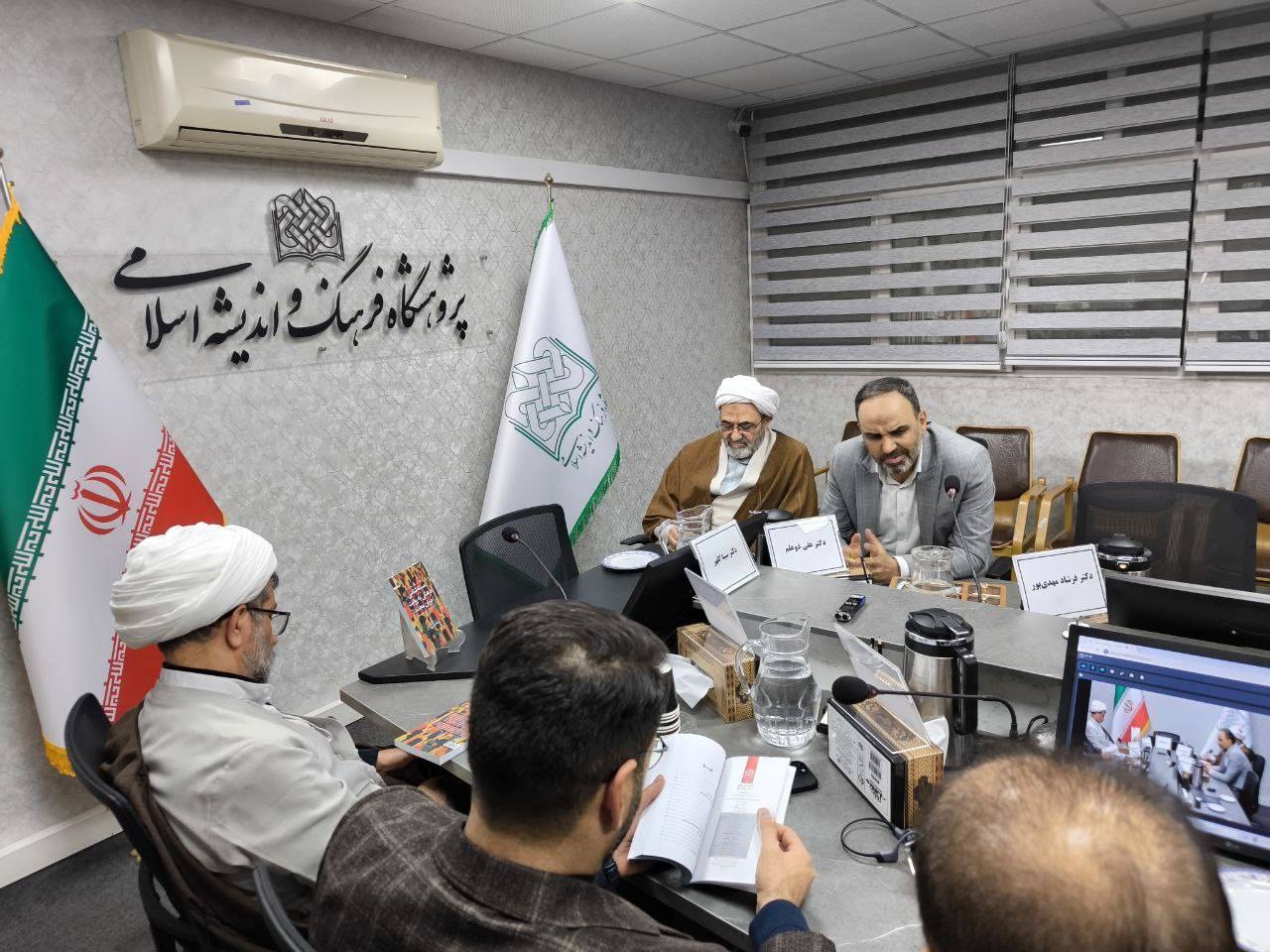
According to Khabaronline News Agency, IBNA’s Religion and Thought Service wrote: The book “Reza’s Narrative,” written by Mohammad Javad Safian, from the “Development Dialogues” series, has been published by Shargh Network. This series of books explores Iranian thinkers and intellectuals from the perspective of development and their approach to it. In “Reza’s Narrative,” Mohammad Javad Safian, a professor of philosophy at Isfahan University, critically examines the thoughts and works of Reza Davari Ardakani, a well-known professor of philosophy, from the viewpoint of development. Previously, IBNA had published an interview with Safian about this book. Now, Reza Davari Ardakani has written a note about this book, which has been exclusively provided to IBNA and is presented below.
****
My dear friend Dr. Mohammad Javad Safian, in collaboration with Dr. Same and others, has prepared a report on my writings about development, which has advantages over the original texts. This report has attracted the attention of Professor Renani, and Shargh Publications has printed and published it. I am grateful to my dear friend, his colleagues, and Shargh Publications. The point I must make at the outset is that Dr. Safian and I have been in agreement and companionship since we met. Dr. Safian has not reported another opinion in this report; rather, he has grasped the pain of underdevelopment himself and attributed it to me, which is, of course, a correct attribution.
Some have asked how someone who has been a critic of modernity can emphasize the necessity of turning towards development. Please note that I am a critic of modernity, not an opponent or enemy of it. No other path but modernity is found. Moreover, as Dr. Safian has stated, fifty years ago, I had nothing to do with development. The issue of development arose for me when I felt the pain and calamity of being stateless (without history) and underdeveloped. Underdevelopment, contrary to what many believe, is not backwardness; it is moving away from the old and falling behind the new. Underdevelopment is losing one’s historical position and becoming afflicted with bewilderment, indecisiveness, and preoccupation with ignorance. Social sciences must understand this situation and show the way out of it.
It is true that development is the development of modernity, but modernity is not the property of the West or under the control of global powers; rather, it is the prevailing and dominant order in the world. People globally have two choices regarding it: either they choose the path of development through research and contemplation, or, with the illusion that they will take what they desire from it and leave what they do not want, they wander around in the desert of underdevelopment.
The polluted air of the technical world does not ask our permission to come or not to come, and since it finds some spaces without interference, it turns to them. Inappropriate and excessive use of technology is also more prevalent in underdeveloped countries. It is through this misuse that all groundwater is extracted. Rejecting development and making selective choices about it, if it has any effect, leads to the disruption of normal conditions, the creation of disharmony in works and organizations, the wasting of national assets and income, and remaining in a state of incapacity and need.
Our country is in a special geopolitical situation, and global powers oppose its development and empowerment. Americans have explicitly declared their opposition. We ourselves have neither the resolve for development nor are we thinking of planning for it. In the last fifty to sixty years, all countries that have pursued the path of development and achieved something in this regard have had governments determined to tread the path of development. It was with this resolve and decision that a small country like Singapore, which had no material or natural resources, transformed into one of the most developed, organized, and prosperous countries in the world.
The emphasis on the necessity of development stems from the fact that the prevailing system in the world is the system of modernity. We do not need to praise this system, but opposing it leads nowhere. This system has empowered countries, not that it is in the hands of the powerful or a tool at their disposal. The power of modernity is now concentrated in technology, and technology does not advance except in the atmosphere of modernity and its specific conditions. Technology is not a tool that we can buy from the world market and consume. In the current order, people have become dependent on technology; new technology did not emerge from people’s needs, but rather, once it emerged, people became dependent on it.
Social, economic, and political development is related to the development of science and technology, and it is not up to us to say that we want a certain science or technology and do not need the scientific-technical order. Power is not in technical objects; it is in its order and system. Universal education and the development of knowledge and universities without a comprehensive development plan are more like a joke, and we have seen and continue to see the results of this joke.
Although development does not materialize without political resolve, it is not merely a political matter; rather, its path can be found and trodden with a specific wisdom. In the books “Political Wisdom in the Time of Underdevelopment” and “Wisdom and Development,” I have emphasized the necessity of searching for the wisdom of development. Finding the path to the house of wisdom is not easy. Its difficulty arises when we are unwilling or unable to acknowledge our capabilities and incapacities. Political wisdom blossoms with the understanding of possibilities and the resolve to realize the most essential among them. To turn towards development, it is essential to have the courage to accept shortcomings, deficiencies, and negligences. That is, without self-awareness of the current situation, there is no future.
I hope the book “Reza’s Narrative: Reza Davari Ardakani’s Narrative on the Issue of Development in Iran” will receive attention and critique from scholars of humanities and social sciences.