Publication of poems by a poet who burned his Divan / ‘Adam Vayganli,’ an unknown poet of the Qajar era
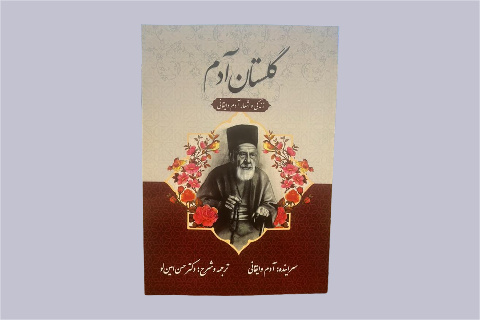
Ali Sadeghzadeh, a literature instructor and researcher who has also written an introduction to the book ‘Golestan-e Adam,’ told the correspondent of the Iran Book News Agency (IBNA) in Tabriz: ‘Although Adam Vayganli has remained unknown in Iran’s literary sphere, the remaining ghazals indicate that he should be considered among Iran’s prominent Turkic-speaking poets.’
He, who has written an excerpt of his research on this poet in a 30-page introduction to the Divan of Adam Vayganli, added: ‘This Qajar-era poet burned and destroyed his own Divan due to misinterpretations of the themes of his poems and their use in frivolous gatherings.’
Dr. Sadeghzadeh recalled: ‘This book is the result of the late Mohammad Taghi Zehtabi’s research into the life and works of Adam Vayganli, which ultimately led to the collection of about 50 ghazals from the poet’s works.’
He stated that the aforementioned poems were collected from the memories of individuals who had memorized Adam Vayganli’s poems or had them passed down to them during that era, clarifying: ‘This Divan has been compiled and published from various sources by Hossein Aminlou, a researcher in the field of literature.’
According to this university professor, the Divan of ‘Golestan-e Adam’ includes ghazals in the Turkish language and their prose translation.
He added: ‘Adam Vayganli’s poetry goes beyond local works and contains new themes such as patriotism, social criticism, and even the use of modern vocabulary like “virtual,” which demonstrates the poet’s intellectual depth and linguistic breadth.’
Adam Vayganli, a ghazal poet of Azerbaijani Turkish literature, was born in 1223 SH (1844 CE) in Vaygan, Shabestar county, East Azerbaijan, and passed away in 1298 SH (1919 CE) in the same city.
His ghazals carry humanistic, patriotic, and religious themes, composed under the influence of the times, especially the events of the Constitutional Revolution and the awakening of Iranians, as well as his travels to Istanbul and the holy shrines (Atabat).
Hassan Aminlou said at the unveiling ceremony of ‘Golestan-e Adam’ at the House of Writers of the Iran House of Book and Literature: ‘Since my youth, I have been searching for Adam’s poems. After learning about the details of the version published in Shabestar, I decided to formally and completely publish the Divan of poems so that people of this generation, especially the youth who are less familiar with the Turkish language, can understand the concepts of these poems through Persian translation.’