Artificial inflation in the paper market / Writing paper is a victim of energy and currency imbalance
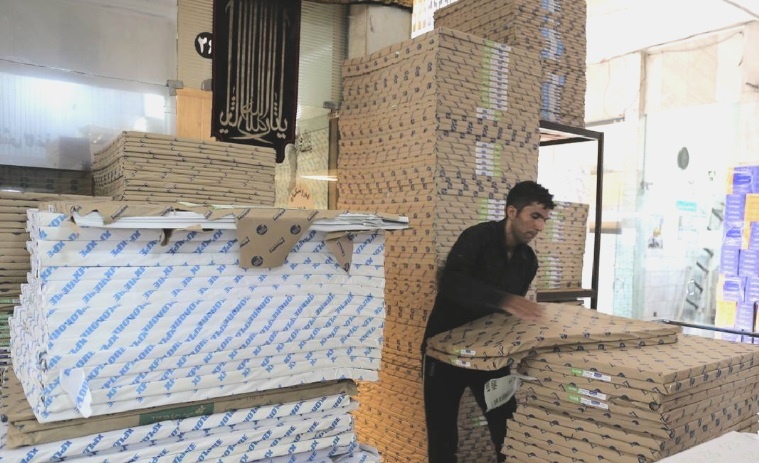
Amirsaman Esfandiari, in an interview with a correspondent from the Iran Book News Agency (IBNA), referring to the main cause of recent fluctuations in the paper market, said: The process of optimizing foreign exchange expenditures and new controls in the area of foreign exchange allocation for imports, with the aim of managing the country’s foreign exchange consumption, has led to delays in securing the necessary foreign exchange for paper imports; this issue has had a severe psychological effect on the market, and its concurrence with an increase in the exchange rate has exacerbated price fluctuations.
Referring to the status of writing paper production in the country, he added: Domestic producers face serious challenges in supplying raw materials, whether pulp and wood or consumable materials and spare parts used in papermaking industries, as well as the issue of energy imbalance. Consequently, the capacity to produce various types of printing and writing paper, which are widely needed, is not fully available domestically, and imports remain essential.
Esfandiari continued: What we observe is not a real shortage of goods; rather, it is the concern of market participants regarding the supply of substitute goods for the future and the process of order registration and foreign exchange allocation that has caused the inflation. If foreign exchange allocation is accompanied by certainty and continuity, the market can be easily controlled.
He also referred to the country’s actual need for writing paper and said: Very different statistics are presented, but the syndicate’s estimate shows that the real need is between 150,000 and 170,000 tons per year. Higher figures sometimes announced should be reviewed with greater accuracy. However, demand has not changed significantly, and the current inflation is mainly due to currency conditions and concerns about import status in the coming months.
According to the secretary of the National Syndicate of Paper and Cardboard Producers, the packaging paper market has also been affected by a sharp increase in the price of the raw material ‘Akhāl’ (waste paper) and starch. The price of starch has risen from less than 30,000 Tomans to 75,000 Tomans since the beginning of the year, primarily due to problems with corn imports and an increase in wheat prices. Producers have tried to cooperate to control this price volatility of waste paper and create a calmer trend in the market.
Esfandiari also spoke about the outlook for controlling the paper market, stating: If exchange rate fluctuations are contained and foreign exchange allocation for writing paper imports is carried out reliably and sustainably, the writing paper market conditions will move towards calm and stability. The continuation of the current trend will only be problematic if exchange rate fluctuations intensify and issues with order registration and foreign exchange allocation persist.