A Literary Journey into the Geography of Iranian Storytelling
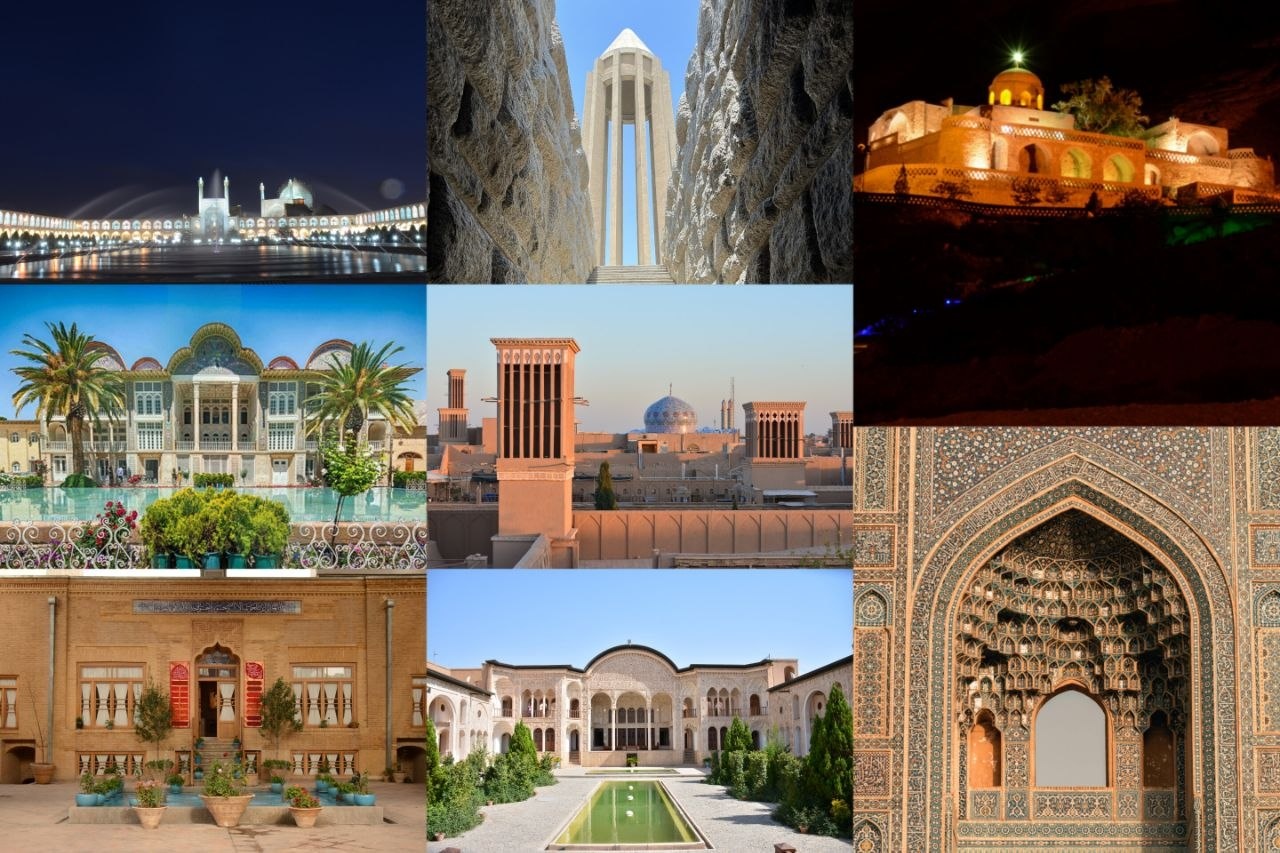
According to the correspondent of the Literature Service of Iran Book News Agency (IBNA), in classical literature, cities often appeared as abstract symbols: legendary Baghdad or poetic Shiraz. But with the emergence of the modern novel from the 1940s, writers’ perspectives changed; cities became not only the setting for events but also a mirror of social and cultural conditions.
The city in Persian novels has multi-layered significance: First, it grants identity; local accents, customs, and foods in stories (like Gilani ghormeh sabzi in Nader Ebrahimi’s “A Calm Romance”) take the reader deep into the culture. Second, it is critical; Tehran in Morteza Moshfegh Kazemi’s “The Terrifying Tehran” exposes Qajar corruption, or Abadan in Zoya Pirzad’s “I Turn Off the Lights” cries out migration and loneliness. Third, it is emotional and political; like love and politics intertwined in the streets of Tabriz in Baraheni’s works.
This localism freed Iranian literature from Tehran-centrism and transformed it into a “literary map”; where each province has a unique voice. According to reputable lists such as “One Hundred Best Iranian Novels,” over 60% of the best novels deal with non-Tehran cities, which indicates the geographical richness of our literature. Now, let’s journey through this map.
Isfahan in “People of Chaharbagh” and “Yahya of Zayandehroud”
Isfahan, the Safavid capital with historical bridges and the ever-changing Zayandehroud, is a symbol of nostalgia and transition in Persian fiction. The city of “Nisf-e Jahan” (Half the World), with its central courtyards and bustling bazaars, as well as the modern Isfahan of the 1960s and 1970s that manifested itself in Chaharbagh, has prompted writers to narrate daily life, social changes, and the transition from tradition to modernity. Below, we refer to two examples of contemporary fictional works in which modern Isfahan is present.
Ali Khodaei is one of the most important writers whose contemporary Isfahan has a special manifestation in many of his works and has become a fictional character; especially in the book “People of Chaharbagh,” in which Isfahan, and particularly Chaharbagh, is a fictional character. In this book, Khodaei, by focusing on Chaharbagh of the 1960s and 1970s and blending imagination, fantasy, and memory, depicts Isfahan’s transition from tradition to modernity and also makes references to historical Isfahan.
The story “Yahya of Zayandehroud” by Keyhan Khanjani, from a collection of the same name, is one of the moving stories featuring Isfahan. In “Yahya of Zayandehroud,” Khanjani writes the story of a father who walks towards the Zayandehroud with the body of his dead child, thus intertwining tragedy, images, and memories of the city in the story.
Other writers who have written about Isfahan in their works include Houshang Golshiri and Mohammad Rahim Okhovat.
Shiraz in the Works of Simin Daneshvar and Sadegh Chubak
Another city with a prominent presence in Iranian fiction is Shiraz. The most famous Iranian novel featuring Shiraz is Simin Daneshvar’s novel “Suvashun.” In “Suvashun,” Daneshvar takes us to Shiraz during the Allied occupation of Iran in World War II and the events of Shahrivar 1320 (August 1941), transforming Shiraz into a symbol of a wounded Iran in this novel.
Another important Iranian novel set in Shiraz is Sadegh Chubak’s novel “Sang-e Sabour” (The Patient Stone). In “Sang-e Sabour,” Chubak presents a picture of poverty, murder, despair, and backwardness in Shiraz during the Reza Shah era, showcasing dark aspects of urban life in Iran of that era.
Other writers who have written about Shiraz in their works and depicted this city in fiction include Mohammad Keshavarz and Aboutorab Khosravi.
Old and New Tabriz in Iranian Fiction
Tabriz is also one of the cities that has entered Iranian stories. Among Iranian novels, a part of which takes place in Tabriz, is “The Secrets of My Land,” Reza Baraheni’s two-volume novel; a novel that narrates the fate of people whose destinies were somehow intertwined in Tabriz of the 1940s (1320s SH). “The Secrets of My Land” is a historical novel where love and politics are intertwined. In this novel, Baraheni links the real and historical Tabriz with myth and imagination, narrating the story of the revolution with a nod to his hometown.
Another writer who has depicted Tabriz in a novel is Gholamhossein Saedi. In the novel “Stranger in the City,” Saedi writes about Tabriz during the Constitutional Revolution and depicts the struggle of the constitutionalists against tyranny and their fight against the Russians. “Stranger in the City” is a story about the occupation of Tabriz by the Russians and the efforts of the constitutionalists to expel them.
Tehran in Iranian Stories
The first Persian social novel, Morteza Moshfegh Kazemi’s “The Terrifying Tehran,” carries the name of a city. “The Terrifying Tehran” is a portrayal of Tehran in the late Qajar era. In this novel, Moshfegh Kazemi embodies the chaos, disorder, and corruption of that period in the face of Tehran; a Tehran submerged in poverty, corruption, collusion, oppression, ignorance, and injustice. In “Tehran, the Terrifying Tehran,” along with the author, we travel to the poor and muddy neighborhoods of Tehran, the infamous districts of this city in the late Qajar era, as well as the aristocratic neighborhoods of Tehran of that period, which were centers of collusion and intrigue, and we witness government corruption and the chaotic social situation in Tehran of the late Qajar era.
Amirhossein Cheheltan is another writer who has written about Tehran in his various works, narrating the city’s fate amidst the political turmoil, social transformations, and historical events of contemporary Iran. In his novel “Tehran, the City Without a Sky,” centered on a character named Keramat, who was one of Sha’ban Bimokh’s thugs, Cheheltan provides a panorama of Tehran during the second Pahlavi era and narrates the story of the rise of louts in that era.
Bozorg Alavi also presents an image of Tehran in his famous and popular novel “Her Eyes.” Tehran in his novel is the Tehran of Reza Shah, which in “Her Eyes” has become an embodiment of suffocation and darkness.
Goli Taraghi, however, gives a nostalgic and bright picture of Tehran in her works. Parviz Davaei is similar. Other writers who have written about Tehran include Reza Julaei, whose works feature Tehran of the Qajar and Constitutional eras prominently.
Kermanshah in Ali Mohammad Afghani’s “Ahou Khanom’s Husband”
Among the cities immortalized in the history of fiction through novels, Kermanshah is one. Kermanshah is the main setting for the events of the still popular, best-selling, and widely read novel “Ahou Khanom’s Husband” by Ali Mohammad Afghani; a novel that addresses women’s issues in a patriarchal society. In “Ahou Khanom’s Husband,” Ali Mohammad Afghani takes us along with his main characters through the alleys and backstreets of Kermanshah during the Reza Shah era, narrating a family story amidst the transformations of that period up to Shahrivar 1320 (August 1941) and the Allied occupation of Iran.
Rasht in Iranian Fiction
Rasht is also a constant presence in Iranian stories. Bijan Najdi, Majid Danesh-Arasteh, and Keyhan Khanjani have each depicted this rainy city from a different perspective and in a different way in their stories, and of course, these are not the only writers from Rasht. Among the recent novels where Rasht is central is Keyhan Khanjani’s novel “Band-e Mahkumin” (The Convicts’ Band).
Ahvaz and Abadan in Iranian Fiction
Ahvaz and Abadan are also cities that have frequently appeared in Iranian stories; for example, in two novels “The Neighbors” and “The Burnt Land” by Ahmad Mahmoud, the first about Ahvaz during the nationalization of oil and the second about war-torn and bombed Ahvaz. Esmail Fasih in the novel “Winter of ’83” and Asghar Abdollahi in the short story “The Dusty Room” have depicted Abadan during the war, and Zoya Pirzad in the novel “I Turn Off the Lights” has written about the employee neighborhoods of Abadan and the life of the middle class in this city in Iran in the years before the revolution.
Among the new writers who have made Ahvaz the focus of their stories, Arash Azarpanaah and his novel “Sognameh-ye Zendegan” (Elegy of the Living) can be mentioned; a gothic novel whose events take place in the city of Ahvaz.
Bandar Mahshahr in Ebrahim Damshanas’s Novel “Atash-e Zandan”
Bandar Mahshahr is also one of the southern cities that have found their way into Iranian fiction. This city in Ebrahim Damshanas’s novel “Atash-e Zandan” (The Prison Fire) manifests itself as a blend of history, reality, myth, and legend, and Damshanas showcases some of the historical and social issues of contemporary Iranian man in this novel, where Mahshahr has a significant and prominent presence.
Last Word
What you read was just a handful of examples of the presence of cities in contemporary Iranian stories. The examples are certainly more than these, and the cities too, for if we were to cover them all, this report would have no end.