A Book That Embodies Iranian Philosophy and Worldview
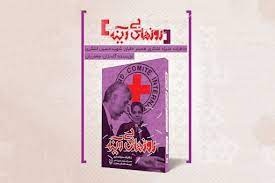
According to the correspondent of the Iran Book News Agency (IBNA), Mohammad Hossein Abbasi: The book ‘Days Without Mirrors’ tells the life story of a woman who begins her romantic life at 17 with a pilot, and at 18 experiences the sweet taste of motherhood. However, only 4 months after her son’s birth, her 18-year separation from her husband begins. This book was penned by Golestan Jafarian and published by Soore Mehr Publications. The book has been translated into Bosnian by Nermin Hojić.
In the first part of this report, explanations were provided regarding the translation and publication of the book ‘Days Without Mirrors’ into Bosnian. Afterwards, excerpts from the views and reactions of four readers of the book were presented. In this section, we will review excerpts from the opinions of four other readers.
Dr. Husnija Kamberović
Writer and Professor at the University of Sarajevo
Kamberović is a renowned professor in Bosnia and Herzegovina in the field of history and the head of the Association for Modern History in Sarajevo. He has authored over ten specialized books and dozens of articles, and has lectured at numerous national and international forums and conferences. After reading the book ‘Days Without Mirrors,’ he wrote a review titled ‘The Iranian Version of Mythical Penelope’ (Iranska verzija antičke Penelope) and published it on his association’s website. He began his note by saying: «You Iranians are truly amazing people, and Iranian women are too.» This sentence was spoken by a Red Cross representative on April 6, 1998, during the release of Hossein Lashgari, an Iranian pilot who had spent all eighteen years in Iraqi captivity; a man about whom no information had been available for years, as he was never registered as a prisoner of war. This book is the memoir of his wife, Manijeh. Before being captured by Iraq on September 18, 1980, Hossein Lashgari was an ambitious pilot in the Iranian Air Force. He had studied in the United States in the 1970s, wore jeans, was fluent in several international languages, and flew Iranian F-5 fighter jets.
In his note, Kamberović introduced the book in detail and described its important passages. In this writing, he expresses his view on the book’s story and Manijeh’s character as follows: The book ‘Days Without Mirrors: The Memoirs of Manijeh Lashkari,’ published by ‘Ketab-e Khoob’ (Good Book) Publications in Sarajevo, is a testament to the suffering, loyalty, and faith of the Iranian people. Although it is the story of one life, it embodies the entire philosophy and worldview of a nation; and it shows how the power of faith and belief determines the path of human life. Manijeh, a woman who waited eighteen years for her husband and had no news of him for the first fifteen years, rejected every offer of remarriage. Thus, with this book, we are confronted with an Iranian version of the mythical Penelope; a loyal woman eagerly awaiting her husband’s return… not from a «business trip,» but from the darkness of war and captivity.
Sabiha Dacić
Artist and Chef
This lady is a renowned culinary artist from the Sandžak region of Serbia, who has many followers on social media and is the author of two cookbooks. After reading the book, she wrote her opinion as follows:
I really cannot convey as I should the deep feelings and impact the book had on me. Thank the manager for gifting me this book. I am very interested in reading such true stories that are recorded between the covers of a book…
Ms. Dacić, who is very popular, especially among young girls, due to her profession and art, believes regarding the book’s usefulness for young people:
The book is truly wonderful. Manijeh married at 17 and had a child at 18… Oh… and the wait for her Hossein… a wait that continued for all eighteen years…
Today’s youth should read such books, because you see how marriages are today; they separate over the smallest issue…
Amina Ramić
Student of Bosnian Language and Literature, University of Sarajevo
This student begins her review with a quote from ‘Ivo Andrić,’ a novelist from former Yugoslavia, as follows:
But what do you do when nothing happens in its own time? When your life is uprooted, just as your ribs are wrongly joined, your heart hangs from left to right, and you forget why you ever stepped into this thornbush? Ivo Andrić
The book’s narrator, Manijeh Lashkari, patiently walked through the «thornbush» of her life and emphasized that «this hard life is my destiny.» The book ‘Days Without Mirrors’ reflects eighteen years of waiting for her beloved husband, Hossein Lashkari, who disappeared at the beginning of the war.
Amina then refers to some important passages of the book and also talks about its writing style:
The writing style of the book, though simple, is full of heavy and painful sentences; sentences that seem to have emerged from great works of world literature. The dream Manijeh has a month before receiving news of Hossein’s survival is a sign of the end of suffering and separation, a dream that seems to predict the end of pain.
This student concludes her note with emotional sentences:
This is just one of the stories and just one of the books that familiarizes us with the heaviness of suffering, separation, and sorrow that war imposes on lives. This is a book that is read in one breath, but also takes that very breath from you. Perhaps because this book is not merely a book, but something much more: it is someone’s life.
However, perhaps it can be said that Amina Ramić expressed her thoughts about the book more in a letter she wrote to the author than in her review. We review parts of this letter:
Ms. Golestan Jafarian! You have narrated this life story in the deepest and most honest way possible, such that the reader can truly empathize with it and feel a bit of the suffering, calamity, and strength of the characters, especially a woman who, in difficult war conditions, takes on the roles of both father and mother and fights selflessly for her child.
As the reader progresses through this book, they internalize all those events and arrive at an image that was like «catharsis» for me. A kind of moral and spiritual purification that may occur after experiencing the deepest events.
For me, this book is not merely a collection of beautiful words, but something far beyond that; a living feeling and a flowing spirit. This feeling is so strong that even after reading the last page, it does not disappear, but remains floating around us, reminding us of the greatness and vividness of what we have read.
Nejra Kajmak
Literature Student at the Faculty of Philosophy, University of Sarajevo
This student begins her writing by describing how she became interested in reading this book, which she will elaborate on in her analytical note. However, the important concluding sentence of that introduction is:
As I am professionally active and also a literature enthusiast, I eagerly awaited an opportunity to read this book. To be honest, I read it in one sitting and immediately decided to write a review while still under its influence.
She then expresses her understanding of the lifestyle of a Muslim family and the role and status of women in the home and society:
Right from the beginning, in the first chapter, the lifestyle within a Muslim family deeply impressed and surprised me. Through her narrative, the author not only conveys the intimate atmosphere of the home but also depicts the worldview that shapes intra-family relationships. The perception of women and their role and status in society is shown with special respect, but within the framework of traditions; this led me to reflect on the interaction of various traditions and customs, as well as the diversity of lifestyles within a society.
This student’s interpretation of the love between Hossein and Manijeh is captivating:
The element of falling in love and love itself, introduced at the very beginning of the story, particularly caught my attention. This element is presented with a special warmth, subtly yet powerfully, such that the reader feels love is not just a personal bond between two people, but a force that sustains them through the most difficult moments of life. This combination of love, tradition, and daily life has made the initial pages of this work very impactful and memorable. The depiction of their marriage and their marital lifestyle was equally moving. In their relationship, I clearly felt emotional warmth, mutual respect, and trust, alongside deep roots in tradition. This combination of love and responsibility, tradition and the challenges of the contemporary world, is portrayed in a way that prompted me to reflect on the universal values of married life; values that are shared regardless of cultural or religious differences.
Although this student did not experience the Bosnian War, through reading this book, she articulates the impact of war on people’s lives with remarkable precision and subtlety:
In ‘Days Without Mirrors,’ more than anything, the theme of war and its consequences captivated my attention. Not only the conflicts and disputes themselves but also the heavy aftermath that affects the lives of ordinary people. What particularly fascinated me were the human sufferings, the loss of a sense of security, feelings of fear and insecurity, and the moral and emotional dilemmas faced by the characters. Through the depiction of war, the author clearly shows how an armed conflict destroys daily life, disrupts human relationships, and leaves a lasting imprint on psychological and social dimensions. This theme makes the work profoundly powerful and moving, as war is not merely a backdrop for the narrative but an active agent in shaping the characters’ destinies and decisions.
Nejra Kajmak sincerely expresses her learnings from this book in the final section of her writing. This student’s perceptions show that the author has managed, through her narration, to open new windows for the reader to pay more attention and reflect on some fundamental topics and concepts:
The book ‘Days Without Mirrors’ taught me many things; including about the people of Iran, their culture, their customs, and their way of life during difficult war conditions. But alongside all of this, the book also reminded me of the value of gratitude. Through the story, I understood how important it is to appreciate simple daily moments, love, and family support; and how courage, perseverance, and loyalty can shape human life and keep hope alive even in the most challenging circumstances.
And the final sentences of this note, which are taken from the last sentence of the book, show the author’s high precision and insight in carefully choosing the concluding sentences of the book:
The last sentence of the book says: «The people of Iran, men and women, are amazing human beings,» and I, after reading this work, can truly confirm this statement. Through narratives of the characters’ patience, courage, loyalty, and love, and by observing the reflection of their culture and daily life, it became clear to me that the people of Iran are powerful, worthy of respect, and inspiring. This book had a profound impact on me and showed me that human strength and goodness can endure and shine even in the most difficult circumstances.
This student’s complete note was published on November 1, 2025 (Aban 10, 1404) in the bi-weekly Proporod in Bosnia and Herzegovina, with the title: ‘The Strength of a Woman Who Waited 18 Years for Her Husband.’





