Pinochet’s Ominous Legacy in ‘The Twilight Zone’
Literature Service of Iran’s Book News Agency (IBNA) – Paria Heidari: “The Twilight Zone” by Nona Fernández is a captivating and magical novel about the legacy of historical crimes. This novel, which was nominated for the National Book Award for Translated Literature in 2021 and was longlisted for the Andrew Carnegie Medal for Excellence in Fiction in 2022, has been published by Nahid Publishing House with a translation by Pouya Rafooei.
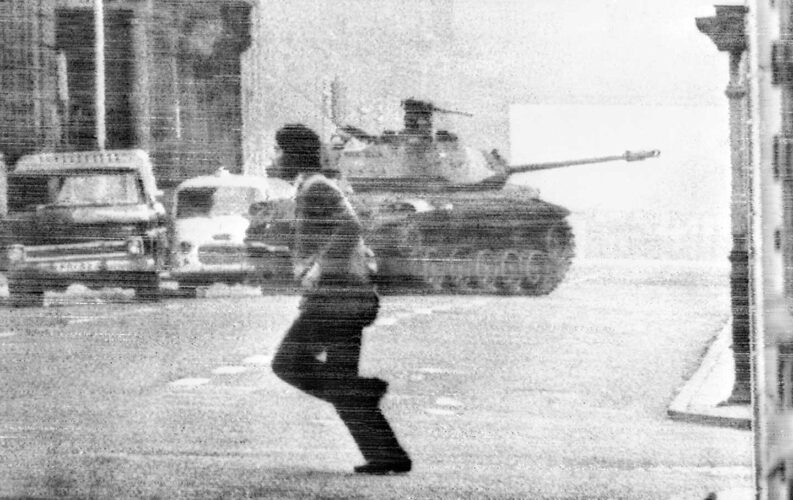
In “The Twilight Zone”, Fernández shows why the emotional cost of Pinochet’s dictatorship has not yet subsided and why a country that denies the crimes of its police forces continues to flounder in an atmosphere of untruth.
The choice of the title “The Twilight Zone” is a conscious reference to the American science fiction and horror anthology series of the same name, which began airing in the 1950s and is recognized as one of the most important and influential works in television history. Nona Fernández uses this metaphorical naming to depict the surreal and lawless nature of Pinochet’s dictatorship in Chile; a period in which reality was distorted like a science fiction story, and logic and natural human laws had ceased to function. This reference to popular culture is consistent with the author’s method, which will also be mentioned later in this review; namely, the use of seemingly trivial and everyday formats (such as TV series and arcade games) to confront deep political and social horror and prevent its normalization or forgetting.
According to Idra Novey, author of “Those Who Knew”, “The Twilight Zone” is a good reminder that we should not let popular culture distract us from today’s tragedies; it is a gripping and powerful journey into a dark and dehumanized heart. Fernanda Melchor, author of “Hurricane Season”, also believes that Nona Fernández “with brilliant prose, very intelligently and with meticulous honesty, helps us understand the horrible reality of torture – and the even more terrifying method of its normalization.” In fact, popular culture had practically silenced the voices of Pinochet’s victims.
In this brilliant work, Fernández compares Pinochet’s Chile to a science fiction show and an arcade video game. She uses these popular culture analogies to confront the ongoing repression and cover-up of the Pinochet regime. This book can serve as a “what not to do” guide for countries grappling with the aftermath of a difficult political regime; because after Pinochet’s overthrow, he was granted immunity and a permanent presence in politics (a lifelong Senate seat, army command), despite more than three thousand criminal charges. Fernández’s conversational and essay-like narrative guides the reader with sure steps through the minefield of political absurdity and casts a black light on the ambiguities and hollow political theater. In a telling scene that takes place at the inauguration of the “Museum of Memory and Human Rights”, the narrator (who can be considered a stand-in for the author herself) is explaining a small political absurdity that encompasses the larger absurdity of post-Pinochet Chile: “When I told him that the person responsible for everything seen in the museum is one of the men who make the laws governing the country, he looked at me in surprise and started laughing, thinking I was joking. My son, at ten years old, had also grasped the bad jokes of Chilean history.”
Fernández’s prose is unpretentious, clear, and direct. She does not use this directness for posturing or showing off. Her colloquial present-tense non-fictional narrative seamlessly transitions into collage-like discontinuities: an epistolary chapter addressed to a torturer, interludes in the form of line-break free verse, and a chapter in the form of a lengthy imitation of Billy Joel’s “We Didn’t Start the Fire” (“a silly song” as Fernández herself says). In her prose and collage-making, clarity, humility, and humor are evident. The overall effect is a kind of lightness that Italo Calvino admired; a style used to balance the weight of life.
Fernández knows that writing about dark subjects does not require making the reader’s life harder. Her books illuminate rather than strike. However, this lightness also carries the risk of superficiality. Fernández’s favorite technique—the overarching metaphorical concept—if overused, can oversimplify and ultimately distort reality. In “The Twilight Zone”, Fernández excels in narrating the proximity of the mundane and the brutal: (“On the same TV screen where we played ‘Space Invaders’, we now saw national police officers blamed for murders.”) Despite this, she is more successful when she admits the almost ridiculous inadequacy of these popular culture references to explain decades of torture and disappearances. And this time, Fernández shows a greater willingness to grant more openness, and a liberating (and honest) degree of imprecision to her metaphorical concepts.
What Nona Fernández’s prose in “The Twilight Zone” seeks are strange angles, alternative paths, and secret corridors to Chile’s national trauma. Even if these secret corridors pass through re-runs of science fiction films or “silly” Billy Joel songs, they are our best hope. Even if these efforts are insufficient, they are much closer than the government’s “non-efforts”: bad jokes, euphemisms, omissions, and clichés. What happened to Chile, to its forcibly disappeared sons and daughters? We will never know. But we must know. Why not play a little sci-fi in the background and try?
This question mark compels us to continue our journey in “The Twilight Zone” and through “The Green Zone”, “The Impact Zone”, “The Ghost Zone”, and “The Escape Zone” – it is in these four acts that the voice of memory rises from silence and forgetting, healing the wounds of a suffering nation and not allowing history to simply close.