55-Year-Old Laws: Inefficient Protectors of Literary and Artistic Property

According to the Culture and Publishing Service of Iran Book News Agency (IBNA), the reform of “literary and artistic property” laws has been repeatedly emphasized by stakeholders in the publishing sector in recent years, even being referred to as an urgent priority for publishing. However, it seems there has been little firm resolve to amend these laws.
This issue arises as the publishing industry and content creators have faced widespread challenges in recent years, such as illegal reproduction, digital publishing, artificial intelligence, and the lack of sustainable income for creators. Many publishing experts believe that the main root of the crisis lies in the antiquity and inefficiency of literary and artistic property laws; laws that were approved more than half a century ago and have never undergone fundamental revision.
Seyyed Abbas Hosseininiak, a publisher and intellectual property law researcher who has continuously worked on reforming these laws for the past 15 years, provides a clear picture of the current situation, its damages, and possible solutions. He believes that the 55-year-old laws are no longer effective against the developments in this field, especially with the advent of cyberspace and artificial intelligence.
Emphasizing the inefficiency of intellectual property laws, he stated: “The laws of 1348 (1969) and 1352 (1973) were fair and good laws in their time, and even conformed to the principles of the Berne Convention. But the problem is that they have remained unchanged for 55 years.”
He continued: “Based on territorial jurisdiction, legal protection only covers works first published in Iran. Therefore, even if an Iranian author publishes their book abroad, they are deprived of Iran’s legal protection. Furthermore, there is no explicit provision in existing laws for simultaneous publication. These are issues that, given Iran’s non-accession to the Berne Convention, must be considered to resolve the existing chaos in the publication of foreign works and their translations.”
A World That Has Changed, and a Law That Has Lagged Behind!
Global developments from the 1960s to today have changed almost everything in content production and publication: from printed books to cyberspace, e-books, online publishing, broadcasting rights, and now artificial intelligence. However, Iran’s intellectual property laws still reiterate the same limited definitions from five decades ago.
Hosseininiak added, stating that intellectual property is one of the modern fields of law: “The laws in this area should be reviewed every few years; however, we haven’t touched the law for nearly six decades. In this regard, the first step in reform must be to update the scope of protected works.”
He said: “Today, digital and electronic works hold the largest share in content production, but there is no explicit and sufficient legal protection for them. Additionally, virtual libraries operate in a legal vacuum with no defined scope for their activities.”
One of the key aspects of Hosseininiak’s analysis relates to the moral and material rights of creators. In this regard, he stated: “For example, for years, authors and publishers worldwide have enjoyed various material rights, such as lending books in libraries. However, in Iran, such a right is not foreseen. Not only is this right unknown to us, but even reputable university libraries have started offering their books electronically, thereby drying up the roots of scientific work production.”
According to him, moral rights, which are specific to creators, also need reform, including adding the right to disclose and publicly announce a work to domestic laws.
Penalties: Neither Deterrent Nor Compensatory
Many legal experts and publishing activists believe that one of the roots of widespread illegal reproduction is the weakness of the penalty system, and many offenders in this field easily endure light penalties and repeat their offenses.
Hosseininiak believes that while the type of crimes in the field of literary and artistic property, especially publishing rights, has changed, the penalties are not deterrent. In other words, mere imprisonment cannot be a deterrent. In addition to imprisonment, there should be financial penalties and actual compensation paid to the creator, so that while partially compensating the rights holder for their losses, the offender is truly afraid to engage in such acts.
He also stated: “In the amended version of the literary and artistic property rights law, with the cooperation of judges and in coordination with the grading of Islamic Penal Code, penalties have been designed to be both deterrent and enforceable within the judicial structure.”
Hosseininiak further elaborated on the long process of reviewing and amending the laws, saying: “In 2010 (1389 Iranian calendar), the then Deputy for Cultural Affairs of the Ministry of Culture and Islamic Guidance tasked me with forming a council to review literary and artistic property laws. Fifteen legal experts, publishers, translators, and legal officials from the Ministry of Culture and Islamic Guidance participated, and in the sessions, we sometimes debated a single article for 3 to 4 hours.”
According to him, the result of those sessions was a collection of amendments and evaluations, a written version of which was submitted to the Deputy for Cultural Affairs of the Ministry of Culture and Islamic Guidance years ago, but there has been no news of its follow-up to date. He emphasized multiple times that “as long as Iran’s position on acceding to the Berne Convention is not clarified, drafting a new bill is futile, but amending existing laws is entirely possible and necessary.”
Final Version Ready, Only Will to Implement Is Needed
In 2023 (1402 Iranian calendar), officials from the then legal deputy of the Ministry of Culture and Islamic Guidance once again asked Hosseininiak to review the bill, and he prepared the complete amended version over 7 to 8 months. In this regard, he said: “In late 2023, I sent the revised version to the Ministry of Culture and Islamic Guidance. We even consulted with the judiciary regarding penalties to ensure it was fully operational, but this process stopped after the helicopter crash incident and the change of government.”
He added: “In the new government, I met with the Presidential Legal Deputy, Mr. Ansari, and also the Minister of Culture and Islamic Guidance, Dr. Salehi, regarding this very issue, and stated that the most important action that can salvage the state of publishing and content creation is the reform of literary and artistic property laws. In my opinion, drafting a new bill is not necessary; rather, if existing laws are consolidated, revised, and amended, it will currently solve most problems. This is the shortest and most effective path. The Parliament’s Research Center also sought my opinion, and I conveyed these points and submitted the amended text.”
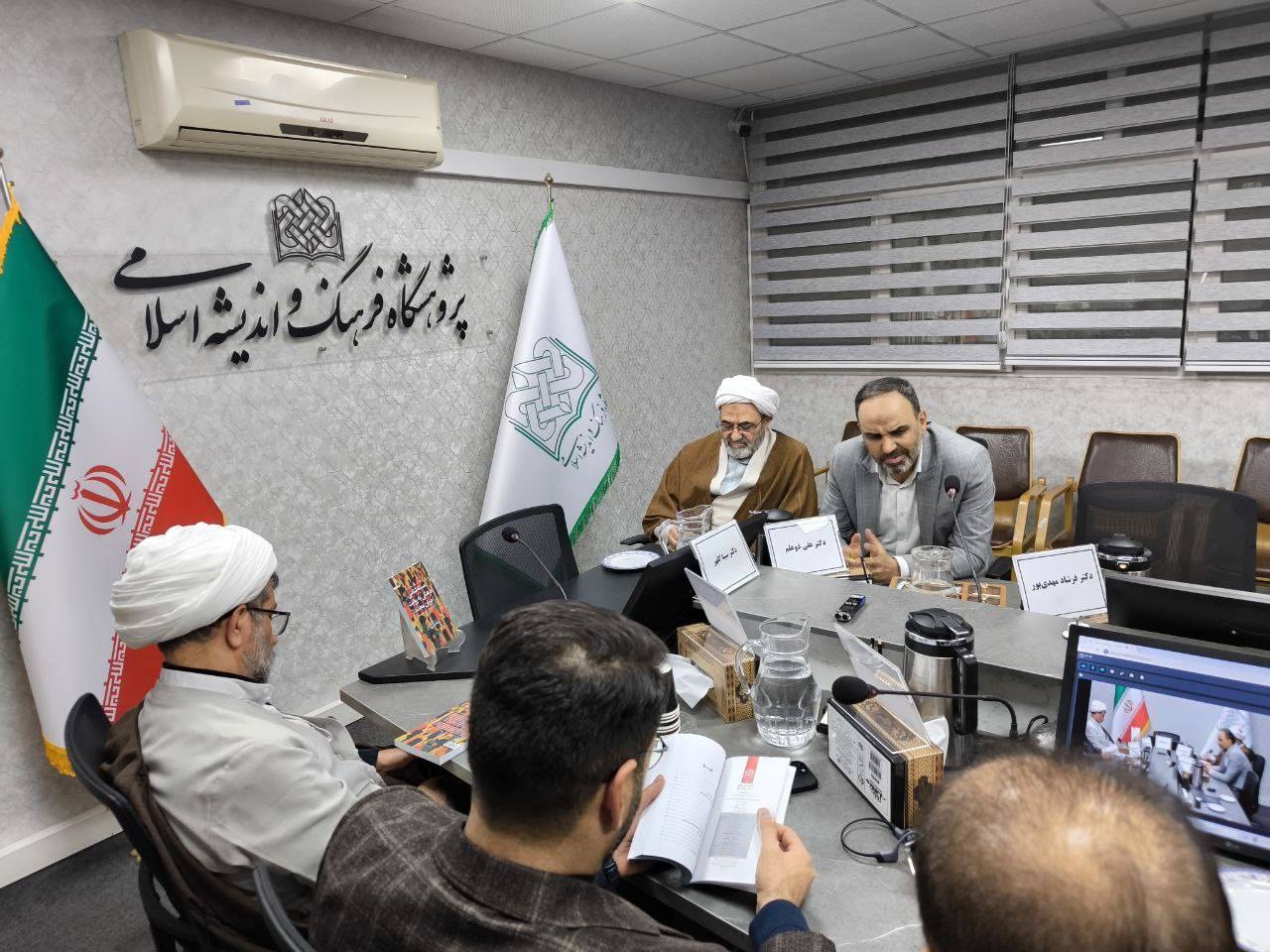
Hosseininiak, referring to the publication of the full text of the amendments in the form of a book, stated: “In 2024 (1403 Iranian calendar), I published the amendments as a book and presented them in specialized sessions. This text is the result of 15 years of work and consultation with legal experts, publishers, judges, and publishing industry activists. This text can be reviewed by a new council selected by the honorable Minister of Culture and Islamic Guidance, amended based on current conditions, and submitted as a bill to the government cabinet and the Islamic Consultative Assembly.”
Now that current laws do not adequately address the modern publishing system, the lack of clear protection for literary and artistic property rights and the absence of deterrent penalties are the most detrimental weaknesses. Despite the existence of an amended version, political and executive will is needed. However, the real starting point for transformation in Iranian publishing is the reform of literary and artistic property laws, not temporary and ineffective policies.