Unveiling of Es’haq Jahangiri’s book with Mohammad Javad Zarif and Bijan Namdar Zangeneh present / ‘In the Thought of Iran’ is neither memoir nor wishful thinking
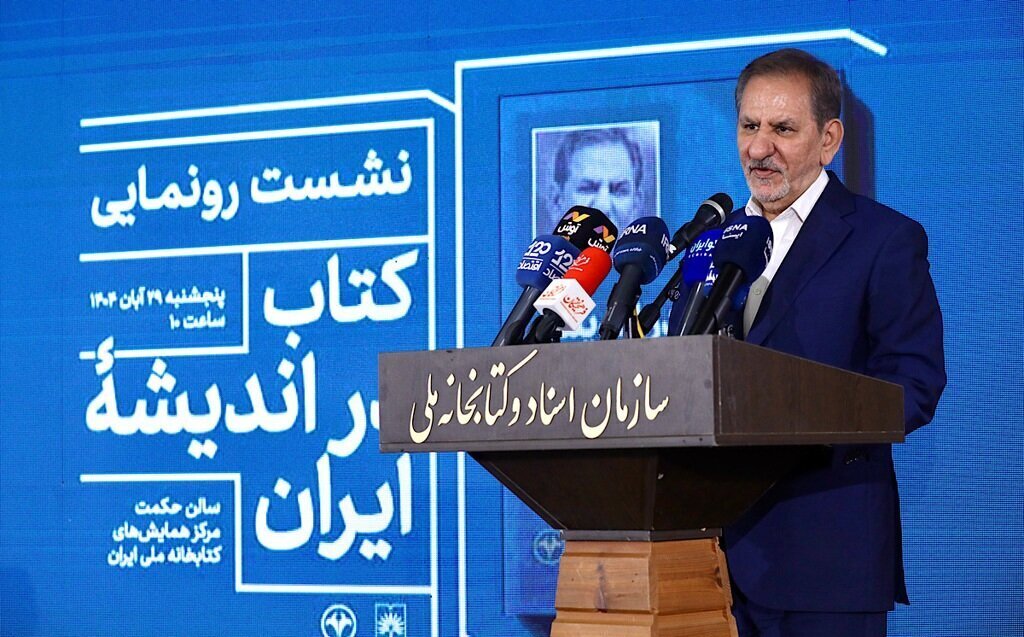
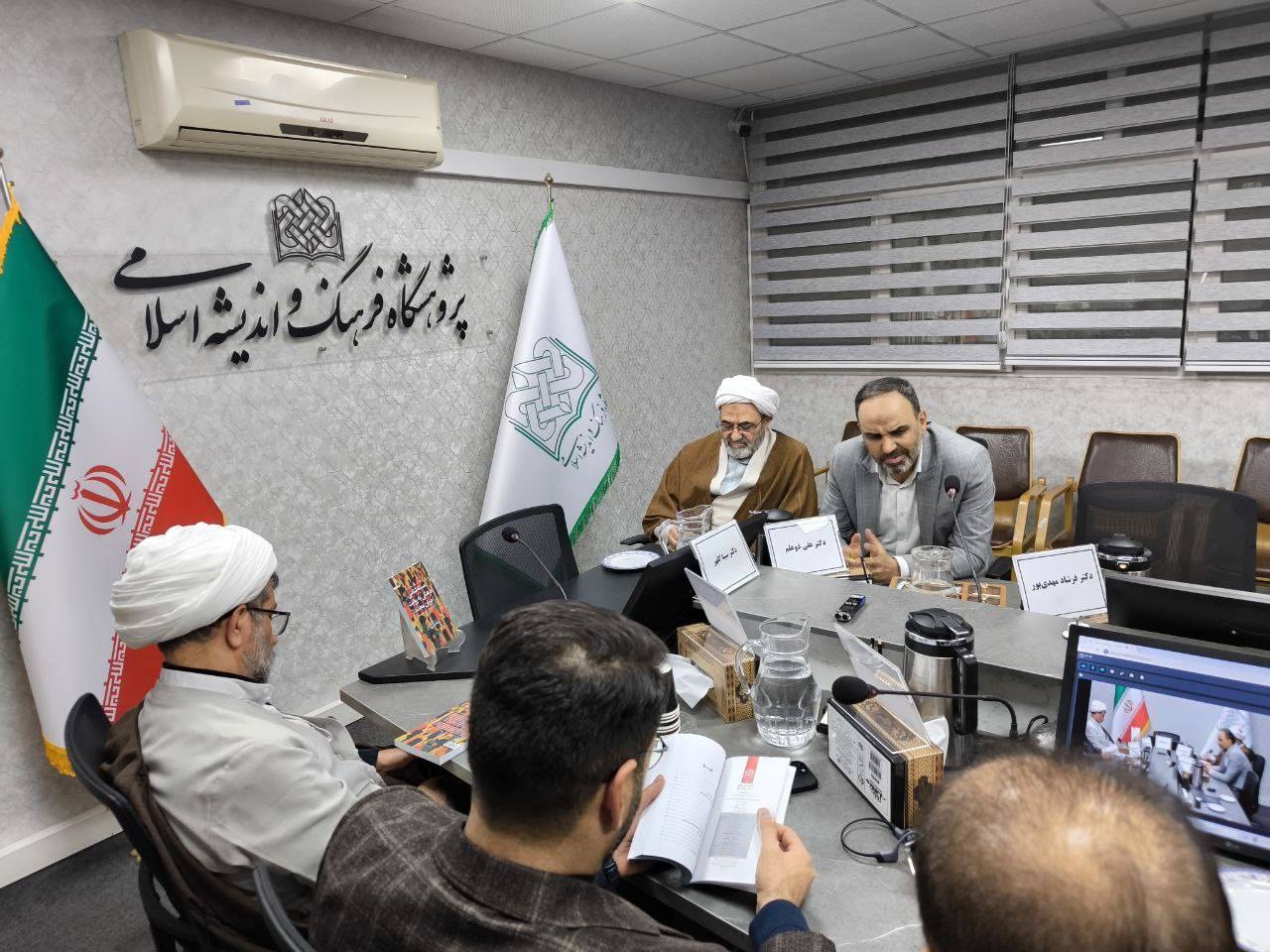
According to Khabar Online news agency, quoting Ettela’at Online, the unveiling ceremony of “In the Thought of Iran,” a book by Es’haq Jahangiri, the First Vice President in Rouhani’s government, was held through the efforts of Ettela’at Publications at the Wisdom Hall of the National Library of Iran, attended by a number of ministers from that government and political activists.
Jahangiri said about the book: “This book is not a look at the past based on today’s understanding, nor is it memoir writing or wishful thinking; it is a narrative of the favorable and unfavorable resources and factors for Iran’s development. In fact, it is a part of experiences that still remain.”
He added: “From my time as Governor of Isfahan in the 1990s until now, I have documented the important issues of the country, the government, and the society I was involved in, and I continue to do so. This book is a selection from those notes and memories. Now that an opportunity has arisen to look at the country’s issues and bottlenecks from above the daily grind of past and present executive tasks, I have written parts of them in this book.”
The First Vice President of Rouhani’s government clarified: “Overcoming the crises, threats, challenges, and super-challenges that the country currently faces requires specific prerequisites and mechanisms. However, avoiding the accumulation of experience – which is the greatest asset of any nation and unfortunately less attended to in Iran – and weakness in critically reviewing governance methods have increasingly deprived our country of the benefit of correcting wrong approaches and crisis-inducing practices.”
Jahangiri further stated: “In my opinion, the prerequisites and mechanisms that must be used in crises and challenges include several important points that should be employed to solve problems. The first issue is selecting a team of competent, strong, and courageous managers. One of the friends present at this meeting was once the head of a large economic enterprise. He said that once we had invited a Japanese professor with extensive managerial experience, and he said, in a statement that seemed exaggerated to me: ‘Ninety percent of a manager’s job, whether he is a president, a minister, or the director of a large economic enterprise, is choosing good colleagues.’ He believed that a manager should choose good colleagues and then go drink his coffee. It is good colleagues who advance the work. Therefore, today the country needs a management team.”
He identified the second point as having a plan and said: “A manager must know from what point, at what time, they want to reach which destination. The third point is that the manager must provide the peripheral environment for the management team. A group cannot put spokes in the wheels of the chosen management team. We are all like the gears of a car. The mission of all gears is to turn. If all gears are in harmony with each other, the country will move forward. If not, each gear will spin on its own, and the car will not move. Also, the team must utilize social capital and, finally, identify opportunities and make decisions in a timely manner. These are models for all years and challenges.”
The author of “In the Thought of Iran” added: “The day Dr. Rouhani’s government began its work, Security Council sanctions and US and EU sanctions were in place. Some reputable individuals told me that even in two to eight years, you wouldn’t be able to solve the problems, yet with these characteristics, we were able to resolve them. Because we believed and still believe that comprehensive development is Iran’s right.”
Bijan Zangeneh: We Went Off Track
Bijan Namdar Zangeneh, former Minister of Petroleum, said at the unveiling ceremony of Es’haq Jahangiri’s memoir: “Here I want to defend the country’s management until 2005 (1384 SH) and after; these managers had important qualities, including adaptability, effective belief in engagement with the world, and avoidance of populism. With the end of the imposed war and the start of reconstruction in 1988 (1367 SH), our country entered a period of development. In the late Hashemi government, managers worked in this direction. Perhaps one of Khatami’s greatest achievements was formulating the 20-year vision document. In this document, important requirements for actions were considered and approved by the Supreme Leader, but from the mid-2000s (1380s SH), the then-government and specific individuals tried to let this document be forgotten.”
He added: “Jahangiri started his career as a governor and then became a minister and later First Vice President. I have known Jahangiri for 43 years; Jahangiri is a thoughtful person; he naturally rose through the administrative ranks.”
Zangeneh emphasized: “The things that are being done now should not be attributed to the management of the Islamic Republic; we have gone off track.”
Zarif: Jahangiri Was a Bastion of Moderation in the Government
Mohammad Javad Zarif, former Foreign Minister of our country, said at the unveiling ceremony of “In the Thought of Iran” by Es’haq Jahangiri: “It is an honor for me to be present at the unveiling ceremony of Dr. Jahangiri’s book. Jahangiri embodies both the title of the book and what is contained within it. Mr. Jahangiri has always thought of Iran. Indeed, the idea of Iran is the main element in Dr. Jahangiri’s political life. If we look around this very room, we see high-ranking officials gathered here out of devotion to Dr. Jahangiri. This indicates that Dr. Jahangiri has proven in his political life that he is committed to Iran’s development. As a governor, a minister, and a first vice president, he has always considered Iran’s development.”
He added: “Jahangiri’s compass has always been the development of Iran, and he has acted according to the forms of this development. Today, he can proudly hold his head high in this country and among these people, because he has never deviated from this path. Iran is vast, capable, and powerful, but Iran’s power lies in its people. It lies in the good managers this country has nurtured, and Dr. Jahangiri is perhaps the best example of these managers. Unfortunately, we have not cherished Iran’s great capital – its people and its managers – and we have not utilized this great asset sufficiently. However, this mistake should not blind us. Our future is very bright because Iran possesses this great capital. Jahangiri, in his slogans, actions, and in his book, is a proponent of reformism. He has always pursued reform. Reform resonates in every word of this book. He is not seeking to express personal grievances but rather to present plans for reforming affairs in Iran.”
Zarif stated: “Both in this book, in his life, and in government, he has been a symbol of moderation. We never saw Jahangiri lose his temper despite the many hardships he faced. He always invited others to moderation. In one or two places in the book, it is mentioned about me that I sometimes deviate from moderation. I must say that Dr. Jahangiri always helped and brought us back to the path of moderation, to the path of reconciliation, and to the path of coexistence. I am always indebted to him.”
The book “In the Thought of Iran” was published by Ettela’at Publications and reached its second print run in less than a month.