An Adapted Film Should Be Reviewed Independently of the Book

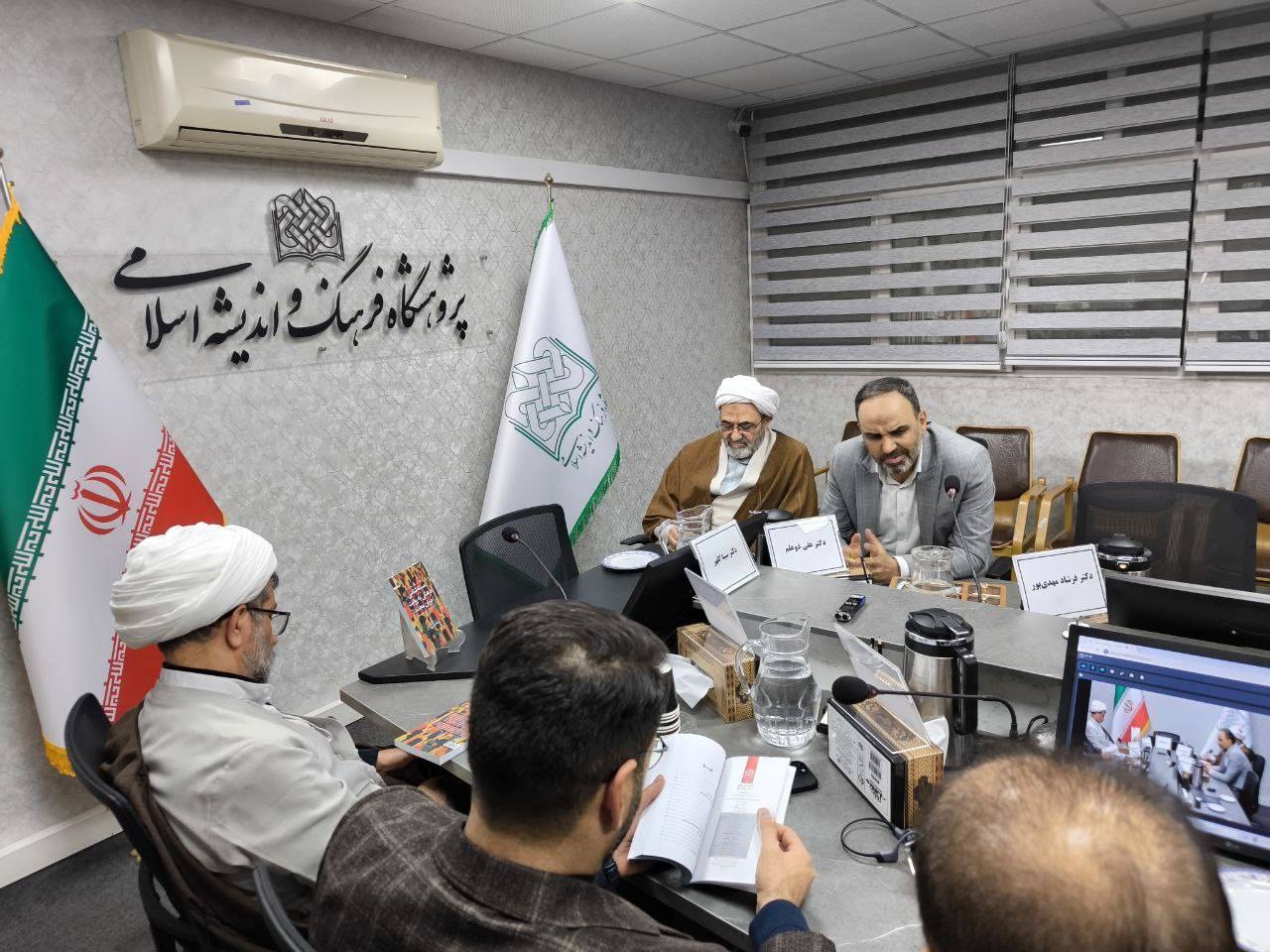
According to Iran Book News Agency (IBNA), at this session, short films “Tunnel” directed by Ehsan Amini, “Choolibooli” directed by Mana Pakseresht, “Dreamsmith” co-directed by Milad Kiaei and Mohsen Mehridoroui from Iran, and the short film “Yesterday, Today, Tomorrow” directed by Orhan Dede from Turkey were screened. Afterwards, Fatemeh Shahbandeh, a cinema critic, and Saman Bayat, the host of the program, engaged in discussions with the directors of these works.
Dreamsmith; Black Mirror was a source of inspiration, not a model for us
Mehridoroui explained the film’s formation process: “I wrote the screenplay in 2021 and we made it in 2022. However, due to involvement with the series ‘One Thousand and One Nights’, the post-production phase was very long, especially since the film had special effects. Its first screening was at the regional festival in 2023, and then at the 41st Tehran International Short Film Festival.”
Referring to his source of inspiration, he added: “A personal mistake and a persistent guilt caused the idea for this film to form in my mind. I constantly thought to myself, if I had done such and such in reverse, a better outcome would have happened. This thought turned into the idea of whether a bitter memory could be turned into a sweet one; something that, when we think of it, we feel pride instead of pain. This was the spark for writing the screenplay.”
Mehridoroui also explained the tone and genre of the film: “Milad Kiaei (the other director) and I always liked the series ‘Black Mirror’. The reason is that each episode has an independent story and tells its own tale in a specific format. Of course, we weren’t directly inspired by it, but we knew our film could fit into that same format; a story without dialogue narrated in a sci-fi setting.”
Regarding the ending of the film, he said: “Usually, I don’t like directors to explain their films in a critique session, but I will only say that the moment the father finds his child’s hair clip is where he finally accepts her death. His efforts in the virtual world never reached that climax, but in confronting reality, he reaches acceptance. He places the photo frame, sheds tears, and decides to visit his child’s grave. That is the moment of acceptance.”
Fatemeh Shahbandeh, the critic of the session, first expressed her interpretation of the film: “I saw a father who accidentally killed his child and is now grappling with guilt and nightmares stemming from it. He tries to use technology and artificial intelligence to turn this nightmare into a dream to escape his disturbing mental space.”
She continued: “We needed a shock in the father’s character arc. I’m looking for a shock, a surprise in the visuals that can make this acceptance palpable for the audience. I want to know how this character arc forms? Because I feel a part of it is absent from the narrative.”
She added: “It seems the screenplay is grappling with something akin to a lack of imagination; that is, an element that should help us understand how the father reached this acceptance. Of course, one of the positive points of the film is that it’s narrated without dialogue, something many of our filmmakers avoid and rely on dialogue. Your film has managed to tell the story through visuals.”
Saman Bayat, the host of the session, referring to the film’s form and atmosphere, said: “The concept and atmosphere of the film reminded me of works about loss, reconstruction, or the creation of memory; works in which memory and the construction of a mental world play a role.”
He continued: “The form of the work led me towards a spiritual and theological world; a world narrated with light, color, and a slow rhythm. But in contrast, we also see a dark and confined world where the father is alone due to his mistake. The combination of these two worlds; one sci-fi and the other spiritual; sometimes created a distance, and I couldn’t easily transition from one phase to another.”
“Tunnel” in the Labyrinth of the Mind; Ambiguity, Magical Realism
Shahbandeh, at the beginning of the session, referring to the film’s adaptation from a short story written by Peiman Esmaeili, said: “When we talk about an adapted film, we must put the book aside and examine the work as an independent film. Everything we need to understand must come from the film itself. The film draws us into the complexities of the main character’s mind; a mind grappling with love, work problems, an ambiguous incident – murder, suicide, or something unclear – fears, and anxieties. Initially, a criminal atmosphere is created, then we enter magical realism, and finally, the boundary between dream and reality becomes so intertwined that the ending can be confusing for the audience.”
Shahbandeh, pointing out that in the short film format, limited time does not allow for several concurrent and ambiguous crises to be fully developed, said: “12 minutes is a short time. If the main action and crisis are not clear, the audience is likely to get lost. It’s possible, like myself during the first viewing, that a misunderstanding arises; for example, that the tunnel is a metaphor for death or that the main character’s love has died.”
She considered the film “I’m Thinking of Ending Things” by Charlie Kaufman as an example that, even in a feature film format and despite the director’s high experience, was vague for many viewers: “Now imagine this same complexity is to be conveyed in a short film.”
Shahbandeh also referred to the visual quality of the work: “The film has very attractive frames at moments; such as the opening sequence and the beautiful interplay of light and shadow, or the image of the beach which approaches magical realism. But this visual quality sometimes gets lost under the pressure of conceptual clutter.”
Subsequently, Ehsan Amini participated in the session by phone and, while thanking the critics and apologizing for not being present in the hall, explained about the film’s production: “From the beginning of writing the screenplay, I decided the film should be black and white. I felt that the main character’s subconscious world had no color, and this choice was closer to the characterization and atmosphere of the work. The external reality was black and white and high-contrast for me.”
Regarding the colored shots related to Mashmooli and Hiva, he explained: “The colored scenes were a kind of distancing for me; something like evoking an image, a dream, the unconscious, or the surreal. We don’t know if the character Mashmooli is seen at his actual age or if he is reconstructed in the main character’s mind. This uncertainty was my intention.”
Amini emphasized that some elements, such as internal monologues and changes in narrative perspective, were not present in the original story and were consciously added for the cinematic adaptation: “Esmaeili’s story is third-person omniscient. To get closer to the character’s mental and dark world, it was necessary for the narrative to approach him. Therefore, a mental structure, modern elements, and layers of the unconscious were my choices for the screenplay.”
The director also spoke about the production process: “It took seven months to get permission to film in the subway. The subway is not a designable space, and these limitations made me keep the frames and the world of the film confined, controlled, and uniform in color.”
Saman Bayat, the expert host of the session, also stated: “Two important signs in the film led him towards a mental and modern interpretation; first, the character’s internal monologue at the beginning of the film, and second, the change in perspective and narrative angle. These two elements usually indicate an entry into the labyrinth of the mind.”
Regarding the color change in parts of the film, he explained: “At first, I thought perhaps for technical reasons or production conditions, some parts remained in color; especially since the scenes related to the late Hatam Mashmooli were in color. But then I guessed it might be a technical and conscious decision that the director should explain.”
Bayat referred to some mental and cinematic references in the film: “The image of the tunnel as a metaphor for the mind has also been seen in the works of Tarkovsky or Bergman. Also, the fixed and static frames led me to believe that the filmmaker probably has a background in photography or painting.”
He considered a moment in the film, executed with chiaroscuro lighting technique, as one of the most beautiful parts and added: “There were also ambiguities for me; such as why the main character is introduced with the surname Bakhtiari, but the narration is close to Laki and sometimes Kurdish, or why only the scenes of characters Hiva and Mashmooli are in color.”
“Choolibooli”; Childlike Reading, Intelligent Humor
Next, it was time to critique and review the short film “Choolibooli”. Fatemeh Shahbandeh said about this film: “The film is very funny and well-made. The director has managed to shape the world of the work from a child’s perspective and with their mental simplicity, and has done so with meticulousness and intelligence. They have taken concepts that we usually use in specific situations and played with them.”
She continued: “The film also uses some familiar shots; such as the famous shot from Western films where, during a duel, the frame is closed from the middle of the body and the weapon is seen in the image. Humor is placing an element in an out-of-place situation, and the more intelligently the director plays with this incongruity, the funnier and more universal the world of the work becomes. For example, when Tchaikovsky’s music is placed over the image of a rural cow, the viewer expects traditional music, but this unexpected choice is humorous and engaging.”
Shahbandeh concluded: “The film is simple, and the director has not ‘bit off more than they can chew’. They have taken a childlike narrative and placed that child’s mental image, without exaggeration in metaphor or conceptualism, into the film format. It seems the director not only has mastery over filmmaking rules but also high creativity, and I truly liked this film.”
Saman Bayat also commented on “Choolibooli”: Regarding the film, he said: “For me, the film also had an extra-textual point. If we place the child’s relationship with the cow alongside the human’s relationship with the ownership of the cow, the first relationship is reminiscent of the atmosphere of Mehrjui’s film ‘The Cow’, and the second relationship is closer to cinema like ‘Suddenly a Tree’. I imagine, although it might just be my personal interpretation, that the filmmaker was influenced by Iranian cinema and its view of the cow’s place in the socio-economic structure.”
He added: “In Mehrjui’s film, ‘Mash Hasan’ is transformed into the cow, but here we see a child who stands against that same socio-economic structure. Even if it costs him his life, he wants to save his cow from prison. This kind of generational resistance was attractive to me, although the director might not have intended such a reading at all.”
At the end of the session, the short film “Yesterday, Today, Tomorrow” from Turkish cinema was also discussed.
Fatemeh Shahbandeh said about this short film: “This documentary failed to convey the emotional burden of an important topic like war and family separation.” She stated that the film’s narration is completely unnatural and expressionless, and more like a text that has been read aloud or even written and read by artificial intelligence.
Shahbandeh added that the director did not get close to the characters and did not extract their true emotions; therefore, none of the narratives affect the audience. According to her, it would have been better if the film had followed only one character to create a deeper narrative. She even found the scene of the mother and child meeting at the end to be devoid of feeling.”
She described the overly emotional music and the 1980s narrative style of the film as ineffective, saying that this method is not impactful for today’s audience, especially the new generation. Shahbandeh also believed that the film was more like a news report with scattered rushes and lacked narrative focus.