Former Head of Assyrian Association: Please don’t call us ‘minority’/ IRIB never introduces us as part of the Iranian nation
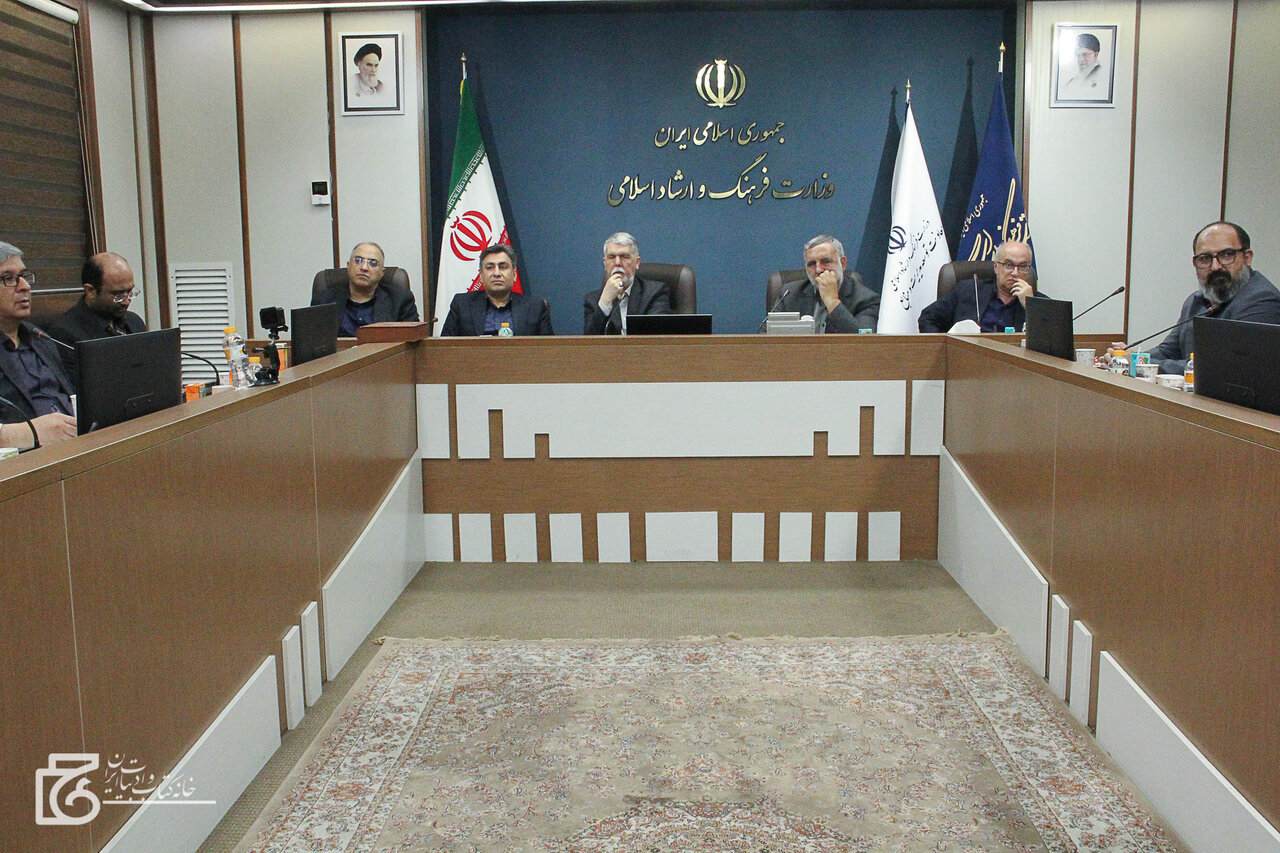
According to the news headquarters of the 32nd Iran Book Week, the ceremony “Unveiling New Publications of Followers of Monotheistic Religions” and the meeting “Publishers and Press of Followers of Monotheistic Religions” were held on Monday morning (November 17, 2025) at the Ministry of Culture and Islamic Guidance conference hall, with the presence of Seyed Abbas Salehi, Minister of Culture and Islamic Guidance; Mohsen Javadi, Deputy Minister of Cultural Affairs; Alireza Nourizadeh, Director General of Cultural Institutions and Guilds; representatives of religious minorities in the Islamic Consultative Assembly; and a group of publishers and writers from followers of monotheistic religions.
In this meeting, held within the framework of Book Week programs, representatives from the Jewish, Armenian, Assyrian, and Zoroastrian communities, including Homayoun Sameyah (Jewish representative in Parliament), Ara Sharoudian (Armenian representative in Parliament), Pedram Soroushpoor (Tehran Zoroastrian Association), and other cultural and publishing figures from monotheistic religions were present.
Iran is a Refuge for Religions and This Flag Must Remain Raised
Seyed Abbas Salehi, in this program, honored the memory of Iran’s martyrs from the beginning of Iran’s history until 2025, stating: “These dear ones left behind a precious legacy, and today we are custodians of this great thousands-year-old heritage.”
He continued by referring to the historical and cultural commonalities of those present at the meeting, adding: “When we, who have gathered around this table, look to the past, we find many common points in this long period; as if we have been interwoven like warp and weft throughout thousands of years of history. In various periods and during Iran’s toughest times, we stood together and smiled together. This ancient shared life, accompanied by understanding and peaceful coexistence, has brought us a wealth of shared beliefs and values.”
He added: “If we were to list these commonalities, we would have to speak for hours; from shared beliefs and values to major and minor common concerns, from family issues and generational gaps to the linguistic changes of the new generation.”
The Minister of Culture and Islamic Guidance said regarding the language change of the new generation: “The language of the new generation undergoes changes that we naturally must pay attention to. Language for Iran is not merely a tool for communication; language carries culture and is also a symbol of identity. Therefore, we cannot simply overlook its changes.”
He pointed to other common concerns and continued: “Many of the common concerns we share exist in the environment and… in major discussions, intermediate discussions, and also in areas like liquidity sources and paper, but all of us, despite all these problems, walk on the same soil, breathe under the same sky, and move towards the future in a single caravan. It is these commonalities that connect us and make us stand together more than ever.”
Salehi, stating that he emphasizes two points in this short opportunity, and the first point is a better understanding of religions, said: “We must be able to have a better understanding of religions, and one of its bases is right here. Iran has always been and remains the land of religions and a refuge for their followers. A collection of religions that at times in history faced limitations in their own lands; Iran was their refuge and their safety net.”
He continued: “This flag of peaceful coexistence must continue to fly high. If we can introduce the authentic and rational narratives of religions, presented by the fair adherents of those religions themselves, to the world, we will have taken a great step in removing misunderstandings and established Iran’s position as a ‘refuge of religions’.”
The Minister of Culture and Islamic Guidance added: “To whatever extent we can translate and offer these presented works to other countries, Iran’s position as a refuge of religions and coexistence of religions still has the possibility of being recognized, and the efforts that our dear ones are making in introducing religions will be helpful.”
Salehi, regarding the second point, addressed the necessity of unity in the face of threats and said: “The second part is Iran itself. Today, Iran is exposed to diverse threats that are not only military, and all of us, including Muslims, Jews, Armenians, Assyrians, and Zoroastrians, who have contributed to building this history and preserving this geography, must stand shoulder to shoulder. Iran is not just a land; it is a spirit and a meaning. Protecting this shared identity is the responsibility of each and every one of us.”
Addressing the attendees, who were representatives of Muslims, Jews, Armenians, Assyrians, and Zoroastrians, he said: “All of us who built this history together and preserved this geography, not as a land, but as a spirit and meaning, must stand together today. Naturally, our dear ones who are sitting around this table sometimes have more opportunities than I, as the Minister of Culture and Islamic Guidance. The connections and opportunities they have are like ‘moments’. In moments, Arashes came and performed lasting deeds for Iran in myths and history. Today is also one of those moments. We must do something so that this motherland sees itself as having worthy children.”
Salehi concluded by referring to the diversity of climates as Iran’s beauty, emphasizing: “Iran’s beauty lies in its diversity; both its climatic diversity, which few countries possess, and its diversity of cultures and religions. If all of Iran had a single culture, it would lose part of its beauty. This gathering can greatly contribute to that ‘semantic climate’ of Iran, which is as valuable as its natural climate.”
Books Have Guaranteed Iran’s Splendor
In another part of this meeting, Mohsen Javadi, emphasizing the shared history of Iranians, said: “Books have always played a major role in the flourishing and splendor of this land. Wherever there have been great books, civilization has been built, and everyone has had a share in it; whether these books were written by Muslims, Christians, or Jews. Fortunately, among the great books that have brought grandeur to Iran, we have works from every profession, group, and religion. Both medical books written by Jews and Armenians in this land, and great books in philosophy, mysticism, and literature.”
He added: “Our plan is to listen carefully to the friends’ speeches, if there is any ambiguity or problem, to resolve it, and if necessary, provide an explanation. Most importantly, if ways or innovations are proposed that can open a new path for activity in this field, we will welcome them, because everything is changing and dynamic, especially with developments like artificial intelligence. Any point that can help us in this path will be valuable. As mentioned, every step for the flourishing of books in this land will ultimately be a step for the country’s pride and glory.”
Facilitating License Issuance and Appreciating the Role of Religious Minorities
Alireza Nourizadeh, Director General of Cultural Institutions and Guilds of the Ministry of Culture and Islamic Guidance, in this meeting, appreciated the presence of representatives of monotheistic religions, considering their presence a symbol of publishing dynamism and respect for pluralism and peaceful coexistence.
He, referring to the historical companionship of religious minorities, emphasized: “We have not forgotten your bravery during the Islamic Revolution, the eight years of Sacred Defense, and your stances in condemning the Zionist regime.”
Nourizadeh announced the facilitation of license issuance and said: “Over the past year, we have tried to issue licenses for your activities in less than two hours, and 90 percent of cases are done within this timeframe.”
The Director General of Cultural Institutions and Guilds announced future programs and added: “We have prepared programs such as an exhibition of the bravery of religious minorities during Fajr Decade and a dinner reception with the presence of the Minister of Culture and Islamic Guidance. I hope today’s dialogue is the starting point for new paths and deeper collaborations.”
Speakers from Religious Communities and Publishing Professionals Share Views
- Homayoun Sameyah Najafabadi, the Jewish representative in Parliament, requested a more open space for non-Jewish researchers to study Judaism, emphasizing: “The Jewish community is not proselytizing, and we expect researchers not to be treated with suspicion.”
- Ara Sharoudian, the Armenian representative in Parliament, referring to the historical background of Armenians in the development of publishing in Iran, said: “Armenians established Iran’s first modern printing house, and today, to continue this role, support for small publishers and facilitating the licensing process are essential.”
- Pedram Soroushpoor from the Tehran Zoroastrian Association, emphasized the necessity of preserving historical documents and announced: “The book ‘Historical Documents of Zoroastrians in the Qajar Era’ will be unveiled on December 18. Our identity depends on preserving these documents.”
- Isaak Younansian from the Hour Translation and Research Institute, referring to the financial problems of printing books, said: “We have eight book titles ready for printing, but there is no financial incentive for publication. License issuance should be expedited.”
- Behnam Mobarakeh, director of Hirmana Publications, requested the allocation of paper quotas for religious books and said: “Holy books should be printed with dignity and at a reasonable price so that people can afford them.”
- Argishti Toumasian, internal manager of Alik newspaper, referring to the 95-year history of this newspaper, said: “Despite all the paper and financial problems, we have kept our faces red by slapping them (idiom for struggling to maintain appearances) and continue our cultural mission.”
- Yonatan Bet Kalia, former head of the Assyrian Association of Tehran, stating that the worst thing he hears is the word ‘minority’, strongly criticized this concept. He added: “This categorization is abused by international bodies and claimants of human rights and portrays us as separate from the Iranian nation.”
- He, referring to the lack of proper media coverage of religious communities’ ceremonies, said: “The Islamic Republic of Iran Broadcasting (IRIB) never introduces us as part of the Iranian nation in any of its programs. These valuable sessions are held every year, but where are they reflected? Only in our own publications!”
- Bet Kalia, emphasizing national unity, added: “I am not separate from Mr. Salehi, I am not separate from Zoroastrian Mobeds, I am not separate from Armenians and Jews. We are all Iranians and we are proud of it. Please do not use the word ‘minority’ for us.”
- Sohrab Salamati from the Sharifabad Zoroastrian Association, referring to the publication of 6 volumes of books in the past two years, said: “With the good cooperation of the Ministry of Culture and Islamic Guidance, we have received the necessary licenses in the shortest possible time.”
- Sardari from the Rafi Cultural Complex, emphasized the necessity of developing national culture against globalization: “To combat global threats, local cultures must be encouraged and developed.”
- Arash Abaei, a Jewish researcher, appreciating the free space for publishing books in the field of religions, said: “The cooperation of Muslim and Jewish researchers in producing reliable resources has led to the country’s progress.”
- Dinaz Dehnadi, director of Barsam Publications, referring to two main concerns, said: “The quality of allocated paper is unsuitable, and the process of writers’ insurance needs transparency.”
- Babak Salamati, editor-in-chief of Amordad magazine, emphasized the necessity of ‘positive discrimination’ to preserve small cultures and said: “There should be special attention for publishers of monotheistic religions who have more limited audiences.”
- Artvit Zahrabian from Nairi Publications, proposed the creation of a ‘special distribution team’ within the Ministry of Culture and Islamic Guidance for books by publishers of monotheistic religions and said: “This action can help in the distribution and recognition of our books nationwide.”
The 33rd Iran Book Week, with the slogan “Let’s Read for Iran,” began on Saturday, November 14, 2025, and will continue until November 20.





