Reza Khan’s Role in the Assassination of a Freedom-Loving Journalist / ‘Terror in Baharestan’ Published
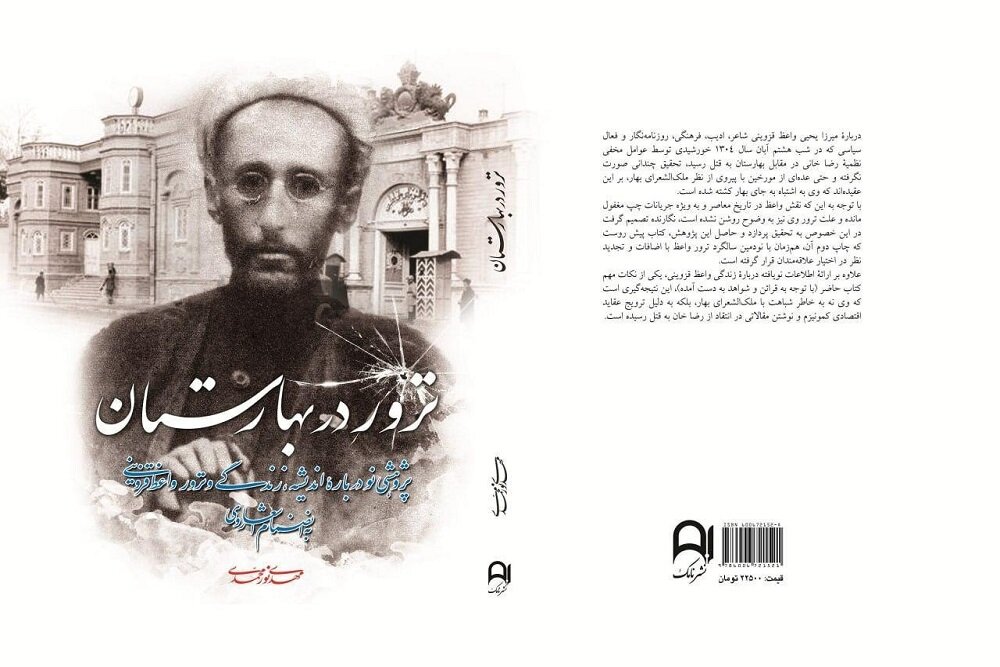
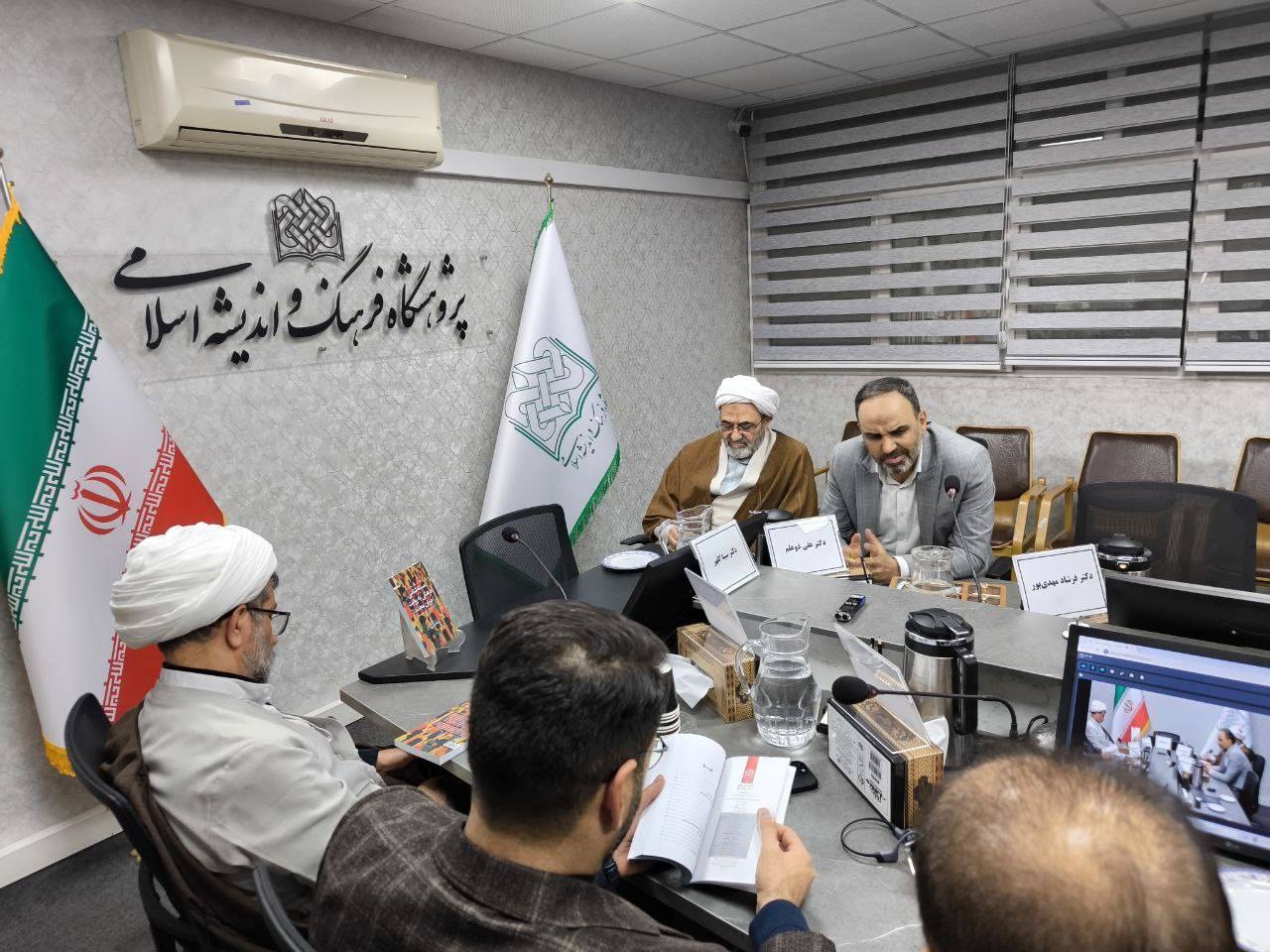
According to Mehr News correspondent, the book “Terror in Baharestan” written by Mehdi Nourmohammadi, is a research work about the life, thoughts, and assassination of Vaez Qazvini (one of the lesser-known figures in the political-social movements of Iran during the Constitutional era and thereafter). In addition to covering his life and journalistic activities, it also includes a collection of Vaez Qazvini’s poems. This book was first published in 2006 by Hadith Emrooz Publications, and its second edition (second revision) was published in 2015 by Namak Publications.
For this reason, we conducted an interview with Mehdi Nourmohammadi, a researcher and author of history books. Regarding the question of how the idea for this research came to mind, he said: “Writing a comprehensive book about Vaez Qazvini can be an effective step to re-identify this historical figure and reveal more facts about his role in contemporary Iranian history. Vaez Qazvini is one of the influential yet lesser-known figures in contemporary Iranian history who, due to the specific historical and social conditions of his time, has received less attention. His life and political activities were influenced by two important factors: first, his connection with Malek-ol-Sho’ara Bahar and the hypothesis of mistaken assassination in his place, which caused his personality to be overshadowed by Bahar’s fame; second, the simultaneity of his murder with the change of monarchy from Qajar to Pahlavi, which diverted attention from this event.”
He added: “Nasihat newspaper, published by Vaez, is considered an important source for understanding his thoughts and ideas. Unfortunately, this newspaper has also been less studied for various reasons, including its extreme rarity. This newspaper is so rare that even Vaez’s nephew and relatives did not possess a single copy of it. Only a few copies existed in the National Library and the Parliament Library. Since 2001, I tried to search for this newspaper, and after enduring many hardships, I finally succeeded in finding its complete run (64 issues), which is the only complete collection of this newspaper available in Iran. If I had not succeeded in obtaining the complete series of this newspaper, I would not have been able to complete this research. By carefully examining this newspaper, I succeeded in clarifying and elucidating the hidden aspects of Vaez’s life and activities and his role in the political developments of that era.”
Who was Vaez Qazvini?
Nourmohammadi said about the personality of Vaez Qazvini at that juncture of history: “Mirza Yahya Keyvani, known as Vaez Qazvini and Mirza Yahya Vaez, is a prominent figure in poetry, literature, education, journalism, and politics. He is the fourth journalist, after Jahangirkhan Sur Esrafil (editor of Sur Esrafil newspaper), Sultan al-Ulama Khorasani (editor of Ruh al-Quds newspaper), and Mirzadeh Eshghi (editor of Qarn-e Bistom newspaper), to sacrifice his life for the awakening and awareness of society. He came from the deprived classes of society and from an early age became familiar with the hardships and adversities of life. Membership, activity, and leadership in the Democratic Party of Qazvin was his first experience in the field of political activities.”
He added: “Vaez, through great efforts, rendered significant services in the field of knowledge and education in Qazvin. Initially inclined towards the Qazvin branch of the Democratic Party, he later joined the Socialists and then the Communist Party, but always maintained his religious affiliations. Through managing and teaching in the ‘Omid’ and ‘Farhang’ schools, he played an important role in expanding modern education in Qazvin and encouraged people to learn new sciences in his sermons and speeches. Farhang School, which flourished under Vaez, was considered one of the main pillars of modern culture in Qazvin.”
Nourmohammadi continued: “He also worked to build schools and promote knowledge in rural areas such as Zavarag-e Alamut. A quote from his nephew indicates that Vaez was strongly against discrimination in the educational environment and even prevented teachers from receiving gifts from students and their parents to ensure justice in school. His social aspirations included: expanding knowledge, reforming the economy, boosting trade, building a nationwide railway, and distributing land among farmers, which demonstrates his deep concerns for the progress of society.”
Finding New Points Amidst the Pages of History
In response to the question of whether he encountered new points during the course of research and writing, Nourmohammadi said: “During this research, new and original points were obtained. Among them, by examining documents related to the suspension of Nasihat newspaper, which are kept in the National Archives of Iran, it was very important to discover that the suspension of this newspaper was carried out by the direct order of Reza Khan himself, who was the Prime Minister at that time. This fact is completely consistent with Yahya Dolatabadi’s writings in the book ‘Hayat-e Yahya,’ which shows that Reza Khan did not have a favorable view of Vaez. Yahya Dolatabadi stated in his memoirs that at a celebration, he was standing next to Sardar Sepah, and the representative of Qazvin, Sheikh Mohammad Ali Sabit-al-Mouti, was standing next to him and asked him (Dolatabadi) to request Reza Khan to release Vaez to return to Qazvin. At this moment, Reza Khan noticed this private conversation and told Yahya Dolatabadi that this request was not timely at present and that he should remain in Tehran. It should be noted that Vaez had come to Tehran after the suspension of Nasihat newspaper to meet with parliamentary representatives and national figures to lift the suspension of the newspaper. A few days after this incident, as Dolatabadi recounted, Vaez was assassinated in front of the Baharestan gate.”
The author of “Terror in Baharestan” continued: “The second point I discovered was that Malek-ol-Sho’ara Bahar, in his book ‘A Brief History of Political Parties,’ put forward a story about how Vaez was killed, which, according to him, others had narrated to him. In this account, it is stated that Vaez entered the parliament building from Baharestan Street, and upon entering the courtyard, terrorists hidden behind trees shot at him, and several bullets hit him. Then they came out from behind the bushes to cut off his head, but when they saw it was not Bahar, they said: ‘It’s not Bahar,’ and left him and went away. This account by Malek-ol-Sho’ara Bahar refers to Vaez coming inside the Baharestan courtyard. However, I found documents that differ from this account; one is the memoirs of Aref Qazvini, another is the memoirs of Mirza Hossein Khayyat, who was Vaez’s literature teacher in the Qazvin seminaries, and third, an advertisement published a year after Vaez’s death for his anniversary ceremony in Qazvin in the ‘Bazpors’ newspaper of Qazvin in 1926 SH. This newspaper stated that Vaez was killed in front of the entrance gate of the Baharestan building.”
He added: “These three sources — the memoirs of Aref, the memoirs of Mirza Hossein Khayyat, and the Bazpors newspaper advertisement — all indicate that Vaez was killed not inside the parliament building but next to its entrance gate. Especially Mirza Hossein Khayyat, who was next to Vaez and accompanied him at the time of his killing, his memoirs are of great importance. I published the memoirs of Mirza Hossein Khayyat in 2009 by Sokhan Publications, and its second edition was published in 2023 by Namak Publications. Therefore, this finding shows that Malek-ol-Sho’ara Bahar’s account, although stated as narrated by friends and acquaintances, cannot be accurate.”
Nourmohammadi continued: “A point that needs to be mentioned here is that Malek-ol-Sho’ara Bahar is one of the great literary luminaries of Iran. He has been called the last master of classical Persian poetry. The grandeur and comprehensiveness of Bahar’s scientific and literary personality have led some admirers of this great figure to consider his account as a divine revelation that has no flaw. For example, the late Mohammad Golbon, who was a devotee of Bahar and, based on this devotion, published the book ‘The Tall Sun of Khorasan’ about this great figure, was somewhat displeased and upset that I had rejected Bahar’s view in this research. I had a friendship with the late Golbon, and I remember in a phone conversation I had with him, he believed that mentioning this point was an insult to Bahar’s character.”
Suspension of Nasihat Newspaper by Direct Order of Reza Khan
Referring to Reza Khan’s role in the suspension of Nasihat newspaper, he said: “Finally, another important point I discovered was that the reason for the suspension of Nasihat newspaper, which was carried out by the direct order of Reza Khan, then Prime Minister, was actually the same six reasons that led to Vaez’s killing. These reasons are: one, writing harsh and critical articles against military personnel in Nasihat newspaper. Two, writing harsh and critical articles against feudalism in Nasihat newspaper. Three, writing harsh and critical articles against British policy in Iran in Nasihat newspaper. Four, writing harsh and critical articles against superstitions and rigid clergy in Nasihat newspaper. Five, membership in the Communist Party and promoting Bolshevism through Nasihat newspaper and also through speeches in sermons and gatherings held in Qazvin. Six, writing critical articles against Reza Khan’s policies and opposing his monarchy in 1925 in Nasihat newspaper.”
The researcher concluded: “Of course, I must also say that Vaez adhered to socialist and communist economic beliefs (distribution of agricultural lands among farmers and confrontation with capitalism) and remained faithful to his religious beliefs based on Shi’ism until the end of his life. Another important point about Vaez’s life is that he considered it wrong to earn a livelihood from sermons during Muharram. Therefore, during the mourning days of Hosseini, he would only give one sermon on the day of Ashura, at the home of Haj Mirza Ishaq Izadi, a high-ranking cleric of Qazvin, without receiving any payment. While mourning, he would encourage people to literacy and learning sciences, arts, and industry. In one of these sermons, he had said: ‘Oh people, you are landlords, you oppress farmers; you are government employees, you oppress clients and squander public funds; you are men, you oppress women and do not respect the rights of your wives and daughters, you raise your hands against them; you own shops… and with all these actions, you cry for Imam Hossein (AS)! Imam Hossein should cry for you!’ These few sentences were recounted to me by the late Esmaeil Keyvani (1927-2013), his nephew, quoting an old resident of Qazvin who had attended his sermon and remembered it.”