A Precise Account of the Ups and Downs of Iran-Russia Relations from the Tsarist Era to the Start of the Invasion of Ukraine
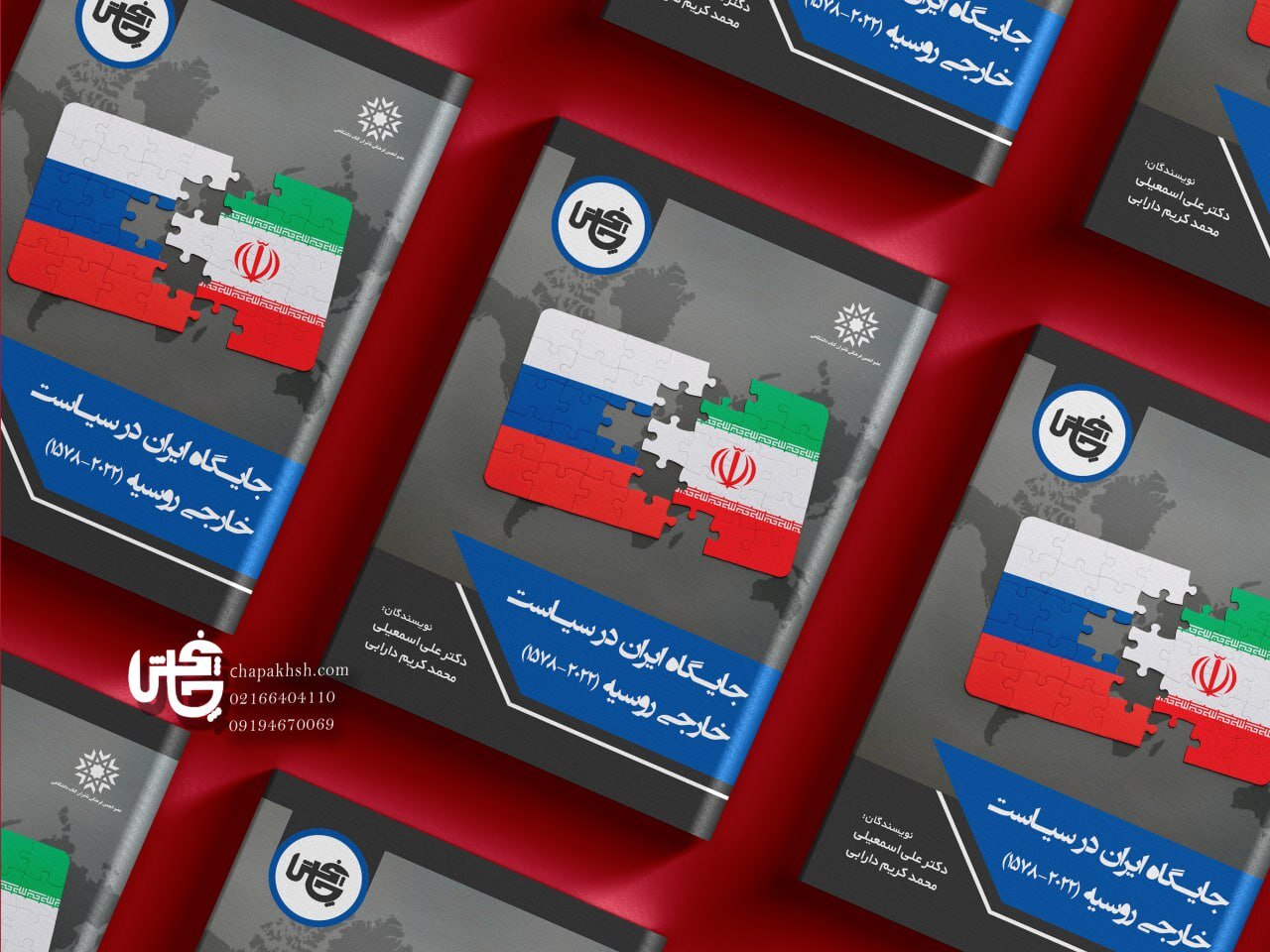
According to Khabaronline News Agency, the book “Iran’s Place in Russia’s Foreign Policy” (1578-2022), written by Dr. Ali Esmaeili, PhD in International Relations and Middle East researcher, and Dr. Mohammad Karim Darabi, PhD in Political Science, was published by Chapakhsh Publications.
Rah-e No Online news website reported this news, stating:
The most significant difference between this work and other published works on Iran-Russia relations is that the current book covers a wide historical scope from the time of the Tsars in 1578 until the beginning of Russia’s invasion of Ukraine in 2022. Second, the research method in this book combines history and international relations. It first addresses Iran’s position in Russian foreign policy until the collapse of the Soviet Union from a historical perspective, and then, from an international relations perspective, examines cooperation and challenges between the two countries in various fields after the Soviet Union’s dissolution. The final chapter, using James Rosenau’s linkage model, analyzes Iran’s place in the foreign policy of the Russian Federation from Boris Yeltsin to Vladimir Putin. With this introduction, the book includes an introduction and five chapters, as follows:
Chapter One: Analysis of the History of Iran-Russia Relations
This chapter begins by examining Russia’s relations with Iran during the Tsarist era. The most significant period was the wars of Russia against Iran in the Qajar era, which had a profound impact on Iran’s political and economic destiny. The conclusion of treaties such as Golestan and Turkmenchay, in addition to the loss of parts of Iranian territory, led to a shift in the balance of power in the region. This analysis shows how these events led to the formation of a pattern of distrust between the two countries.
Subsequently, the impact of the Constitutional Revolution and the World Wars on Iran-Russia relations is analyzed. The October Revolution of 1917, with the establishment of the communist system in Russia, led to a fundamental change in the country’s foreign policy. This historical development not only affected bilateral relations but also had profound regional and global consequences. In the final section, post-Soviet relations are examined, and changes in Russian foreign policy and their impact on the interactions between the two countries are presented, providing a background to the political and economic dynamics of Iran and Russia in the contemporary period.
Chapter Two: Russia’s Foreign Policy and Iran’s Position
This chapter examines the principles and objectives of Russia’s foreign policy in the Middle East and defines Iran’s position in these equations. The book’s analysis shows that Russia’s national identity and strategic interests play a key role in its foreign policy decisions. For instance, due to its geopolitical location and energy resources, Iran is one of the main axes of Russia’s policies in the region. Vladimir Putin’s role in Russian foreign policy is discussed in detail in this chapter. Putin, relying on tools such as military power and energy diplomacy, has managed to strengthen relations with Iran in various fields, including nuclear and security cooperation. This analysis shows that Russia’s foreign policy towards Iran is a combination of realism and attention to long-term economic and security interests.
Chapter Three: Iran’s Place in Russia’s Foreign Policy
This chapter reviews the historical relations between Iran and Russia and analyzes the main axes of interaction between the two countries in cases such as Iran’s nuclear program. Analyses show that Russia, despite extensive cooperation with Iran, has always maintained a cautious approach towards this country. One reason for this caution is the historical distrust between the two nations, rooted in events such as the Qajar treaties.
Furthermore, the common challenges faced by Iran and Russia against the United States and the role of these challenges in shaping the policies of both countries are examined. This chapter explains how shared interests in confronting a common adversary have paved the way for strengthening strategic cooperation between Iran and Russia.
Chapter Four: Key Components of Russian Foreign Policy
Chapter Four examines the role of the Caspian Sea as one of the key points in Iran-Russia relations. Due to its geopolitical importance and rich energy resources, this region has always been a focus for both countries. An analysis of Russian policies shows that this country, by leveraging its influence in the Caspian Sea, seeks to maintain the balance of power in its favor.
Energy policies and nuclear cooperation are other important topics in this chapter. Russia, by supporting Iran’s nuclear program, not only strengthens bilateral relations but also seeks to reinforce its position in global energy equations. This chapter also provides a comparative analysis of the two countries’ foreign policies in the Caspian Sea and shows how competition and cooperation in this region influence their relations.
Chapter Five: Variables of James Rosenau’s Theory and the Foreign Policy of the Russian Federation towards Iran
In the final chapter, the variables of James Rosenau’s theory and the foreign policy of the Russian Federation towards Iran are meticulously analyzed. James Rosenau’s theory, emphasizing five key variables, provides a comprehensive framework for foreign policy analysis, encompassing individual variables, role, governmental structure, society, and the international system. In this chapter, the foreign policy of the Russian Federation towards Iran is examined using these variables.
The individual variable emphasizes the personality traits and decision-making of leaders. In this regard, Vladimir Putin’s role as the main leader of Russia, with an emphasis on his geopolitical views and grand strategies, has been highly influential in shaping relations with Iran. Putin’s decisions to strike a balance between global rivalries and strengthen regional relations with Iran stem from his personal approaches and strategic calculations.
The role variable refers to Russia’s international and regional expectations and responsibilities. As a global power, Russia has always played a key role in Middle Eastern developments, especially in interactions with Iran. This role arises from political, economic, and security necessities to maintain Russia’s superior position in the region.
Other variables include governmental structure, society, and the international system. The governmental variable focuses on Russia’s governmental structures and decision-making institutions, which play a fundamental role in determining foreign policy. The Russian Ministry of Foreign Affairs and the Kremlin, in coordination with security and economic institutions, have adopted balanced and intelligent policies towards Iran.
The societal variable reflects the impact of societal expectations and needs on foreign policy. In this context, Russian society, through cultural and economic relations, has welcomed interaction with Iran, especially in areas such as energy and trade. Finally, the international system variable indicates the impact of structural changes in global relations on Russian foreign policy.
The confrontation between Russia and the West, and the need for allies in the region, including Iran, has led to strengthening bilateral relations. Russia’s foreign policy towards Iran, in addition to economic and security interactions, is generally designed based on extensive cooperation and efforts to create balance in a multipolar world order. At the end of Chapter Five, the authors summarize the book’s contents.
To purchase the book, you can contact Chapakhsh Bookstore at 02166404110 or obtain the book from their website https://chapakhsh.com/.





