People Are the True Guardians of Cultural Heritage
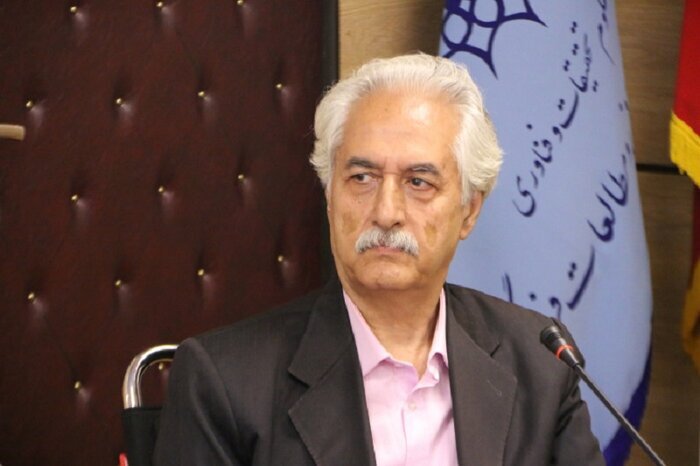
Marking the 17th anniversary of the global inscription of the “Radif of Iranian Music,” we present an exclusive interview exploring the journey of this invaluable heritage, its historical roots, and the intricacies of international cultural registration.
Referring to the global registration of the “Radif of Iranian music” in 2009 as Iran’s first independent dossier in UNESCO, a music writer and researcher said: “People are the true guardians and protectors of cultural heritage; although legally governments must answer to international obligations, the identity of this heritage belongs to society.”
According to KhabarOnline News Agency, the dossier for the “Radif of Iranian music” was submitted to UNESCO in 2008 through the efforts of the Iran House of Music and Iran’s Cultural Heritage, Handicrafts and Tourism Organization, and on September 30, 2009 (Mehr 8, 1388), it was inscribed on UNESCO’s Representative List of the Intangible Cultural Heritage of Humanity as Iran’s first independent dossier.
According to IRNA’s report, the Radif of Iranian music comprises traditional musical pieces of classical Iranian music that form the essence of Iranian musical culture.
More than 250 melodic units are arranged into cycles called Gusheh, providing an underlying qualitative layer against which various melodic motifs are organized.
Although the primary function of performing traditional Iranian music is through improvisation in accordance with the musician’s mood and in response to the audience, Iranian instrumentalists spend years learning and mastering the Radif of Iranian music as a set of musical tools for their performances and compositions.
The formulation of the Radif of Iranian music is attributed to Ali Akbar Farahani and his sons, Mirza Abdollah and Aqa Hosseinqoli, who were musicians of the Qajar court.
Some analysts believe that the formation of the Radif also reflects, in a way, the cultural developments of Iran during this period.
Although the original versions of the Radifs of Mirza Abdollah and Aqa Hosseinqoli were not recorded or written down, the Radifs of their students have survived in recorded or written forms.
The Radif is performed in two forms: instrumental and vocal, with the instrumental Radif being more extensive than the vocal one.
Notable instrumental Radifs include those of Mirza Abdollah and Aqa Hosseinqoli, while notable vocal Radifs include those of Davami and Taherzadeh.
The first person to notate the Radif was Alinaghi Vaziri, and the first person to bring the Radif out of the court and among the masses was Darvish Khan.
The analysis of the Radif has been the subject of numerous books in Persian and English, and some of these works have also offered critiques of the Iranian musical Radif.
Critics of the Radif consider it an innovation that occurred during the Qajar era, which neglected the theoretical subtleties of Iranian music; conversely, defenders of the Radif view its formation as a sign of the dynamism of Iranian music.
The Radif of Iranian music can be in the domain of vocal performance or instrumental playing, and is executed on various instruments with different techniques, including plucked string instruments such as the tar, setar, tanbour, and santur, as well as the bowed string instrument kamancheh and the woodwind instrument ney.
The Radif of Iranian music is transmitted orally from master to student, passed down from generation to generation.
The Radif is both the embodiment of the aesthetics and the philosophy of Iranian musical culture.
Learning the Radif takes at least a decade of hard work, practice, and perseverance, during which students memorize the musical pieces of the Radif and enter a transcendent and semantic musical process that opens the door to human and spiritual virtues.
This rich and valuable treasure lies at the heart of Iranian music and reflects the cultural and national identity of the Iranian people.
Until 2024, no institution had ever held an anniversary to celebrate the registration of the Radif of Iranian music, but in 2024, thanks to the initiative of its dean, the Faculty of Music at the Art University held the first-ever commemoration ceremony for the registration of the Radif in UNESCO after 14 years.
The second ceremony was held on September 30, 2025, at the Roudaki Hall with the presence of various musical figures.
On the occasion of the 17th anniversary of the global registration of the “Radif of Iranian Music,” we have conducted an interview with Behrouz Vahdani, a writer, translator, music researcher, and board member of the Music House Researchers Center, who played a role in preparing and compiling this intangible heritage. The interview is presented below.
He stated: According to UNESCO regulations, only member states—and not individuals—are authorized to compile and submit registration dossiers.
In Iran, this responsibility rests with the Ministry of Cultural Heritage, Tourism, and Handicrafts.
Considering quota limitations, where each country usually has one national quota every biennale, 27 works from Iran have been inscribed on the Intangible Cultural Heritage list so far.
This music researcher added: Dossiers are submitted for global registration through two methods: national (independent) and joint (multinational).
In 2009, Iran’s first two dossiers—the “Radif of Iranian Traditional Music” dossier—were registered independently and exclusively by Iran, while the “Nowruz” dossier was initially registered with the participation of seven countries and subsequently with the accession of others, ultimately involving 12 countries as a shared multinational heritage.
Pointing to the priorities for the global registration of Iran’s cultural heritage, Vahdani noted: Iran’s standing as one of the ancient and rooted civilizations of the world has created special expectations from international bodies, including UNESCO.
The richness of Iran’s ancestral heritage is such that it not only holds countless potentials for global registration, but also places this country among the few governments possessing a global civilization.
Pointing to the promotion of peace through joint cultural heritage dossiers, he said: In recent years, UNESCO has changed its approach to registering global works and has moved toward encouraging countries to submit “joint dossiers.”
From this institution’s perspective, registering a work with the participation of several neighboring countries demonstrates the inclusive nature of that heritage beyond geographical borders.
This approach is considered a symbol of cooperation, peace, and solidarity among nations, and UNESCO prioritizes such dossiers for review.
Stating this, the board member of the House of Music Researchers Association noted: With the increase in the number of member states to the World Heritage Convention, UNESCO has implemented a quota system to ensure fairness in evaluating works.
Iran, which previously held the record due to numerous registrations in past years, now faces quota limitations.
Vojdani added: According to the new rules, the status of Iran’s heritage registration includes national dossiers, the submission of which has been scheduled biennially. To bypass quota restrictions, it is possible to prepare and submit joint dossiers with neighboring countries.
This path not only helps accelerate the registration process but is also aligned with UNESCO’s overarching policies for the development of regional peace.
He noted that while Iran’s 27th global registration file entitled “The Art of Mirror-Working” was registered in India, planning for the upcoming term is based on regional cooperation.
In accordance with the plans made, for the upcoming period, Iran has a combination of joint dossiers with neighboring countries and possibly a national dossier on its agenda to ensure the continuation of its presence on the UNESCO World Heritage list.
This writer and researcher stated that various countries are striving to create identity, pride, and background for themselves by registering intangible cultural heritage to announce to other countries that they are not newly established nations, but rather possess a rich heritage.
Iran has always been recognized in global forums as one of the five civilization-founding centers of humanity, and in recent years, it has succeeded in registering a significant volume of ancestral heritage on the World Intangible Heritage list.
Nevertheless, the global registration of works is the first step in safeguarding cultural elements.
Vojdani commented on how the “Radifs of Iranian Music” was globally registered, stating that this voluminous and comprehensive dossier (in 2007) was prepared and compiled in English by the Researchers Center of the House of Music, and the management of the dossier was also handled by Mohammad Sarir, the Managing Director of the Iran House of Music.
Ultimately, this comprehensive exploration highlights both the profound artistic depth of the Radif and the ongoing diplomatic efforts required to safeguard Iran’s rich cultural legacy on the global stage.
In an effort to shed light on the preservation and global registration of Iran’s musical heritage, the following insights detail the meticulous process behind the dossier’s submission and its ongoing safeguarding.
He stated: Houman Asadi, a professor at the Faculty of Fine Arts of the University of Tehran, was the author of the English text of the dossier, and as a retired official from the Cultural Heritage Organization and an activist in the organization’s international affairs, I served as the liaison between the House of Music and that organization. In addition to facilitating communications, I was also responsible for supervising all audio and visual documents, conducting interviews, and handling the Q&A sessions with masters of the Radif, after which the dossier was compiled and submitted to the Cultural Heritage Organization.
Vojdani added: The duty of the Cultural Heritage Organization was that, upon receiving the documents and if it found the documentation compliant with UNESCO regulations and standards, it would send them to UNESCO’s headquarters in Paris for official registration—a process that was successfully completed at that time.
Regarding the obligations following the global registration of the Iranian musical Radif, this music researcher said: According to the regulations of the UNESCO Convention for the Safeguarding of the Intangible Cultural Heritage (2003 Convention), the process of global registration of a dossier is not the end of the road; rather, all member states are obligated to report their practical measures regarding “safeguarding,” “promotion,” and “intergenerational transmission” to UNESCO through periodic and official reports after the registration of the element.
The responsibility for preparing and drafting these reports lies with experts in the field of cultural heritage.
He added: One of UNESCO’s most prominent criteria is the flowing, ongoing, and dynamic nature of intangible heritage.
Fortunately, the continuous teaching of Iranian musical Radif by knowledgeable masters in specialized faculties, particularly at the University of Tehran and the University of Art, has guaranteed the survival of this art.
Vojdani stated: So far, during two specialized events at Vahdat Hall, various conferences and performances featuring the artistry of students from these two universities have been held, including academic lectures, solo and ensemble performances, and vocal renditions based on the Iranian musical Radif.
All of these programs have been recorded with audio and visual documentation and can be presented to international bodies as a living proof of the vitality and dynamism of the Iranian Radif in the academic community.
He said: Among Iran’s registered works in the Intangible Cultural Heritage list, 6 works (the construction and playing of the Oud, Dotar playing and making, Kamancheh making and playing, Khorasan regional music and Bakhshi Dotar, traditional skills and techniques of making and playing the Rubab, and the Radif of Iranian music) are directly dedicated to music, and in several other dossiers, music plays a fundamental and inseparable role, to the extent that removing the musical element would practically severely reduce the richness and impact of those dossiers.
Vojdani added: Globally, statistics from the convention’s member states show that music and ritual and folkloric dances are the most numerous and primary elements registered annually on the global list.
A member of the board of directors of the House of Music’s Researchers Center considered the people as the true guardians and protectors of cultural heritage, stating that although legally and diplomatically governments must answer to UNESCO and international commitments, the identity of cultural heritage (both tangible and intangible) belongs to the body of society.
All material and intellectual rights of this site belong to Khabaronline News Agency, and the use of its content is permitted with attribution. Copyright © 2026 Khabaronline News Agency, All rights reserved.
منبع: Khabaronline (FA)
#printed_in_iran #international_publication #printing #publishing #books #iran #persian #Cultural_Heritage #National_Music #UNESCO