Between Fact and Narrative: Challenges of Sacred Defense Memoir Writing in Today’s Era
IBNA’s Homeland and Resistance Service, Mahrokh Ebrahimpor: Throughout the Sacred Defense era, memoir writing has always been one of the tools for documenting and representing the lived experiences of combatants. However, from the beginning, challenges have existed regarding the verification of memoirs, as many narratives were based on the narrator’s personal experience, and authors of books were obliged to confirm their accuracy through thorough research and investigation. Decades after the imposed war, the importance of this issue has increased, because published works not only have historical value but are also used as educational and research resources.
In the last two decades, the volume of memoir works in the form of autobiography, oral history, and documentary biographies has increased significantly. This growth, while positive from the perspective of recording oral history, has also caused damage; including dispersion in the classification of works, weakness in verifying memoirs, and overlap between personal and documentary narratives. Some books, after several reprints, have faced criticism, and parts of their memoirs have been discussed and reviewed in online spaces.
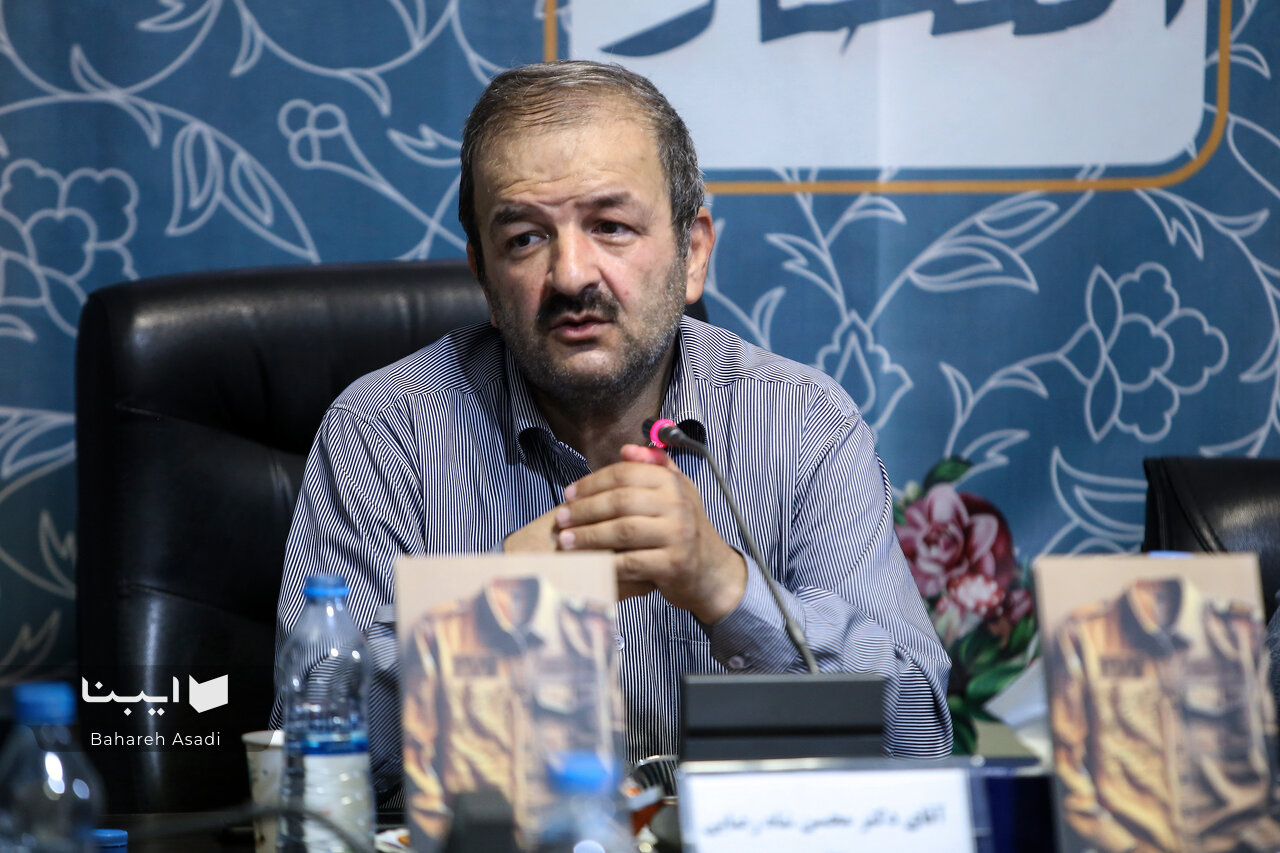
This situation indicates that Sacred Defense memoir writing requires a scientific and standardized framework, in a way that preserves the authenticity of the narrative, affirms historical accuracy, and at the same time is understandable and attractive to the audience. Only then can memoir works be used as reliable research and cultural sources. Recently, discussions have arisen about the book “Da: Seyedeh Zahra Hosseini’s Memoirs,” and in light of the publication of Mohsen Shahrezaei’s book “Memory and Memory Writing,” we sat down for an interview with him.
Question: The book “Memory and Memory Writing,” with its focus on the Iran-Iraq imposed war, seems more like a textbook for students than for enthusiasts in this field. Why is it so brief?
Part of this process was initiated by Imam Hussein University (AS). The goal was to convert practical and lived experiences into “applied knowledge.” For example, if we go back about 40 years to the war period, we see that a memoir writing movement was formed in the Sepah (IRGC) and some other institutions; especially in the Sepah, because the main part of the forces consisted of students and young people.
The main question is how these experiences can turn into knowledge, and what path must be taken to achieve this. At that time, we lacked a specific theoretical and experimental background for memoir writing, narration, and collection. When combatants returned from the front to the home front, they would talk about the events of the front in mosques, schools, family gatherings, and friendly circles, narrating what had happened. These narratives initially took the form of primary oral memoirs.
Gradually, these memoirs were written down and made available to others, creating the groundwork for converting lived experiences into knowledge. Now we can even call it the “industry of memoir collection, narration, and writing”; because this field grew gradually and progressed from individual memoirs to collective memoirs. The result of this process was the compilation of a book or curriculum whose goal was to convert those experiences into applied knowledge.
I was a student during that period and witnessed firsthand the formation of the memoir writing movement in the Sepah and Basij. They wanted to systematically extract those experiences in a concrete way, so that the historical course of memoir writing could be presented in the form of a curriculum. This work was written more for students; especially students in cultural and media fields, where the topics of memoir collection and narration relate to their specialized field. For this reason, Imam Hussein University also published it.
Naturally, the book is not large in volume and has an educational and curriculum structure, examining the process of memoir writing during the war by the Basij and Sepah from a historical perspective. In the end, a work was published, a couple of years have passed since its publication, and I don’t recall the exact details, including the number of pages; but in any case, it is a book dedicated to this discussion.
Question: Considering the importance of language and tone in memoir writing, some believe the narrator’s tone and language should be preserved in its original form, while others believe the text should be refined to some extent so the audience can connect more easily. In your opinion, to what extent is maintaining the narrator’s tone necessary and significant in a memoir?
In my opinion, the closer we get to authenticity, the better it naturally is, and there is no doubt about this. However, if the tone of the narrative enters the text in a way that makes the book incomprehensible to the general audience, this itself counts as a weakness of the work. Therefore, I believe the best way is to use a balanced combination of these two approaches and utilize tools such as footnotes.
For example, if the narrator has an accent and belongs to an ethnic group, this feature cannot be ignored, and the narrative cannot be completely converted into a perfectly standard and uniform language; because in this case, the authenticity of the narrative is lost, and many nuances, scene descriptions, and meaningful details are removed.
On the other hand, if we introduce the conversational tone and accent completely and directly into the text, it might become tiresome for the reader, in a way that they lose connection with the text after reading a few pages or become confused and put the book aside.
Therefore, I believe a mixed approach should be adopted. This requires high skill and artistry, in a way that while preserving the authenticity of the narrative, the attractiveness of the text is not lost. One effective tool in this regard is the use of footnotes in the book. The combination of these methods can lead to the best result. I think I have also referenced examples in the book itself.
Question: In memoir writing, time and place are two key elements that help maintain authenticity and a correct understanding of events. Attention to temporal sequence and spatial features can distinguish between a credible memoir and an incomplete narrative. Given this importance, the question is: in the memoirs you have studied, to what extent has precise attention been paid to observing time and place, and has this principle been well observed in the works?
It is natural that a memoir is inherently intertwined with language, and we cannot separate it from language. I was recently reading a book that scientifically explained the role of “time” as the fourth dimension in physics, in a somewhat heavy manner. From this perspective, I can never consider the element of time separate from a memoir; because a memoir fundamentally forms within the context of time.
Therefore, when I am writing my own memoirs as an individual, or especially when I am writing the memoirs of others—meaning I am doing second-person memoir writing—I must pay serious attention to the element of time. Temporal sequences, especially concerning topics like war, operations, decision-making, events, and occurrences, have a determining importance; because all these matters depend on time.
Hence, time is an inseparable and integral element of a memoir and holds extraordinary importance in memoir writing; both when we write the memoirs of others and when we record our own memoirs. Since memoirs form over time and are subject to erosion, the correct sequence and order of events may not be remembered correctly, while this sequence is of high importance.
Alongside time, the element of place also holds special importance in memoir writing. If an event occurred for me in a specific location, I must be sensitive to preserving the authenticity of that location and correctly understand and represent its spatial features and components.
If an operation occurred in a particular area, it cannot be narrated from another person’s perspective without attention to the element of place. Therefore, in my opinion, time and place simultaneously are integral components of memoir writing. Of course, heavier scientific discussions might be raised in this area, which are beyond the scope of this short interview, but paying attention to these elements is of great importance.
Question: In the field of Sacred Defense, there is a phenomenon called “oral history” which seems to have spread more since the 2010s; meaning that an individual goes to a narrator, records their memories, and then a book is compiled based on them. This is while in earlier decades, we were more often confronted with self-written memoirs. Today, however, this phenomenon has grown significantly, and many books are published in this format, a considerable portion of which unfortunately do not have appropriate quality. The question is why this type of memoir writing has spread so much in recent years? Is this growth due to publishers’ policies and market reception, or have other factors played a role in the formation and spread of this phenomenon?
I don’t want to just make a general statement without backing; the reality is that this topic requires serious research. The numerous classifications seen today in genres of memoirs and documentary works—ranging from oral history to fictional biography, documentary biography, novel, documentary narrative, fictional narrative, narrative biography, and similar titles—have become so diverse and sometimes vague that they cause disagreement and confusion even in evaluations and book compilations.
I personally have encountered all kinds of these titles in different books; in a way that sometimes, if I’m not mistaken, we might face ten to fifteen different titles for a similar genre. In my opinion, it is necessary that this issue be researched and deliberated upon once and for all in a credible scientific source.
My practical suggestion is that a group of experts and scholars in this field gather; even a specific scientific gathering or meeting could be held in this regard to precisely discuss and examine the titles that are put on books today. Ultimately, this scientific group can reach a consensus and specify that, for example, from now on we are dealing with five specific and defined genres.
Such a conclusion can be proposed to institutions and agencies responsible for this field; including think tanks operating in this area, such as the Stability Think Tank. In my opinion, this issue needs to be seriously and scientifically organized once so that afterward we know exactly what format and genre each work falls into. Here, my intention is neither absolute defense nor denial; but simply raising an issue and offering a proposal for organizing the current situation.
Regarding the harms of this situation, the discussion is lengthy, and there is no opportunity to bring it up in this short interview; but the reality is that, as you mentioned, this diversity and scattering in classifications have become harmful. In many cases, even the audience doesn’t understand the difference between a memoir, a written memoir, and an oral memoir. Perhaps in the term “oral memoir,” the intention is that the text has not been highly formalized or literary devices have been less used to make the work attractive, and for this reason, such a designation has been given, but this issue remains vague.
Regarding whether the sales of these works are the main factor in their spread or not, I truly do not have such an impression, and I don’t think it has a determining effect. In any case, the audience for these books is largely known and limited. Of course, we must try to expand the range of audience and make these works more attractive, while maintaining their authenticity; because otherwise, these books remain only for a specific group of audiences.
As for why the number of works referred to as “oral history” has increased, I truly cannot express a definitive opinion; I neither have accurate statistics nor have I conducted specific research in this area.
Question: You are among the judges of the Sacred Defense Book of the Year award, surely you have encountered a flood of oral history books in your judging?
Yes, if we look at the works submitted in events like the “Sacred Defense Book of the Year,” we see that a significant portion of the books fall into the category of memoir and documentary; a field that includes memoirs, biographies, and similar genres, and constitutes one of the largest parts of Sacred Defense literature.
This popularity of documentary and memoir-centered works can be rooted in scientific and research needs. I can raise general reasons, but since these reasons are not based on cohesive research, and we are coincidentally in Research Week, I prefer not to make a general judgment about this and not go further into the discussion.
Question: You have probably heard that Saeed Tavousi Masrour, a historian and university professor, mentioned the book “Da, Zahra Hosseini’s Memoirs” in an interview with Farhikhtegan and raised debates about it; some people criticized the historical content of the book and certain points made by the narrator. Now, after multiple reprints, some of these issues still haven’t been resolved. The question is, can such a book, which has been reprinted 160 times, be edited? And when its content faces criticism, what points and messages can it have for those active in the field of memoir writing or oral history?
Firstly, the attention and care of researchers to such works are inherently valuable. Whether this attention leads to criticism and correction of the book or to raising objections, it shows that our researchers and scholars are not indifferent to the genre of perseverance and Sacred Defense literature, and this itself is inherently valuable.
But regarding the objections raised against the book, attention must be paid to its publication time. If I remember correctly, this book belongs to the 1990s, meaning about 30 years ago. At that time, this work managed to attract attention, gain audience, and create excitement; especially in the market for Sacred Defense books. Therefore, the success of the book must be measured in its own time frame, and it cannot be evaluated solely by today’s standards. Just as we cannot measure achievements from centuries ago with today’s standards, we must study every scientific and research phenomenon within its own time context.
However, if there are issues, they are definitely correctable. In this regard, the author and narrator of the book need to be informed and cooperate so that corrections can be made; provided that they consent.
In my opinion, this attention from researchers and the criticisms they provide are valuable phenomena, indicating that there is no indifference. I know that theses, researches, and articles have also been written about this book, and I find this trend inherently blessed and auspicious.